

 +86-13386111894
 Products & Solutions
  en
en English
 Русский
 España
 عرب .
عرب .
If you need any help, please feel free to contact us
inquire
Water Level Controls: Types, Applications & How to Specify the Right One
From Float to Digital: The $10.1 Billion Water Level Control Market
The global level sensor market was valued at USD 5.3 billion in 2025 and is projected to reach USD 10.1 billion by 2035, growing at a compound annual growth rate of 6% over that period. review the full level sensor market growth analysis and forecast. The growth is being driven by three converging forces: the accelerating adoption of industrial automation, tightening regulatory requirements around water management and process safety, and the integration of smart sensing technologies with IoT and SCADA platforms that demand more precise, continuous, and remotely accessible level data than earlier-generation controls could provide.
Water level controls sit at the operational core of this market. They govern the behavior of pumps, valves, alarms, and process shutdowns across every industry that stores, moves, or processes liquid. From municipal water treatment reservoirs and industrial cooling towers to food processing tanks and chemical storage vessels, the ability to accurately detect and respond to liquid level is a foundational requirement of safe, efficient operations. Understanding the liquid level control product series for industrial applications begins with understanding what these systems actually do and how the technology behind them has evolved.
What Water Level Controls Do—and How They Fit Into Process Systems
A water level control is any device or system that detects the level of liquid in a vessel and triggers a response based on that detection. The response may be immediate and direct—closing a valve, starting a pump, sounding an alarm—or it may take the form of a continuous signal transmitted to a process controller, PLC, or SCADA system that makes the control decision based on broader process logic.
The simplest water level controls operate as binary devices: they detect whether liquid is above or below a defined threshold and switch an output accordingly. When the water level in a tank rises to the high-set point, the control opens an outlet valve or stops an inlet pump. When it falls to the low-set point, the inlet restarts. This on/off logic handles the majority of residential, commercial, and light industrial level control requirements effectively and at low cost.
More complex industrial applications require continuous level data rather than simple threshold detection. A reactor vessel in a chemical plant, a buffer tank in a food processing line, or a cooling water circuit in a power generation facility may need real-time level information fed continuously to a control system that adjusts flow rates, temperatures, or pressures dynamically based on the current level reading. In these systems, the water level control is not a standalone device but an input to a larger process control architecture, and its output signal—typically a 4–20mA analog current loop, a digital Modbus or HART signal, or a voltage output—must integrate cleanly with the receiving instrumentation.
Five Types of Water Level Controls and How Each One Works
The technology underlying water level controls ranges from mechanical simplicity to sophisticated non-contact sensing, and the appropriate choice depends on the specific liquid, vessel geometry, required accuracy, and operating environment.
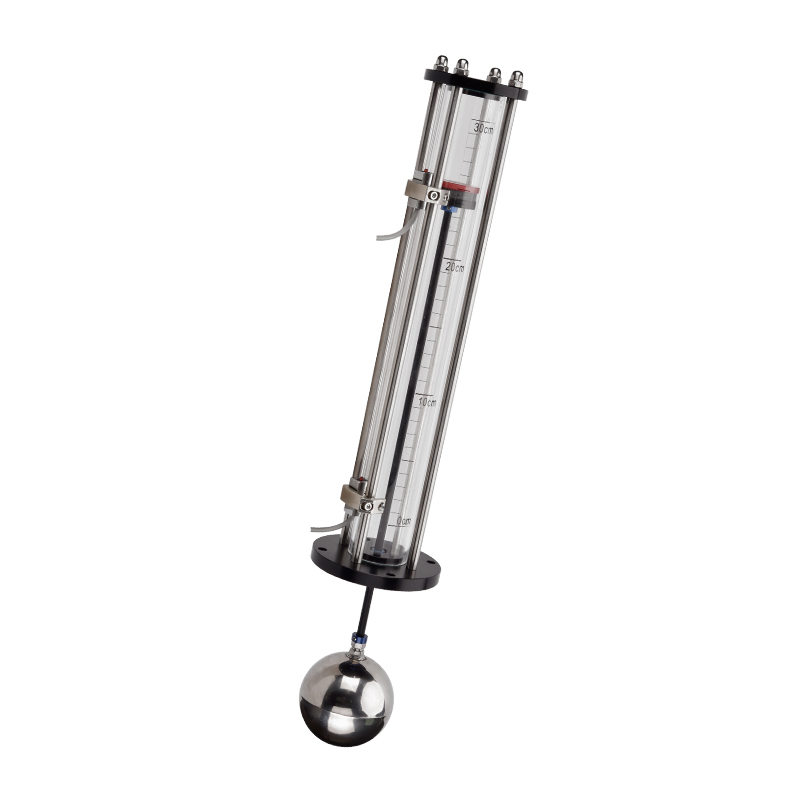
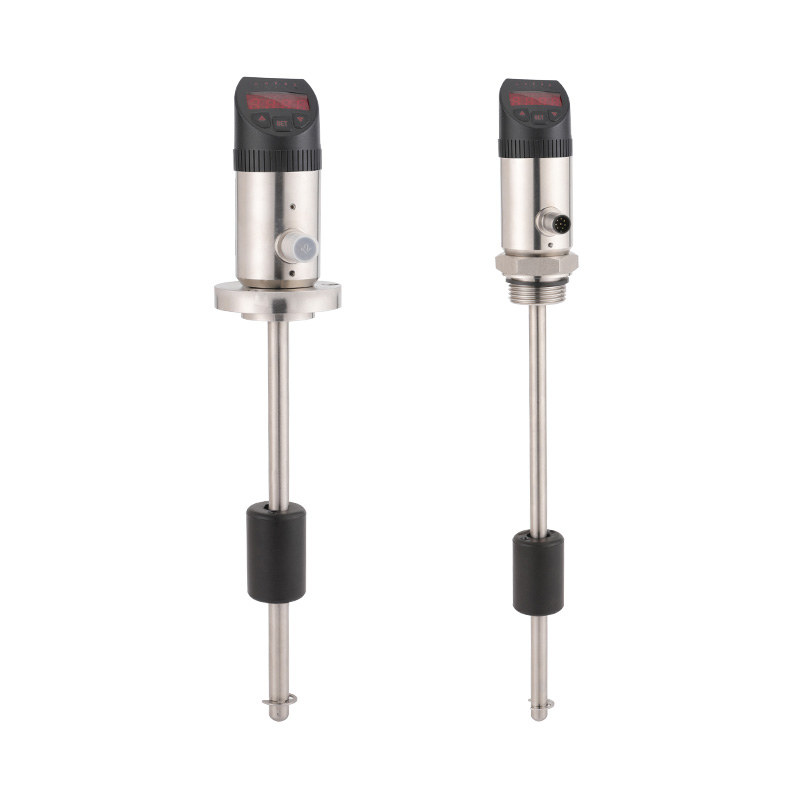
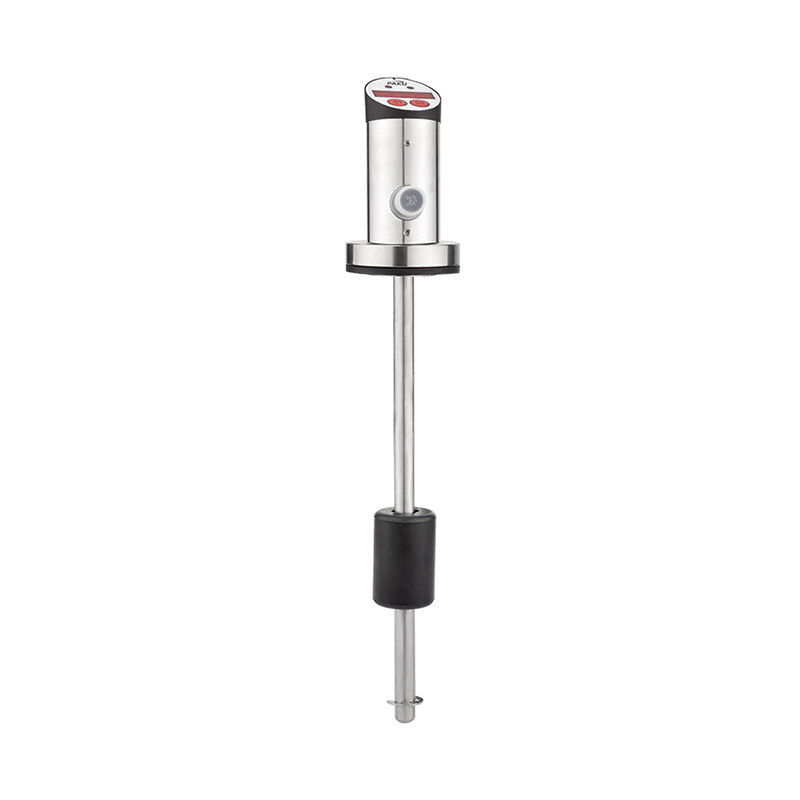
Float-type level switches. The oldest and most widely deployed water level control technology. A buoyant float rises and falls with the liquid surface; at a set level, the float's movement actuates a reed switch or magnetic switch that opens or closes an electrical circuit. Float switches are mechanically straightforward, require no power to sense (only to actuate the connected device), and operate reliably across a wide range of liquids. The float-type liquid level switch for reliable point-level detection covers the standard vertical-mounting configuration used in storage tanks, water treatment vessels, and process sumps. For open tanks, reservoirs, and sewage applications where the sensor must be suspended within the vessel rather than mounted through the wall, the cable float level switch for tanks and open reservoirs provides the same reliable switching function in a format that can be positioned freely at any depth within the vessel.
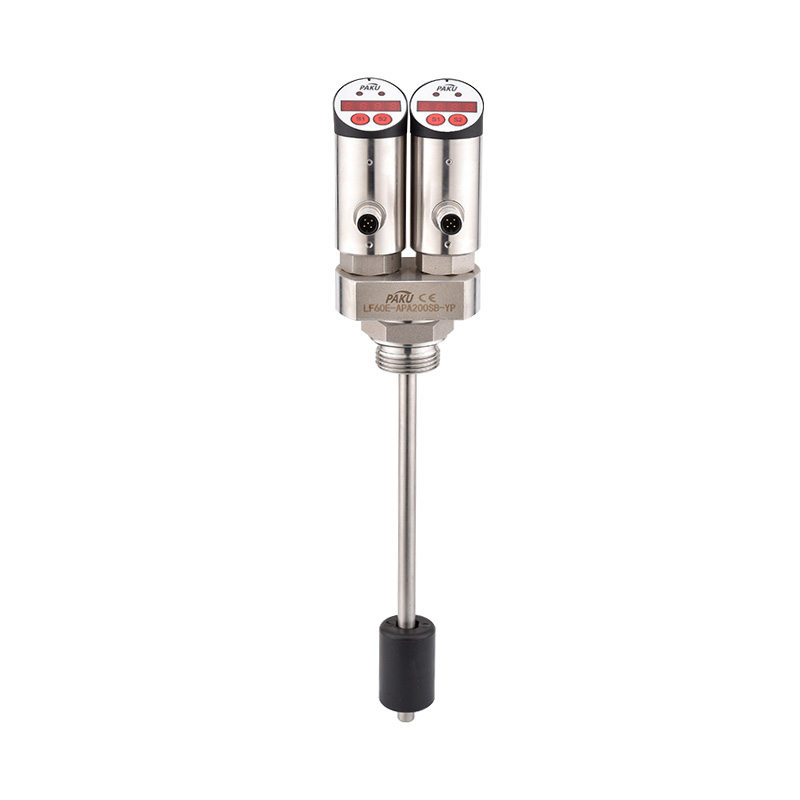
Electronic liquid level switches. Electronic level switches use solid-state sensing principles rather than moving mechanical parts, offering greater repeatability, faster response times, and no wear from the actuation mechanism. The electronic liquid level switch for non-contact detection uses impedance or conductivity sensing to detect liquid presence at the sensor tip without requiring any moving components. This makes electronic switches particularly suitable for applications where float mechanisms may become fouled by viscous liquids, foam, or suspended solids, and for systems requiring high-cycle reliability over extended service periods.
Magnetic induction level sensors. Magnetic induction sensing detects liquid presence through changes in the electromagnetic field at the sensor probe, without the probe making direct electrical contact with the liquid. This technology provides strong corrosion resistance and works reliably with liquids that would degrade or foul electrical contact-type sensors. The electronic magnetic induction liquid level switch sensor suits applications involving mildly aggressive liquids, food-grade process fluids, and installations requiring hygienic construction where no electrical contact with the process liquid is acceptable.
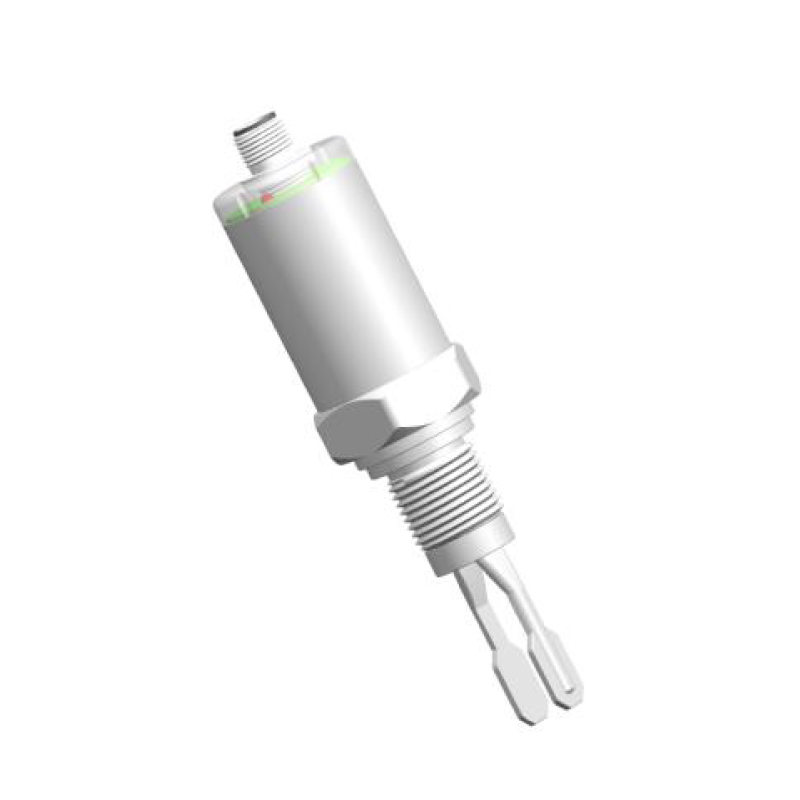
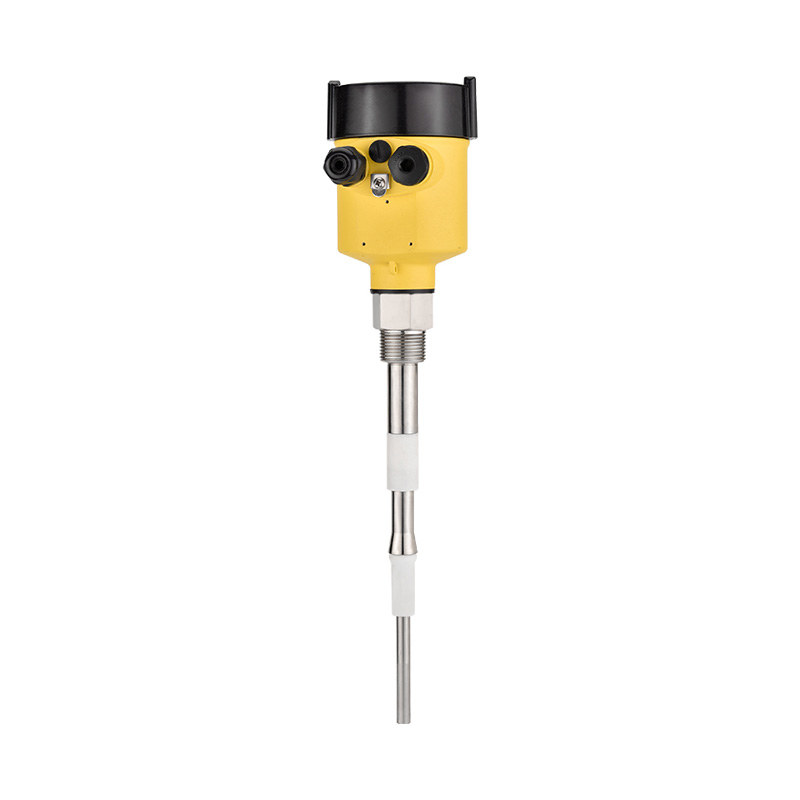
Tuning fork level switches. Tuning fork sensors use a piezoelectric element to vibrate two tines at their natural resonant frequency. When liquid contacts the tines, the resonant frequency shifts, and the control electronics detect this shift to trigger a switch output. Tuning fork technology works with both liquids and bulk solids, is unaffected by flow, turbulence, foam, or pressure changes, and requires no calibration for the specific liquid being measured. The tuning fork level switch for solid and liquid media is specified in applications where process conditions would cause false readings in float or conductivity-based switches—high-pressure vessels, turbulent mixing tanks, and tanks containing aerated or low-density liquids.
Ultrasonic level sensors. Ultrasonic sensors transmit high-frequency sound pulses from a transducer mounted at the top of the vessel and measure the time elapsed before the echo returns from the liquid surface. Because the sensor never contacts the liquid, ultrasonic measurement is inherently suited to corrosive, hazardous, or ultra-pure liquids where probe contact would create a contamination or safety risk. The ultrasonic liquid level sensor for non-contact measurement provides continuous level output across the full measurement range, making it suitable for applications requiring real-time level data rather than simple threshold switching.
Level Switch vs. Level Sensor vs. Level Transmitter: Key Differences
The terms switch, sensor, and transmitter are sometimes used interchangeably in informal contexts, but in process instrumentation they describe three distinct product categories with different output characteristics, integration requirements, and application roles. Specifying the wrong category for a given application results in either over-engineering (adding cost and complexity the application does not require) or under-specification (providing insufficient data for the control system to function correctly).
A level switch provides a binary output—on or off, open or closed—triggered when the liquid level crosses a predetermined threshold. It does not provide information about where the liquid level is between the minimum and maximum of its range; it only reports whether the level is above or below the set point. The liquid level switch range for process control applications covers float, electronic, tuning fork, and capacitive switch types, each optimized for different liquid properties and installation configurations. Switches are the right choice for simple pump and valve control, high-level alarms, and low-level shutdowns where continuous level data is not required by the control system.
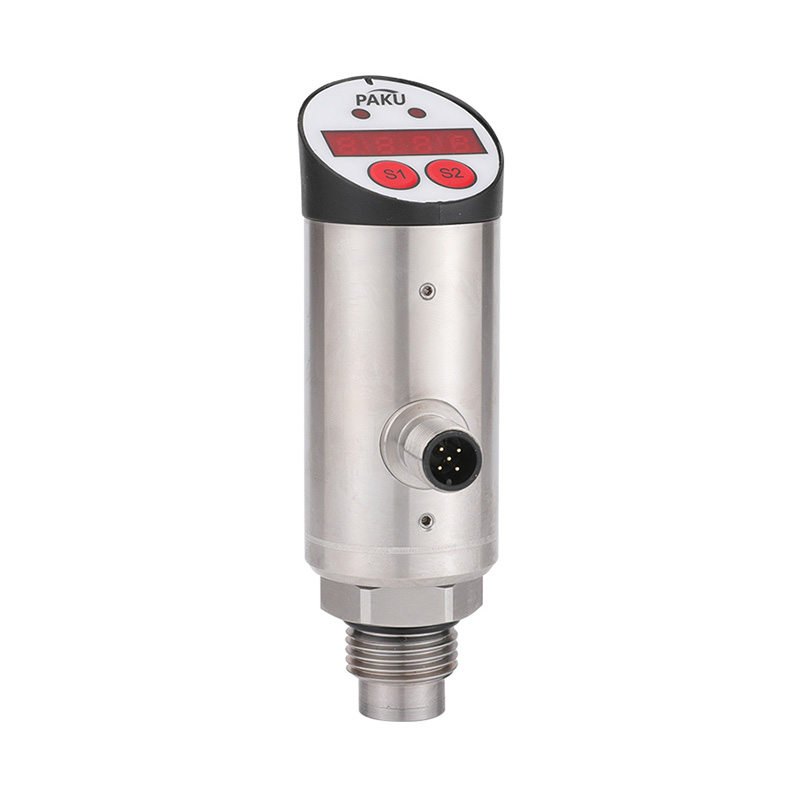
A level sensor provides a continuous output signal proportional to the current liquid level across the full measurement range. Rather than a simple switch contact, a level sensor outputs a voltage, current, or digital signal that changes continuously as the level changes. The liquid level sensor range for continuous monitoring includes electronic, magnetic induction, ultrasonic, and float-type continuous sensors that deliver real-time level data to PLCs, display controllers, and data acquisition systems. Sensors are the appropriate specification when the control system needs to know not just whether the level is high or low, but exactly where it is at any given moment.
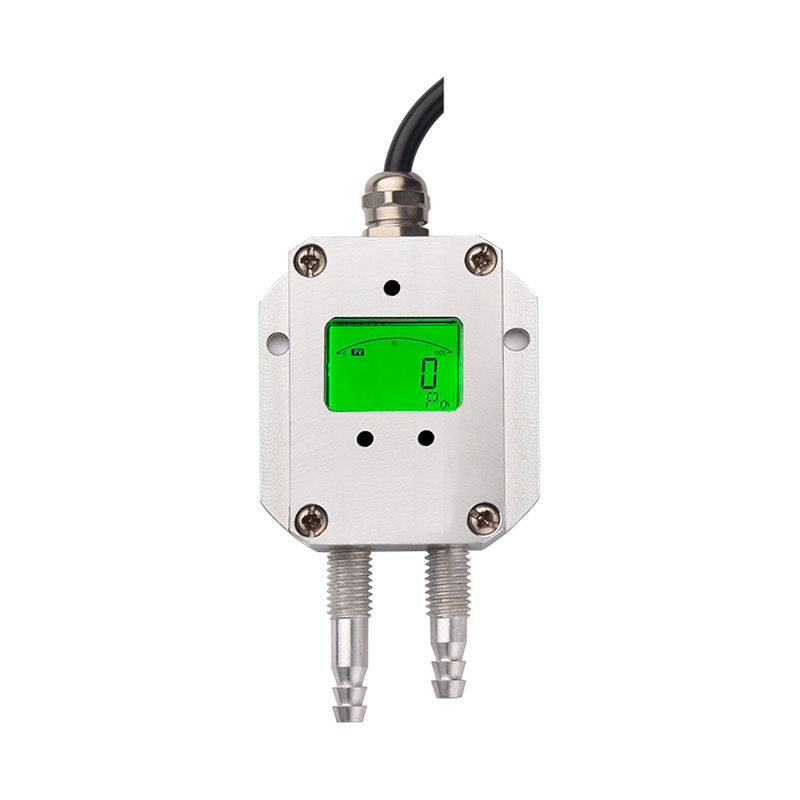
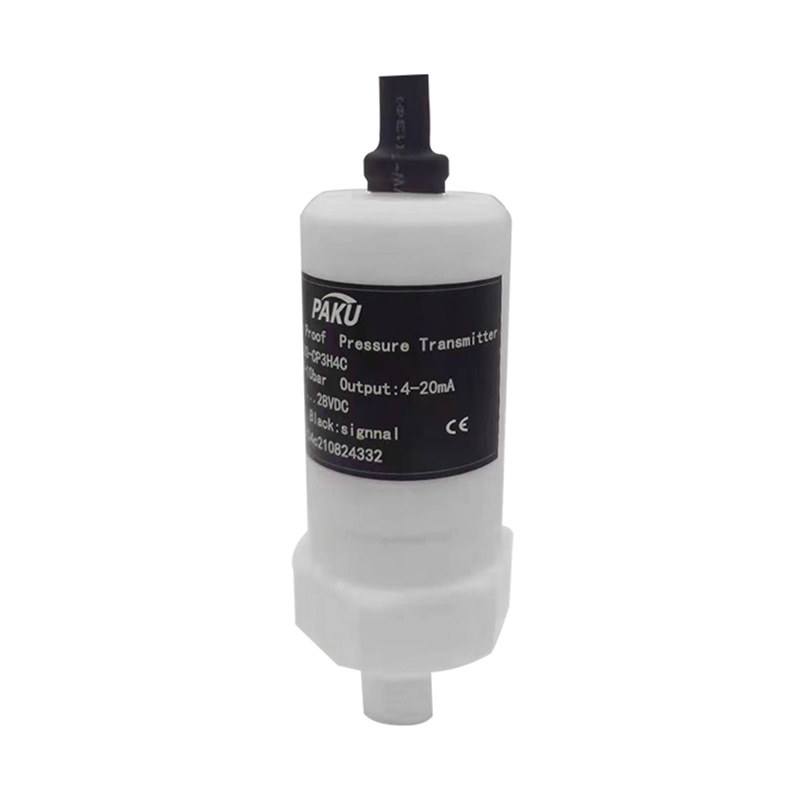
A level transmitter is a level sensor with a standardized process output—almost universally the 4–20mA analog current loop, sometimes with superimposed digital HART communication—designed for long-distance signal transmission and direct integration with industrial control systems. The liquid level transmitter range for 4–20mA process integration is specified wherever the level measurement must interface with a distributed control system (DCS), remote I/O, or centralized SCADA architecture. The submersible static pressure level transmitter for deep tank measurement works by measuring the hydrostatic pressure at the base of the liquid column—which is directly proportional to liquid height—and transmitting a calibrated 4–20mA signal representing the level across the full measurement range. This approach is particularly effective for deep tanks, underground storage, and reservoirs where top-mounted non-contact sensing is impractical.
Where Water Level Controls Are Most Critically Applied
Water level controls appear across virtually every industry that processes or stores liquid, but several sectors depend on them for functions where failure has immediate operational, safety, or regulatory consequences.
Water treatment and municipal infrastructure. Treatment plants, pump stations, and distribution reservoirs use level controls to manage storage levels, coordinate pump sequencing, prevent overflow into combined sewer systems, and trigger alarms for abnormal level conditions. The reliability requirement in this sector is among the highest of any application—a failed level control in a treatment plant can result in regulatory violations, environmental discharge events, or loss of supply. Both float-type and electronic level switches serve straightforward high/low alarm duty; submersible level transmitters provide the continuous level data required for telemetry systems that monitor assets across distributed infrastructure networks.
HVAC and building services. Cooling towers, chilled water systems, condensate receivers, expansion tanks, and boiler feedwater systems all require water level management to operate safely and efficiently. Low water conditions in boilers create fire risk; overflow in cooling tower basins wastes water and creates slip hazards; incorrect expansion tank levels compromise hydronic system pressure. Electronic level switches provide the clean, repeatable switching action required by the building management system (BMS) controllers that govern these systems.
Food and beverage processing. Ingredient tanks, mixing vessels, CIP (clean-in-place) systems, and product buffer tanks require level controls with hygienic construction, compatibility with food-grade cleaning chemicals, and compliance with FDA and similar food safety regulations. Magnetic induction and tuning fork sensors are frequently specified in these environments because they offer reliable detection without electrical contact with the process fluid, and their smooth external surfaces resist bacterial colonization.
Chemical processing and oil and gas. Storage tanks, reactors, separators, and scrubbers in chemical and hydrocarbon processing environments demand level controls that can handle aggressive media, high pressures, explosive atmospheres, and extreme temperatures. Ultrasonic non-contact sensors eliminate compatibility concerns for the most corrosive liquids; explosion-proof rated switches meet the hazardous area classification requirements of ATEX and IECEx standards. The continuous level data provided by transmitters integrates with the DCS systems that manage complex, interdependent process parameters in these facilities.
Agriculture and irrigation. Reservoir level monitoring, irrigation canal control, and storage tank management in agricultural applications increasingly use submersible transmitters connected to remote monitoring platforms via cellular or LoRaWAN networks, enabling farmers and water managers to monitor and control water resources from mobile devices without being physically present at the measurement point.
Selection Criteria: What to Specify Before You Buy
Selecting the appropriate water level control requires working through a defined set of application parameters before evaluating specific products. Skipping this process typically results in a device that works in the factory but fails or underperforms in the actual installation environment.
Liquid properties. The chemical composition, viscosity, density, and temperature of the liquid determines which sensing technologies are compatible. Highly conductive liquids work well with conductivity-type electronic switches; very low conductivity liquids (deionized water, some organic solvents) require capacitive, float, or ultrasonic sensing. Viscous or coating liquids can immobilize float mechanisms and foul probe surfaces. Corrosive liquids require sensor materials—316 stainless steel, PTFE, Hastelloy—that resist chemical attack over the product's service life.
Measurement range and accuracy. A point-level switch needs only to be positioned at the desired set point; the range of the vessel is irrelevant to its function. A continuous sensor or transmitter must have a measurement span that covers the full usable range of the vessel with the required accuracy at every point in that range. For most industrial process applications, ±1% of full scale is an adequate accuracy specification; for custody transfer and high-value inventory management, ±0.1% or better may be required.
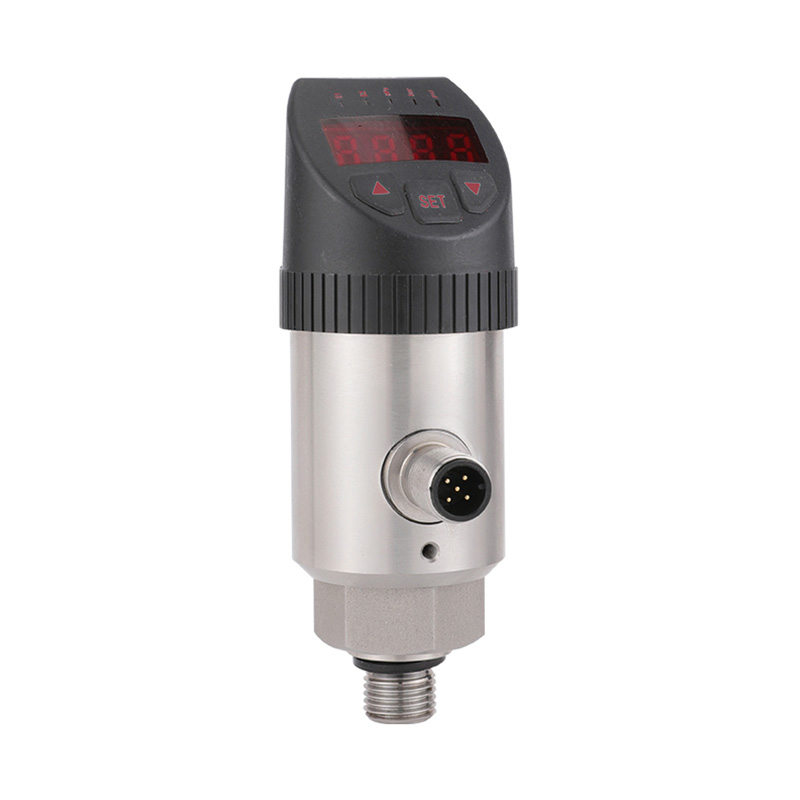
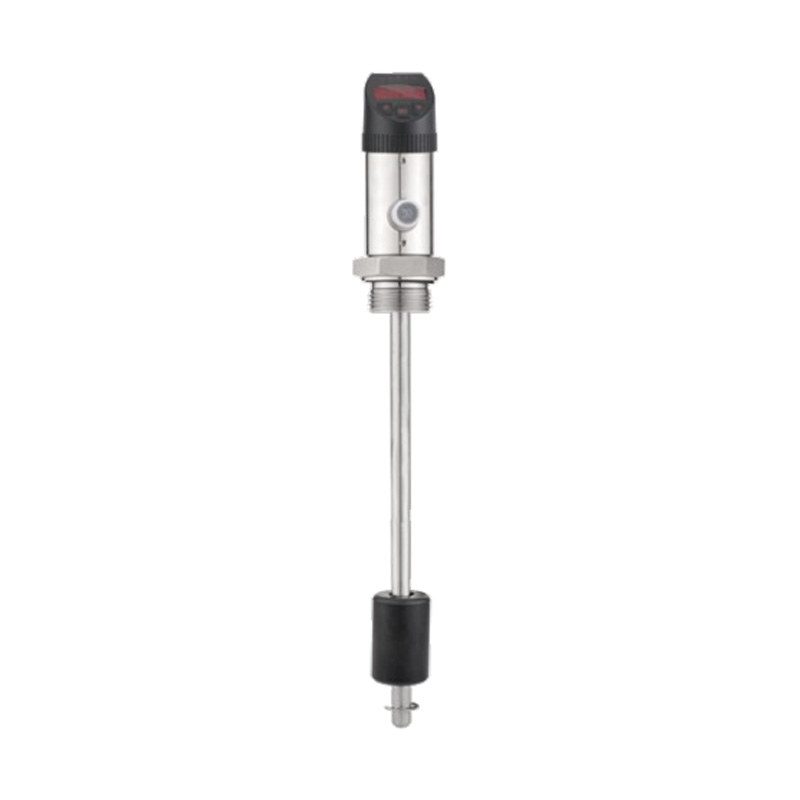
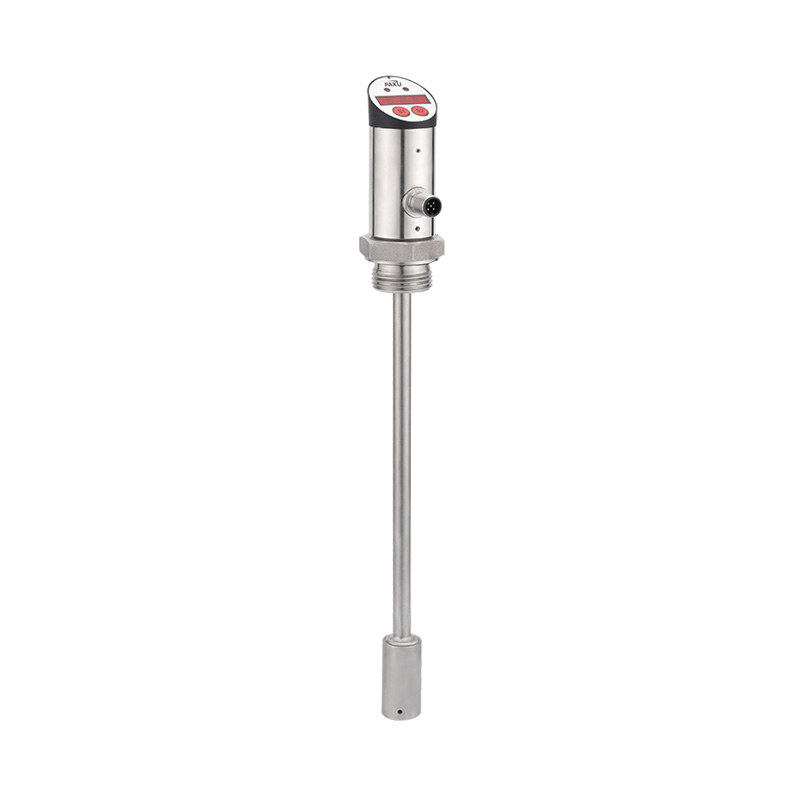
Installation geometry. Top-mounted, side-mounted, and bottom-mounted configurations have different implications for vessel penetration, maintenance access, and measurement performance. Vessels with agitators, internal baffles, or inlet turbulence may require sensor positioning that avoids these disturbances. The electronic digital liquid level switch sensor for industrial systems is available in both top-mount and side-mount configurations to accommodate vessels where access geometry constrains the installation options.
Output signal and system integration. A level switch provides a relay or transistor switching output compatible with most PLC digital input cards. A continuous sensor may output 0–10V, 4–20mA, or a digital protocol. A transmitter standardizes on 4–20mA with optional HART. Confirming that the level control's output signal is compatible with the receiving input—in terms of both signal type and electrical specification—is a prerequisite to successful integration. Compatibility between level sensing and fluid flow control is covered in more detail in electronic flow switches for fluid control and monitoring, which examines how these measurement categories work together in complete fluid management systems.
Hazardous area classification. Installations in locations classified as Zone 0, Zone 1, or Zone 2 (IECEx/ATEX) or Class I Division 1 or Division 2 (NEC) require equipment certified for use in explosive atmospheres. This is a mandatory specification requirement, not an optional upgrade—non-certified equipment cannot legally or safely be installed in classified areas regardless of its other technical merits.
Maintenance and lifecycle cost. Float-type mechanical switches have moving parts that wear and may require periodic replacement of the reed switch assembly or float body. Electronic and non-contact sensors have no moving parts and typically offer longer maintenance-free service lives, offset by higher initial cost. For high-cycle applications—where the switch may actuate hundreds of times per day—the lifecycle cost advantage of electronic sensing often justifies the premium within the first year or two of operation. Evaluating total cost of ownership rather than purchase price alone produces better long-term specification decisions for water level controls in demanding industrial environments.
information
 [email protected]
 +86-13386111894 / +86-021-37566990
[email protected]
 B-4th Floor, Lane 1313, Nanting Road, Nanqiao Town, Fengxian District, Shanghai, China

Product Links