

 +86-13386111894
 Products & Solutions
  en
en English
 Русский
 España
 عرب .
عرب .
If you need any help, please feel free to contact us
inquire
Level Switches: Types, Working Principles & Selection Guide for Industry
What Are Level Switches and Why Industrial Processes Depend on Them
A level switch is an instrument designed to detect when the level of a liquid, powder, or granular solid inside a tank, vessel, or silo reaches a predetermined point. When that threshold is crossed — either rising to a high-level setpoint or falling to a low-level setpoint — the switch opens or closes an electrical contact, triggering a downstream action: starting or stopping a pump, opening or closing a valve, activating an alarm, or initiating a process sequence.
This point-level detection function sits at the foundation of process safety and automation across virtually every industry. Overflow events in chemical storage tanks, dry-run damage to pump equipment, batch overfill in food processing, and reagent depletion in pharmaceutical manufacturing are all failure modes that a correctly specified and installed level switch prevents. The stakes are measurable: unplanned process shutdowns from level control failures cost industrial operators billions of dollars annually in downtime, product loss, and equipment damage.
The market reflects this criticality. According to Research and Markets, the global level sensors and switches market grew from USD 5.76 billion in 2024 to USD 6.13 billion in 2025 and is projected to reach USD 8.30 billion by 2030, expanding at a CAGR of 6.28%. Rising industrial automation, stricter safety regulations across process industries, and the integration of IoT-enabled monitoring into plant infrastructure are driving sustained demand for accurate, reliable level detection technology. Explore the full liquid level switch range to see how different detection technologies map to specific application requirements.
Float-Type Level Switches: The Mechanical Standard
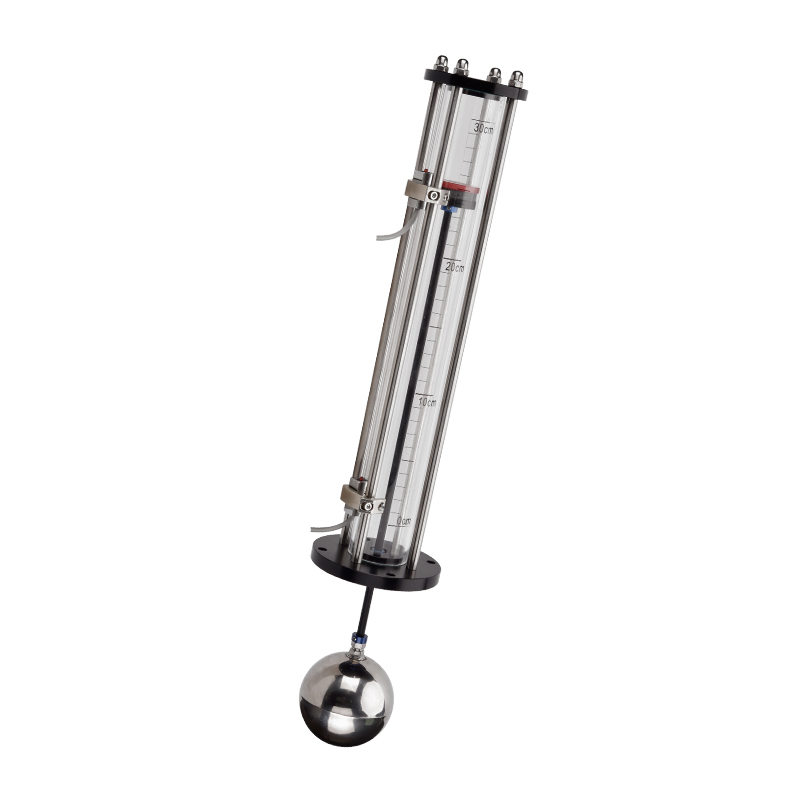
Float-type level switches are the oldest and most widely deployed level detection technology in industrial and commercial applications. Their operating principle is elegantly simple: a buoyant float rises and falls with the liquid surface, and that mechanical motion activates a reed switch, microswitch, or magnetic sensor at the trip setpoint. No external power is required for the sensing element itself, and no complex calibration procedure is needed — the float's position at the desired level determines the switch actuation point.
Float switches are available in several mounting configurations to accommodate different vessel geometries and installation requirements:
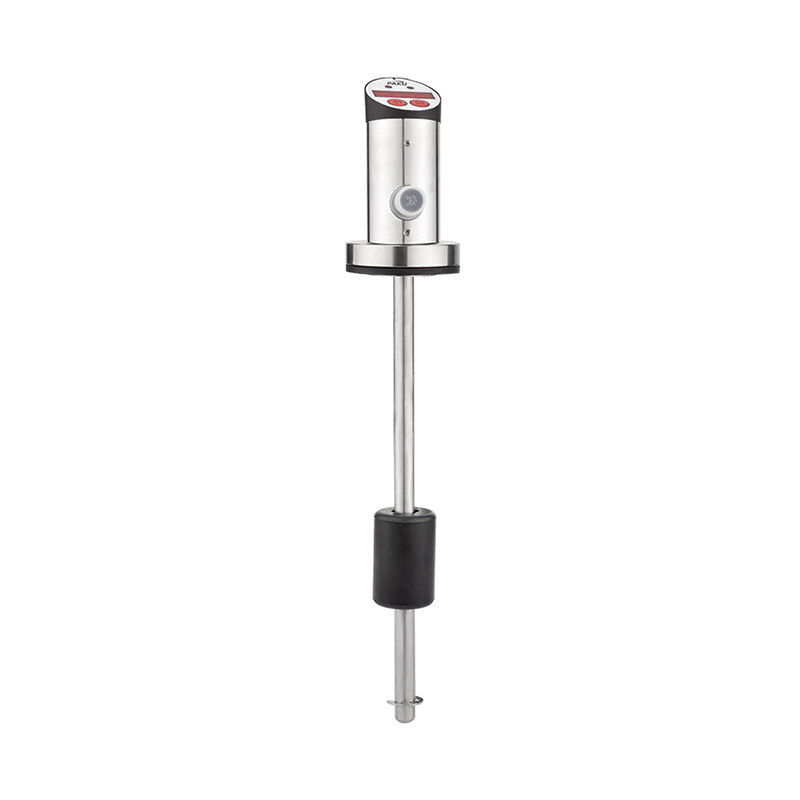
- Vertical top-mount float switches are installed through a fitting at the top of a tank, with the float hanging on a stem or chain into the liquid. They are suited to tanks where side entry is not practical and where the float can move freely through the full operating level range.
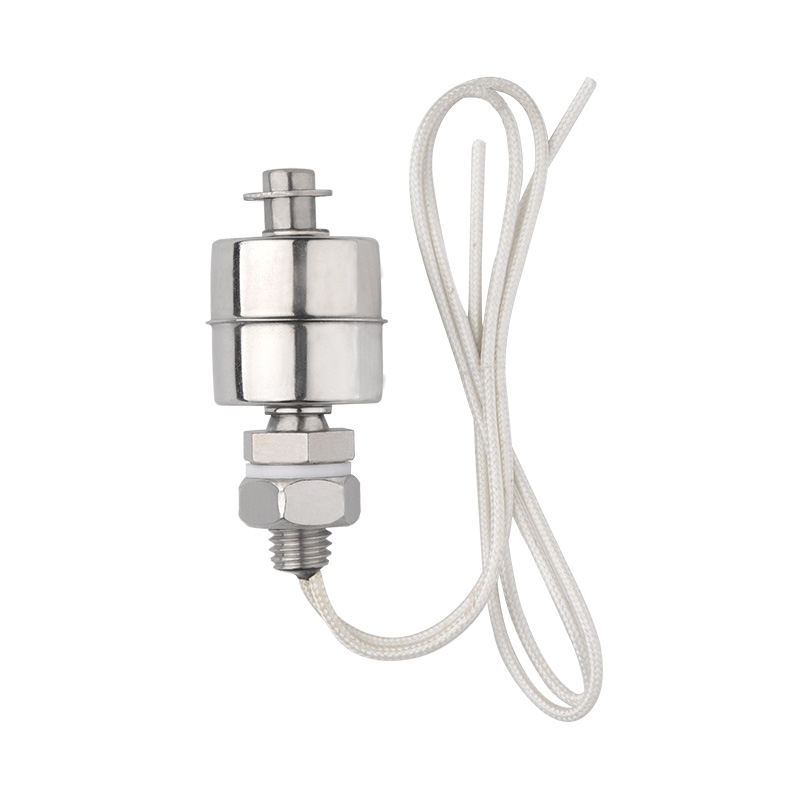
- Horizontal side-mount float switches are installed through the tank wall at the specific level setpoint, with the float swinging upward as liquid rises to actuate the switch. This configuration is ideal for single-point high or low-level alarms in smaller tanks and reservoirs.
- Cable float switches are suspended on a cable from above, floating freely on the liquid surface. As level rises or falls, the cable angle changes and the internal counterweight inside the float tilts to actuate a microswitch.
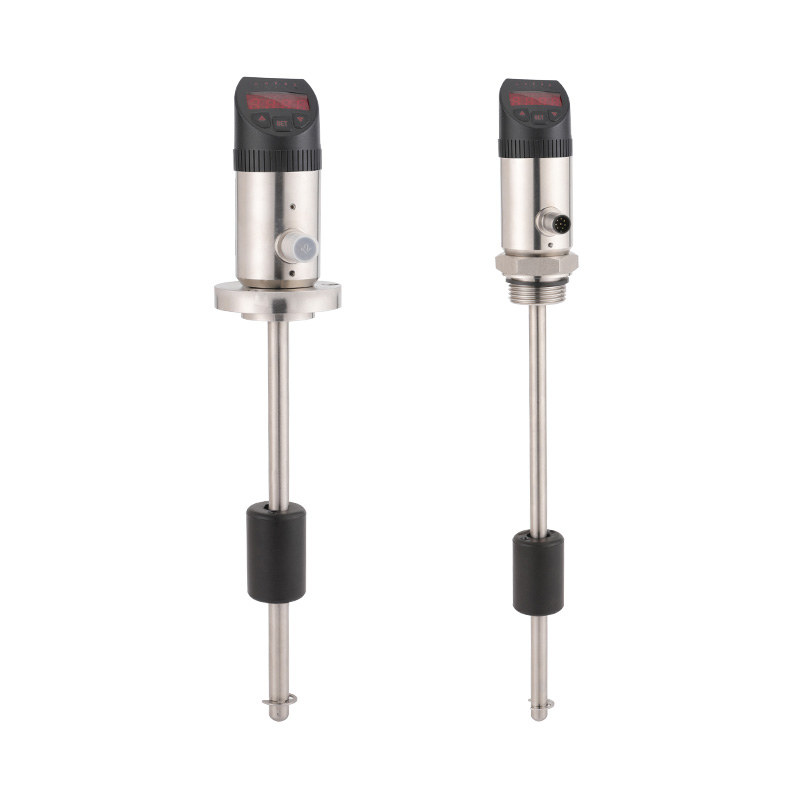
The float-type liquid level switch for standard tank installations delivers reliable point-level detection for water, cooling fluids, light oils, and non-aggressive process liquids across HVAC, water treatment, and general industrial applications. For large open tanks and sumps where the installation point is distant from the liquid surface, the cable float level switch for deep tank applications provides installation flexibility that rigid-stem designs cannot match.
In chemical storage and corrosive fluid applications, standard float switch materials are not sufficient. The anti-corrosion float-type liquid level switch uses chemical-resistant materials throughout the wetted components, maintaining reliable operation in acidic, alkaline, and solvent-based fluid environments where standard polypropylene or brass components would degrade within weeks.
Float switches are cost-effective, easy to install, and require no electrical power for the sensing element. Their primary limitation is mechanical: turbulent liquids, high-viscosity fluids, and media with heavy foam layers can interfere with float movement and generate false trip signals. In these conditions, electronic or vibration-based technologies offer more stable performance.
Electronic Level Switches: Solid-State Precision
Electronic level switches replace the mechanical float-and-switch assembly with solid-state sensing technology — no moving parts, no pivot points, no mechanical wear. This fundamental design difference makes electronic level switches inherently more reliable in applications where mechanical switches fail: turbulent liquids, high-cycle operations, vibrating equipment, or environments where the float assembly would be prone to fouling or jamming.
Several detection principles are used in electronic level switches:
- Optical infrared detection uses a prism-tipped probe where an infrared LED transmits light within the probe body when the probe tip is in air. When liquid contacts the prism, the refractive index changes, disrupting total internal reflection and diverting light away from the receiver. The resulting signal change triggers the switch output. Optical switches operate with no moving parts and respond in milliseconds, making them ideal for fast-cycle applications and small-volume vessels.
- Thermal dispersion (calorimetric) detection uses a heated sensing element that dissipates heat at different rates depending on whether it is in contact with air or liquid. The rate of heat dissipation — which changes instantly when liquid contacts the probe — is measured by an electronic circuit and converted to a switching output. This technology is unaffected by liquid conductivity, color, viscosity, or foam, making it effective across a wide range of media types.
- Magnetic induction detection senses the presence of a conductive or magnetic liquid without requiring direct probe submersion in the process fluid, enabling level detection through tank walls in certain configurations.
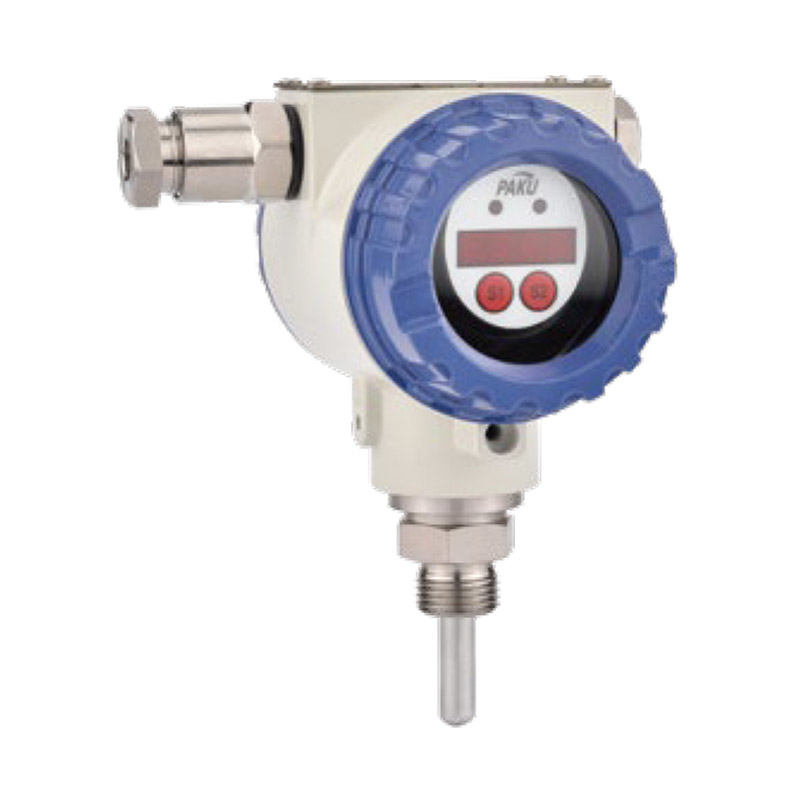
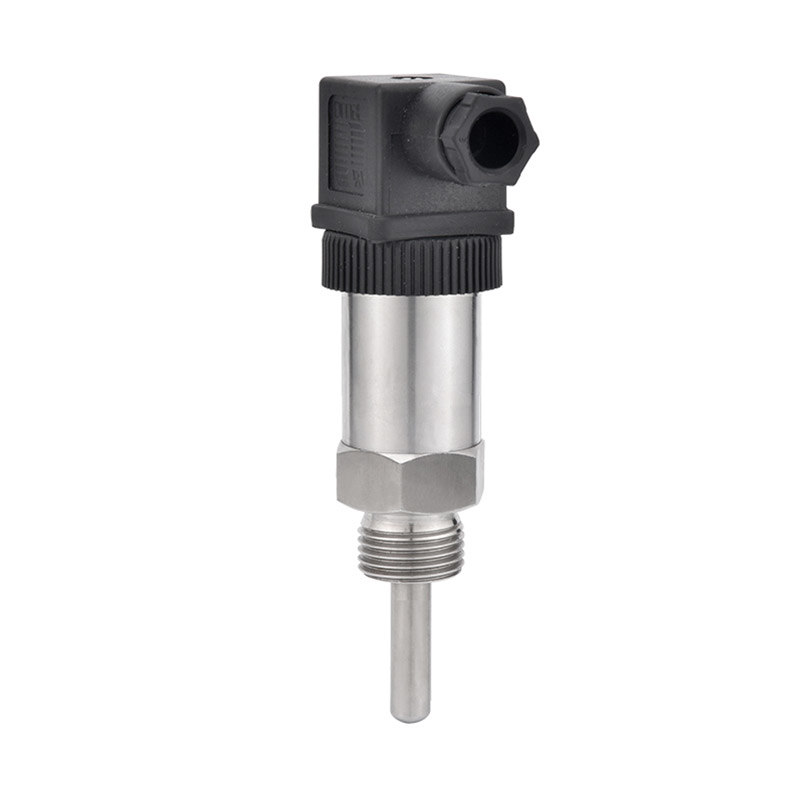
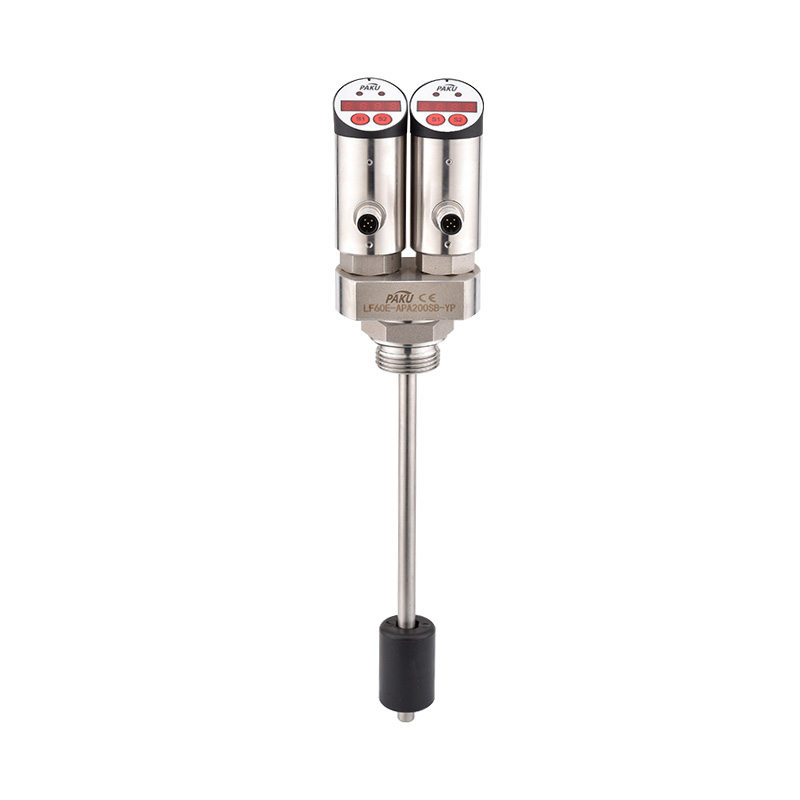
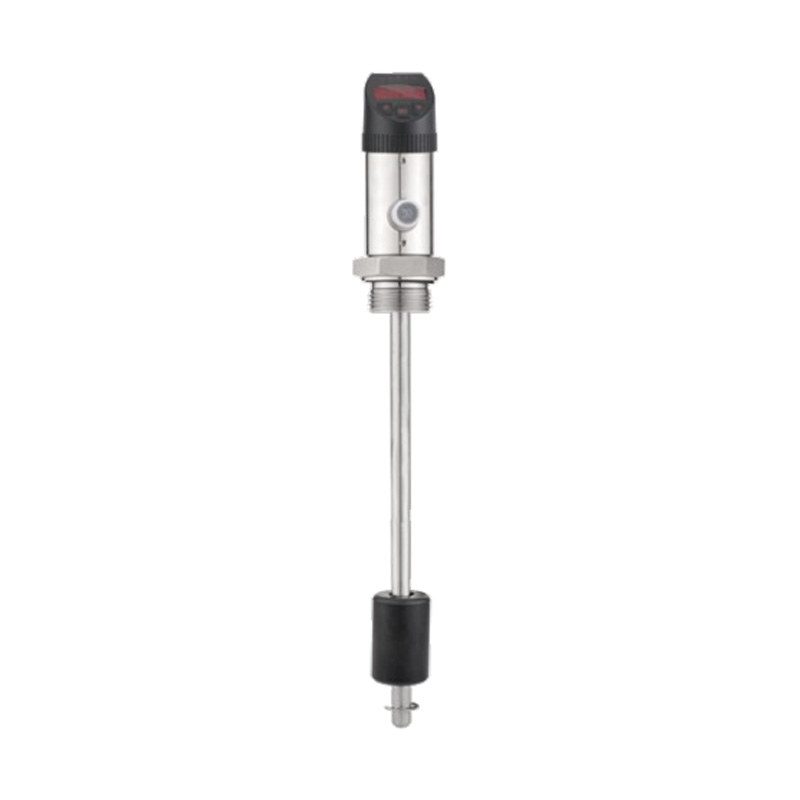
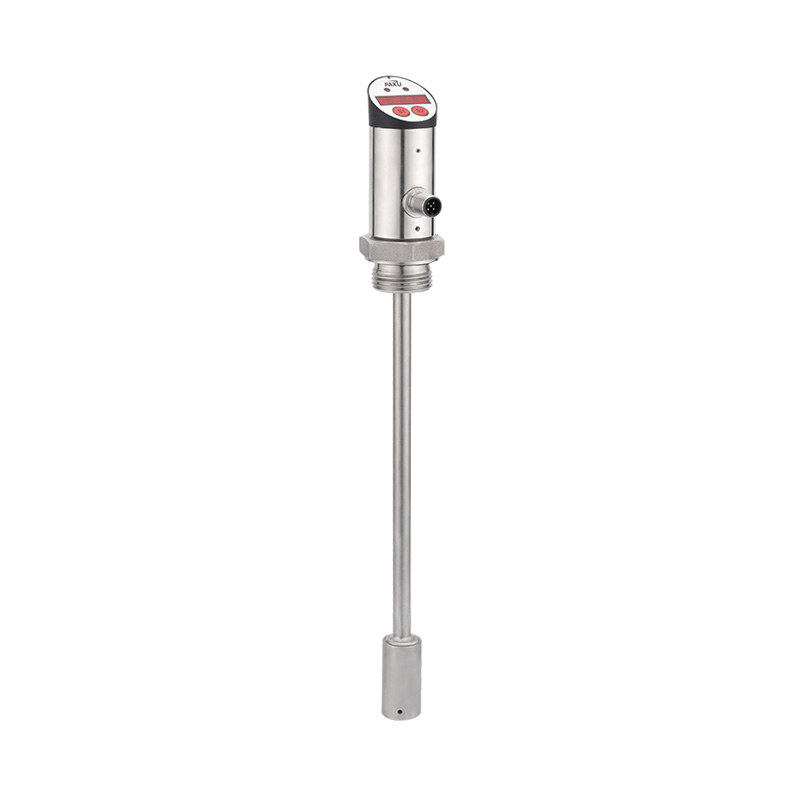
The electronic liquid level switch LF80A provides solid-state point-level detection with digital output, combining high repeatability with resistance to the installation variables that affect mechanical float performance. For applications requiring both level detection and local digital display of process conditions, the electronic liquid level switch sensor LF600 integrates switching function with real-time level indication in a single compact instrument — reducing wiring complexity and panel space in control system installations.
Electronic level switches typically offer faster response times than mechanical alternatives, longer service life due to the absence of moving components, and greater resistance to the effects of liquid turbulence and surface agitation. The trade-off is higher unit cost relative to basic float switches, and a requirement for instrument power supply in all configurations.
Tuning Fork Level Switches: Reliable Detection in Difficult Media
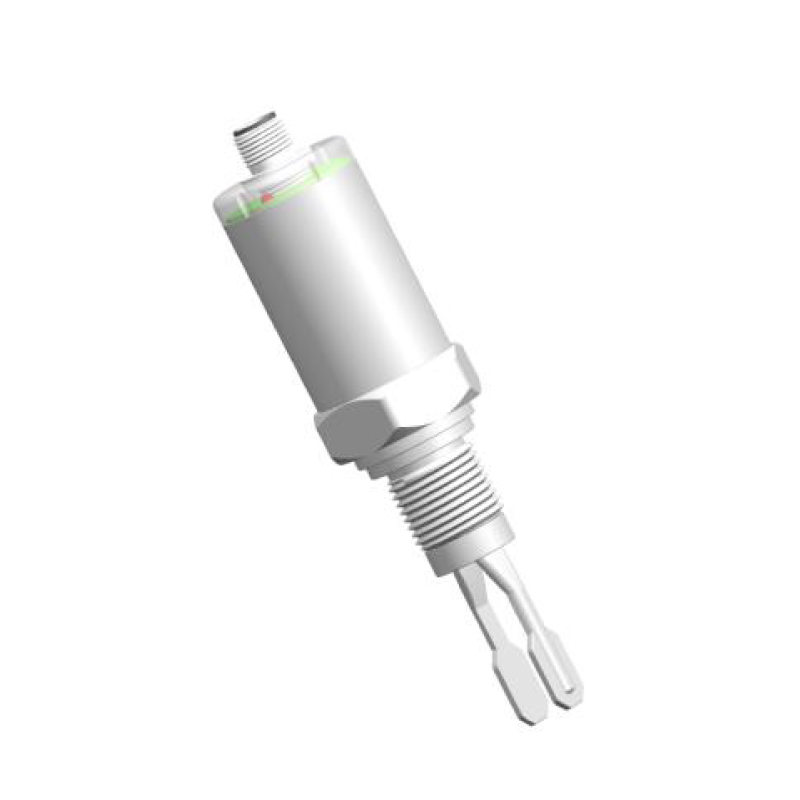
Tuning fork level switches — also known as vibrating fork or vibratory level switches — operate on a resonance-disruption principle that makes them uniquely suited to applications where other technologies struggle. An internal piezoelectric crystal excites a two-pronged fork structure at its natural resonant frequency, typically in the range of 80–120 Hz for liquid applications and higher frequencies for bulk solids. When the fork prongs come into contact with liquid or solid material, the mass loading effect shifts the resonant frequency. The onboard electronics detect this frequency change and trigger the switch output.
Several characteristics of tuning fork technology make it the preferred choice in challenging process conditions:
- Self-cleaning effect. The continuous vibration of the fork prongs resists material buildup and fouling. In applications where viscous liquids, sticky media, or crystallizing products would coat and immobilize a float switch, the vibrating fork continuously shakes off accumulations, maintaining reliable detection without manual cleaning intervals.
- Solid and bulk material detection. Most liquid level switch technologies cannot function reliably in powders, granules, or pellets. Tuning fork switches are used extensively for point-level detection in grain silos, plastic pellet hoppers, cement bins, and pharmaceutical powder vessels — applications where float switches are mechanically impossible and capacitive switches may be affected by varying bulk density.
- High-pressure and high-temperature suitability. Tuning fork probes are structurally robust and available in process connection ratings suitable for pressurized vessels and elevated-temperature services that would damage or compromise float assemblies.
- Hazardous area certification. Tuning fork switches are widely certified for ATEX and IECEx hazardous area classifications, making them the standard choice for level detection in flammable liquid storage, chemical reactors, and oil and gas processing environments.
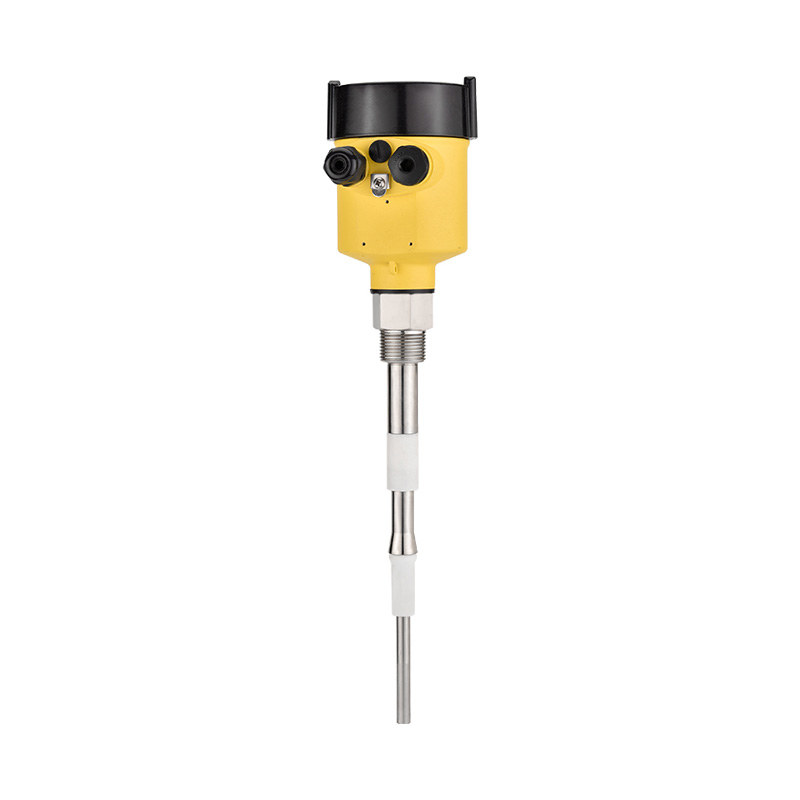
The tuning fork level switch for solid and liquid media delivers vibration-based point-level detection across liquids, slurries, and bulk solids in a single instrument platform — providing process engineers with a consistent detection technology that can be standardized across multiple measurement points regardless of media type.
Capacitive and Ultrasonic Level Switches: Advanced Detection Solutions
For applications where contact between the sensing element and the process fluid is problematic — due to contamination risk, extreme chemical aggression, hygiene requirements, or media that would foul or damage immersed probes — capacitive and ultrasonic technologies offer non-contact or minimally invasive alternatives.
Capacitive Level Switches
Capacitive level switches detect the change in electrical capacitance that occurs when a liquid or solid material contacts or approaches the sensing electrode. The electrode and the tank wall (or a reference electrode) form a capacitor; when process media — which has a higher dielectric constant than air — enters the capacitor field, the capacitance increases measurably. This change is detected by the onboard electronics and converted to a switching output.
Capacitive technology is particularly effective for:
- High-purity and hygienic applications where an immersed mechanical probe would create contamination risk
- Highly viscous or adhesive media that would coat and immobilize float or optical probes
- Through-wall detection on plastic tanks where no process penetration is permissible
- Small vessels and compact installations where the sensor footprint must be minimized
The miniature capacitive level switch provides compact, non-invasive point-level detection with high sensitivity — enabling installation on vessels too small for conventional float or fork switches and in systems where process penetrations are restricted.
Ultrasonic Level Switches
Ultrasonic level switches emit high-frequency acoustic pulses downward from a transducer mounted above the liquid surface. The time elapsed between pulse emission and echo return from the liquid surface is measured and converted to a distance calculation. When the calculated liquid level crosses the configured setpoint threshold, the switch output changes state.
Because the ultrasonic transducer never contacts the process fluid, this technology is inherently suited to aggressive chemical applications, high-temperature liquids, slurries, and materials that would foul or corrode contact-type sensors. It also enables continuous level measurement and switch functionality in a single instrument — the switch setpoint is a configurable parameter rather than a fixed mechanical position, allowing setpoint adjustment without physical reinstallation.
The ultrasonic level sensor for non-contact measurement delivers reliable, contact-free level detection across open tanks, chemical storage vessels, and process sumps — combining switch output with continuous level monitoring for applications requiring both alarm function and real-time level data in a single installation point.
Selecting the Right Level Switch: A Practical Decision Framework
With five distinct level switch technologies available — each with specific strengths, limitations, and optimal application ranges — selection requires a structured evaluation of process conditions rather than defaulting to the most familiar or lowest-cost option. The wrong technology choice does not simply underperform; it fails, generating either false trips that disrupt production or missed trips that allow overflow, dry-run, or contamination events to occur.
| Technology | Best For | Limitations | Typical Industries | Moving Parts |
|---|---|---|---|---|
| Float Switch | Clean liquids, low-cost installations, simple on/off control | Turbulent or viscous fluids; high-cycle applications | HVAC, water treatment, general industrial | Yes |
| Electronic Switch | High-cycle applications, compact vessels, fast response | Higher cost; requires instrument power | Machinery cooling, hydraulics, food & beverage | No |
| Tuning Fork | Viscous/sticky liquids, bulk solids, hazardous areas | Not suited to very low-density media | Chemical, oil & gas, grain/powder silos | No |
| Capacitive | Hygienic service, through-wall detection, adhesive media | Affected by conductive media coating electrodes | Pharma, food processing, plastics | No |
| Ultrasonic | Aggressive chemicals, non-contact requirement, continuous + switch | Foam or vapor layers can interfere with echo return | Chemical storage, wastewater, mining | No |
Beyond technology type, five additional factors should drive the selection process:
- Process media properties. Viscosity, density, conductivity, chemical composition, and the presence of foam, suspended solids, or entrained gas all determine which detection principles will function reliably. A technology that excels with clean water may fail completely with a 500 cP adhesive liquid.
- Temperature and pressure ratings. The switch must be rated for the maximum operating temperature and pressure of the vessel, with appropriate safety margins. Exceeding rated conditions damages sensing elements, seals, and electrical components — often in ways that are not immediately visible but that progressively degrade detection reliability.
- Process connection and mounting orientation. Tank geometry, available nozzle locations, and required insertion depth all constrain which switch configurations can be physically installed. Horizontal float switches cannot be installed in vessels with insufficient clearance for float arm travel; top-mount sensors require adequate vertical clearance above the process connection.
- Output signal and control system compatibility. Level switches are available with relay outputs, NPN/PNP transistor outputs, NAMUR outputs for intrinsically safe circuits, and 4–20 mA analog outputs for continuous level plus switch function. Verify compatibility with the PLC, DCS, or relay panel input specifications before ordering.
- Hazardous area certification requirements. Installations in Zone 1, Zone 2, or Division 1/2 classified areas require switches with appropriate ATEX, IECEx, or FM certification. Installing a non-certified instrument in a hazardous area is both a safety violation and an insurance liability.
For applications requiring not just point-level switching but continuous level measurement with 4–20 mA or digital output, the liquid level transmitter range provides hydrostatic pressure, ultrasonic, and float-based continuous measurement options that complement point-level switch installations in tanks requiring both alarm and inventory monitoring functions. Combining a level switch with a level transmitter on the same vessel — the switch providing safety-critical alarm and pump control, the transmitter providing continuous inventory data — is the standard instrumentation architecture for critical process vessels across chemical, water treatment, and oil and gas applications.
information
 [email protected]
 +86-13386111894 / +86-021-37566990
[email protected]
 B-4th Floor, Lane 1313, Nanting Road, Nanqiao Town, Fengxian District, Shanghai, China

Product Links