

 +86-13386111894
 Products & Solutions
  en
en English
 Русский
 España
 عرب .
عرب .
If you need any help, please feel free to contact us
inquire
Capacitance Level Sensor: How It Works, Advantages & Selection Guide
What Is a Capacitance Level Sensor?
A capacitance level sensor is an electronic instrument that determines the level of a liquid or bulk solid inside a tank or vessel by detecting changes in electrical capacitance. Unlike mechanical approaches that rely on floats or moving parts, the capacitance sensor has no components that shift, wear, or jam — making it one of the most reliable level measurement technologies available for demanding industrial environments.
The principle has been in industrial use for decades, yet its relevance has only grown. As processes become more automated and fluids more chemically aggressive, the ability to measure level continuously and accurately without physical contact with a moving mechanism becomes increasingly valuable. From chemical storage tanks to food processing lines, liquid level sensors for industrial applications based on capacitance technology now represent one of the most widely deployed sensing methods across global industry.
How Capacitance Level Sensors Work
The operating principle draws directly from fundamental electrical theory. A capacitor consists of two conductive electrodes separated by a dielectric material — any substance that does not conduct electricity but can store electrical energy in a field between the plates. The amount of capacitance a capacitor can store depends on three factors: the surface area of the electrodes, the distance between them, and the dielectric constant of the material between them.
In a capacitance level sensor, the probe electrode forms one plate of the capacitor. The tank wall — or a second reference electrode in non-metallic vessels — forms the other. When the tank is empty, the dielectric material between the electrodes is air, which has a very low dielectric constant. As liquid rises and fills the space around the probe, it replaces air with a fluid that has a significantly higher dielectric constant. This substitution causes a measurable increase in capacitance, which the sensor's electronics convert into a proportional level signal. As defined by established electrical engineering principles, capacitive sensing technology can detect and measure anything with a dielectric constant different from air — a property that gives it remarkable versatility across fluid types.
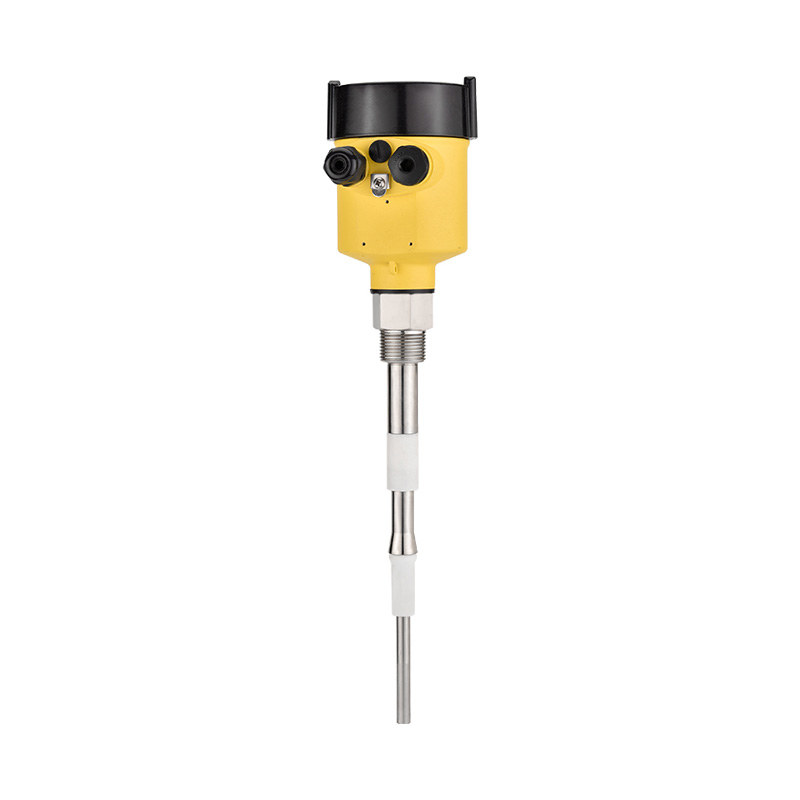
Two fluid categories require slightly different approaches. For non-conductive liquids such as oils, fuels, and solvents, the fluid itself acts as the dielectric between the probe and the tank wall, and the measurement is straightforward. For electrically conductive fluids — acids, alkalis, water-based solutions — the sensor probe is coated with an insulating material such as PTFE or polyethylene. This coating becomes the functional dielectric, and the conductive fluid acts as the second electrode. The result is equally accurate measurement without any direct electrical contact between the sensor electronics and the process fluid. For a deeper look at how these principles extend to non-contact configurations, the capacitive and non-contact level sensor guide covers the full spectrum of detection modes.
Key Advantages Over Other Level Sensing Technologies
Capacitance level sensors compete with several well-established technologies, each with its own strengths. Understanding where capacitance excels — and where alternatives may be more appropriate — is essential for making a well-informed specification decision.
| Technology | Moving Parts | Handles Viscous/Corrosive Fluids | Continuous Measurement | Typical Limitation |
|---|---|---|---|---|
| Capacitance | None | Yes (with coating) | Yes | Dielectric constant must be known |
| Float / Magnetic | Yes | Limited | Yes | Mechanical wear; jamming risk |
| Ultrasonic | None | Indirect (non-contact) | Yes | Foam, turbulence, vapor interference |
| Hydrostatic Pressure | None | Limited by material | Yes | Density changes affect accuracy |
| Vibrating Fork | Minimal | Yes | Point detection only | Not suited for continuous level output |
The absence of moving parts is the most operationally significant advantage of the capacitance approach. Mechanical level switches — those based on floats or rotating paddles — are vulnerable to fouling, wear, and failure in fluids that are viscous, crystallizing, or chemically aggressive. A capacitance probe has no such vulnerability. Correctly specified and coated, it operates reliably in acids, alkalis, sludges, and high-temperature media where float-based devices would fail within months. For applications requiring reliable point-level detection and alarm triggering, liquid level switches for point detection and control provide a practical solution for high/low level indication without mechanical complexity.
Compared to ultrasonic sensors, capacitance probes are unaffected by foam layers, vapor blankets, or surface turbulence — conditions that routinely cause ultrasonic signals to scatter or misread. This makes capacitance sensors the more dependable choice in agitated tanks, sealed vessels, or processes where the liquid surface is not clean and flat.
Common Industrial Applications
The combination of chemical resistance, high accuracy, and mechanical simplicity makes capacitance level sensors suitable across a remarkably wide range of industries and process conditions.
- Oil and Gas: Continuous level monitoring of crude oil, refined fuels, and hydraulic fluids in storage tanks and process vessels. Capacitance probes handle the low dielectric constants of petroleum products with high repeatability and are routinely deployed in hazardous-area classified installations with appropriate explosion-proof housings.
- Chemical Processing: Strong acids, alkalis, solvents, and reactive intermediates demand sensors that resist chemical attack. PTFE-coated capacitance probes are the standard choice for aggressive media where stainless steel alone is insufficient. Applications range from bulk acid storage to reaction vessel level control.
- Food and Beverage: Hygienic process requirements make the absence of moving parts especially valuable. Capacitance sensors measure levels of beverages, dairy products, edible oils, and syrups without the risk of mechanical contamination.
- Water and Wastewater Treatment: From clean water reservoirs to activated sludge tanks and chemical dosing systems, capacitance technology provides reliable level measurement across the full range of water treatment process stages.
- Pharmaceutical Manufacturing: Strict batch accuracy and cleanability requirements are met by hygienic-grade capacitance probes, which can be sterilized in place and leave no dead zones where product can accumulate.
For a detailed look at how capacitance principles apply specifically to fuel storage and liquid level control systems, the capacitive fuel level sensors and liquid level controls guide covers fuel-specific selection criteria, accuracy benchmarks, and system integration considerations. A broader view of the complete liquid level measurement product range illustrates how capacitance-based sensing fits within a wider portfolio of level technologies.
Insertion vs. Immersion: Choosing the Right Configuration
Capacitance level sensors are available in two principal physical configurations, each suited to different tank geometries and measurement requirements.
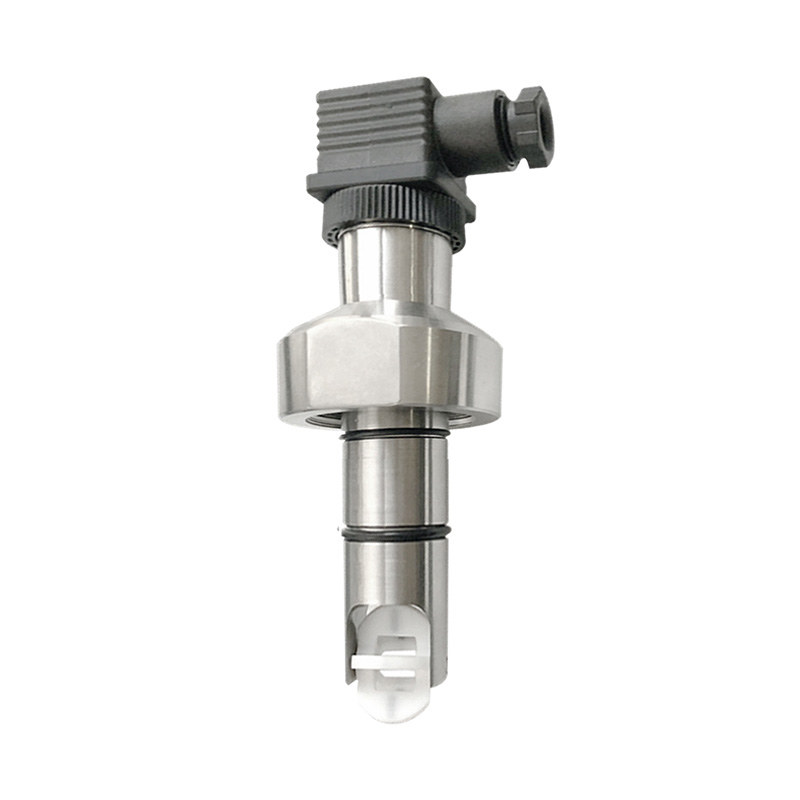
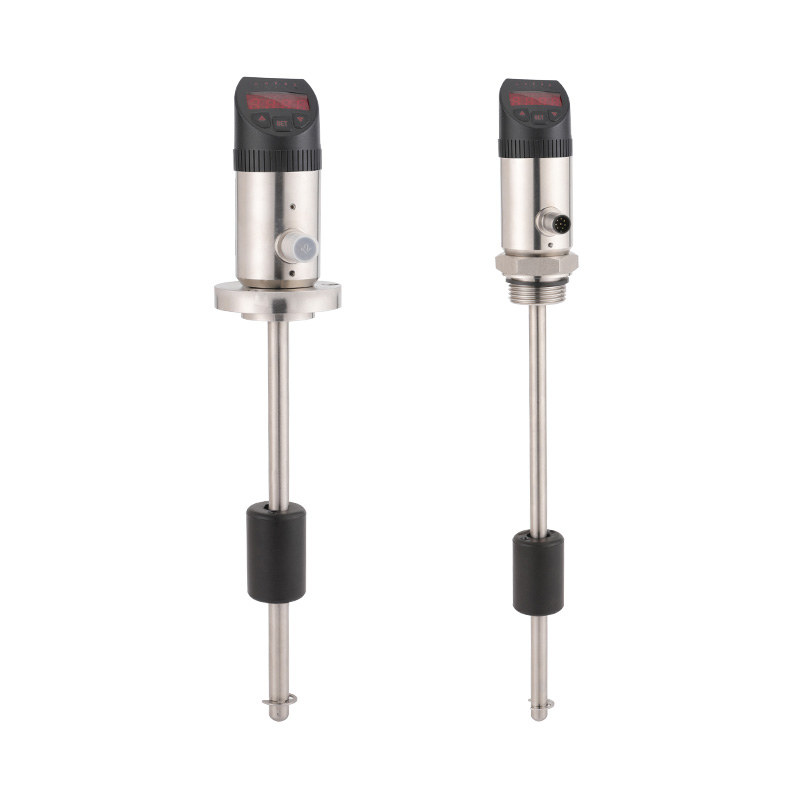
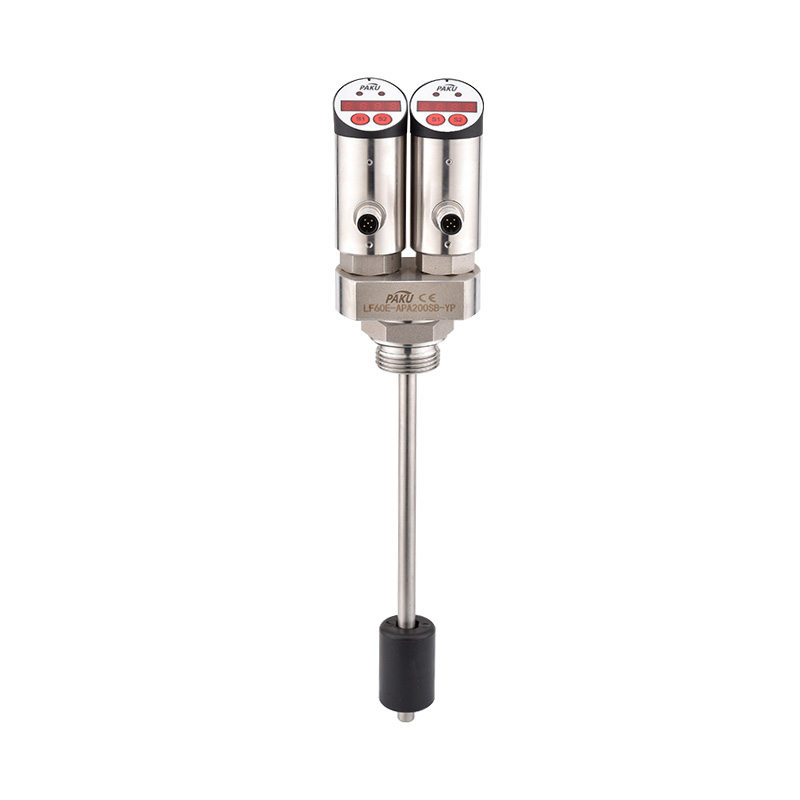
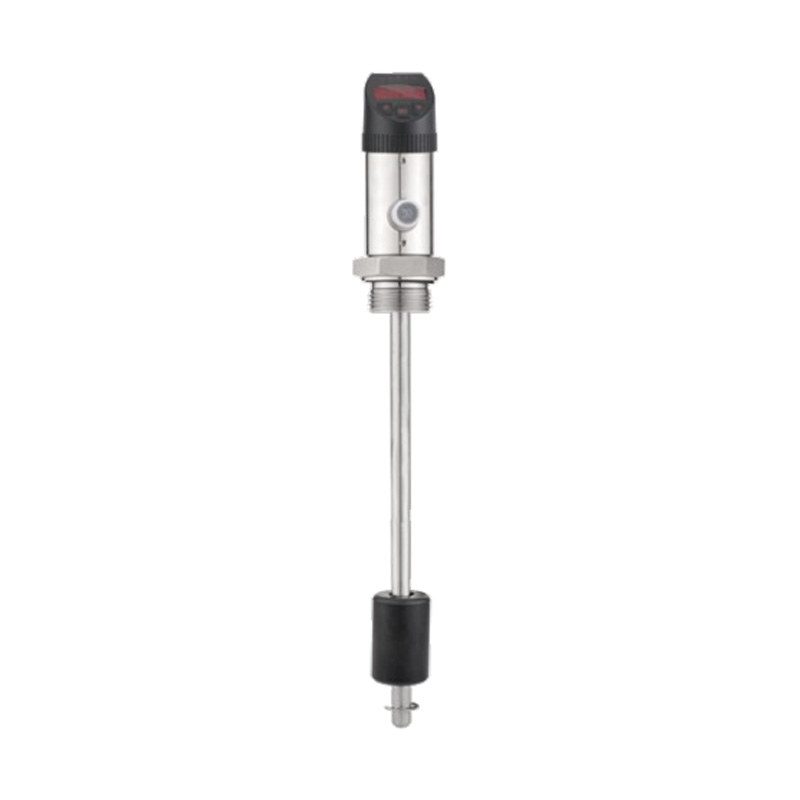
Insertion-type sensors are installed through a fitting in the side or top of the vessel, with the probe extending into the medium to a defined depth. They are well-suited to smaller tanks, pipeline installations, and applications requiring level measurement at a specific point rather than across the full vessel height. The probe length can be selected to match the measurement range, and most insertion sensors are designed for straightforward replacement without draining the vessel.
Immersion-type sensors — also referred to as submersible probes — are designed to be fully submerged, with the entire sensing element immersed in the liquid. The sensor measures the capacitance change along its full length, providing a continuous level signal proportional to the depth of liquid above the probe base. This configuration is standard in deep wells, large storage tanks, and any application where the full measurement range spans several meters of liquid column.
The choice between configurations depends primarily on tank depth, mounting access, and whether point detection or continuous output is required. In many installations, both types serve complementary roles: an immersion probe for continuous process monitoring, and a separate point-level device for high-level alarms or pump control.
Factors to Consider When Selecting a Capacitance Level Sensor
Specifying the correct sensor requires matching its technical parameters to the actual process conditions — not the idealized design case. Several variables consistently determine whether a capacitance sensor will perform reliably over its service life.
- Fluid dielectric constant: The sensor must be calibrated for the dielectric constant of the specific fluid. If the dielectric constant of the process medium varies significantly with temperature or concentration, the sensor's accuracy will drift accordingly. Some advanced units include automatic compensation for known dielectric variations.
- Fluid conductivity: Conductive fluids require an insulated probe. The insulation material — PTFE, polyethylene, or ceramic — must be compatible with the chemical and thermal properties of the fluid.
- Temperature and pressure range: Process temperatures above 200°C or high-pressure sealed vessels impose specific requirements on probe materials and seal integrity. Always verify that the sensor's rated temperature and pressure envelope covers the full range of operating conditions, including upset scenarios.
- Build-up and coating tendency: Some fluids deposit layers on the probe surface over time. Most modern capacitance sensors incorporate circuitry to compensate for gradual build-up, but in severe fouling applications, probe geometry and surface finish should be carefully evaluated.
- Output signal and communication protocol: Capacitance sensors are available with analog outputs (4–20 mA), digital switch outputs, and fieldbus communications. For continuous monitoring integrated into a SCADA or PLC system, selecting the output format that matches the existing control infrastructure avoids costly interface conversions.
For processes that require not just level measurement but standardized transmission of level data to remote control systems, liquid level transmitters for continuous measurement output convert sensor signals into standardized 4–20 mA or digital outputs suitable for direct integration with process control infrastructure. Matching the right sensor technology to the right process condition — from probe material through output protocol — is what separates a reliable long-term installation from a recurring maintenance headache.
information
 [email protected]
 +86-13386111894 / +86-021-37566990
[email protected]
 B-4th Floor, Lane 1313, Nanting Road, Nanqiao Town, Fengxian District, Shanghai, China

Product Links