

 +86-13386111894
 Products & Solutions
 en
 English
 Русский
 España
 عرب .
If you need any help, please feel free to contact us
inquire
How Does a Float Sensor Work? Working Principle, Types, and Selection Guide
A lift station pump runs dry for twenty seconds and the mechanical seal is gone. A chemical tank overflows for one minute and fumes fill the containment area. Both failures happen daily on industrial sites, and both can be prevented by a device that costs a fraction of the repair bill: a float sensor.
Float sensors have served the process industry for decades because their principle is simple and their failure modes are predictable. The question of how a float sensor works usually comes up during level switch selection, replacement of a failed unit, or new tank specification. This guide covers the working principle, the common types, and the selection criteria that matter in real installations.
What Is a Float Sensor?
A float sensor is a level measurement device that uses buoyancy to detect the position of a liquid surface inside a tank, vessel, or pipe. It has three basic elements: a float that moves with the liquid level, a switching or sensing element, and a housing that protects the contacts from the process environment.
Float sensors are divided into two functional groups. Point level sensors report when the liquid reaches a specific level, such as a high alarm or low alarm. Continuous sensors provide a level reading across the operating range of the tank. For point level detection, the float sensor is usually the most economical and field-reliable option available.
How Does a Float Sensor Work?
The working principle starts with buoyancy. A float with a density lower than the liquid rides on the surface. When the level rises, the float rises; when the level falls, the float falls. The float carries a permanent magnet, and the switching element is a reed switch mounted inside a guide stem or switch body. The reed switch is a pair of ferromagnetic contacts sealed in a glass tube. When the magnet comes close, the contacts pull together and the circuit closes. When the magnet moves away, the contacts open. This arrangement requires no external power at the sensing point, which makes it intrinsically simple and safe for most industrial applications.
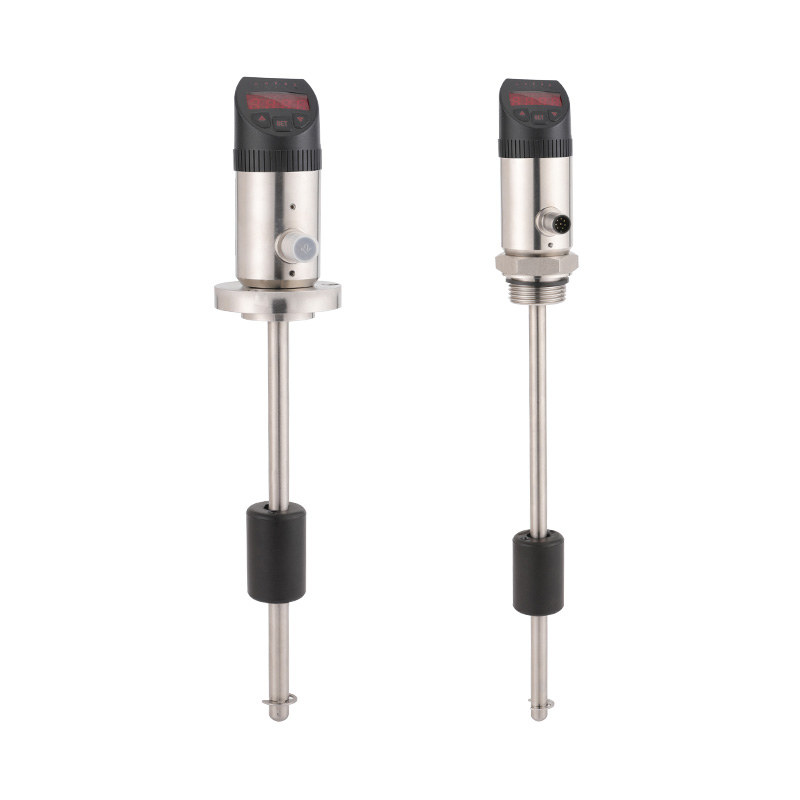
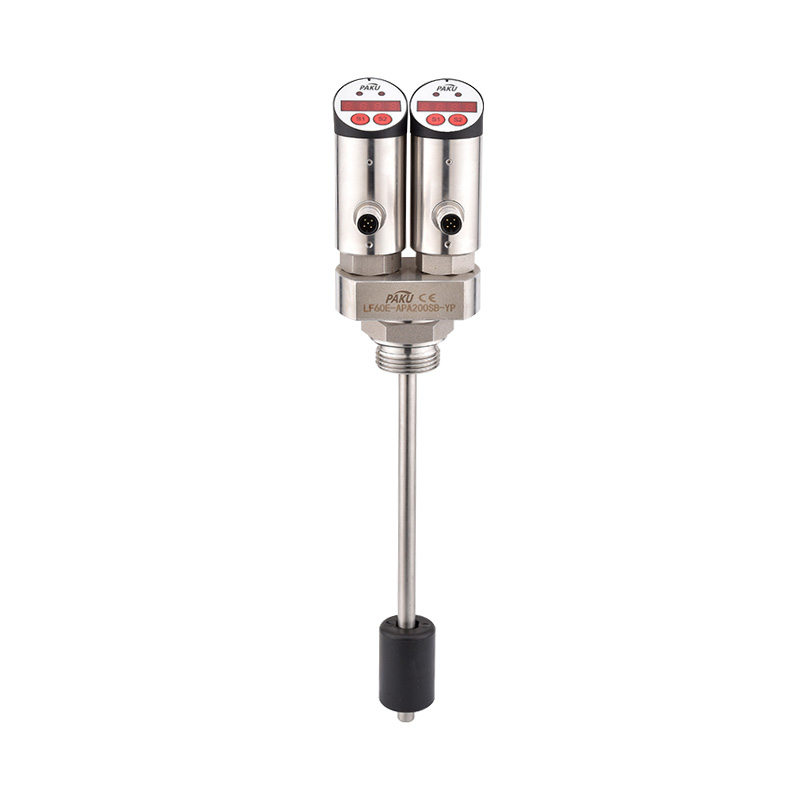
In a vertical stem-mounted sensor, the float slides along a rigid stem and the reed switch sits inside the stem at the desired trip point. A single stem can hold several reed switches to provide multiple level alarms. For continuous measurement, some float sensors use a chain of reed switches connected to a resistor network; the output is a stepped resistance or voltage that a controller converts into a level reading. This is why continuous float sensors are less accurate than radar or pressure transmitters but much simpler to install and maintain.
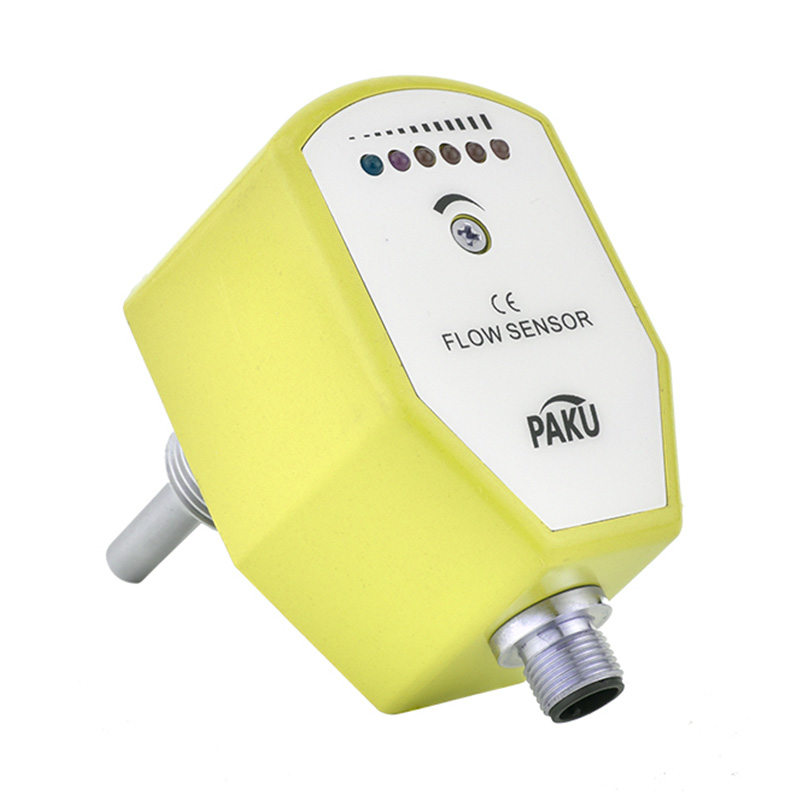
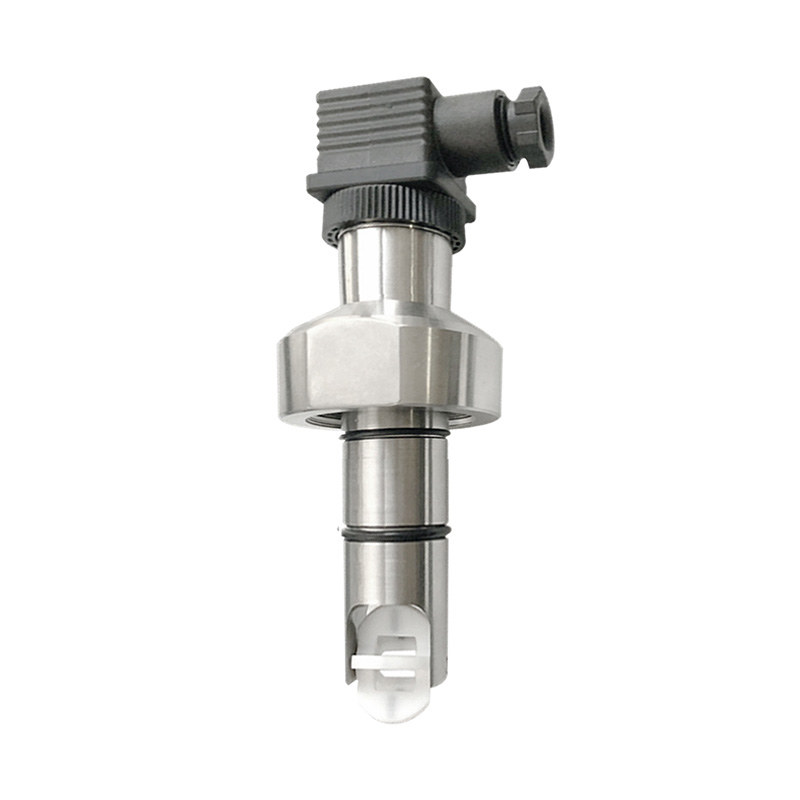
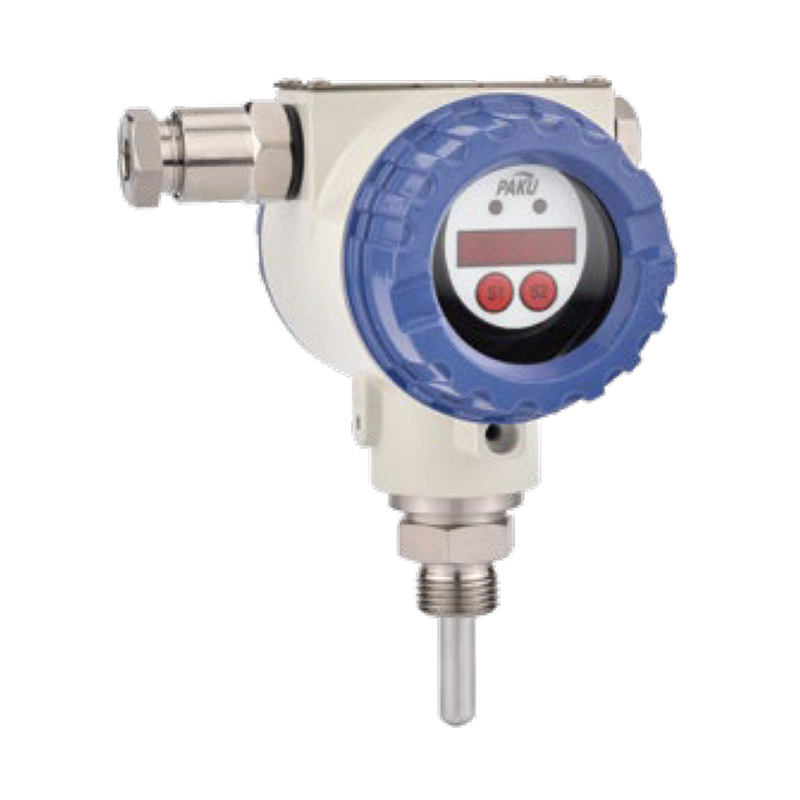
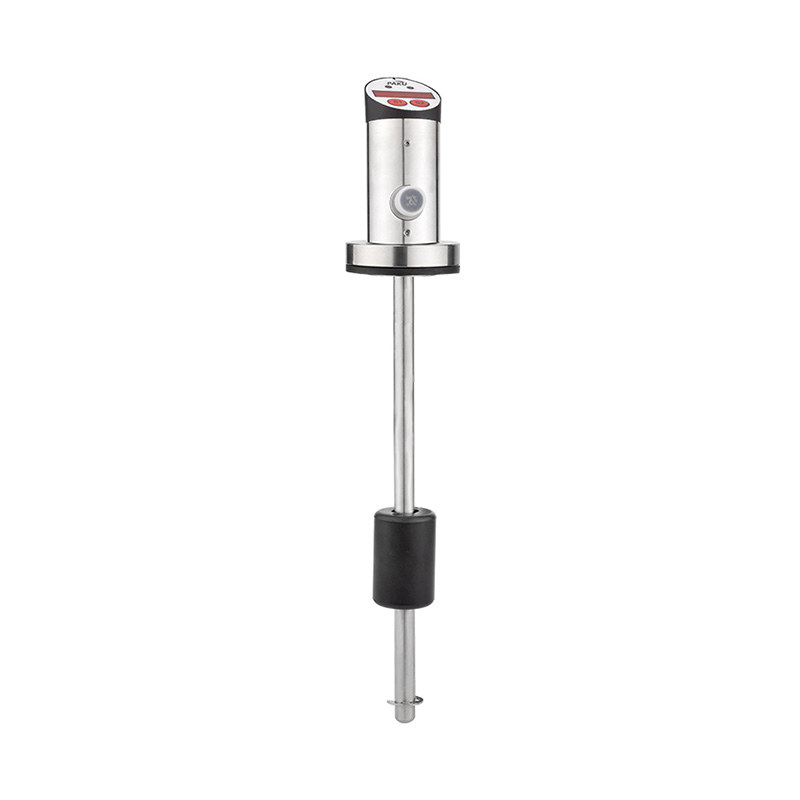
The electrical configuration matters as much as the mechanism. A normally open sensor closes the circuit when the liquid reaches the trip level. A normally closed sensor opens the circuit at the trip level. For fail-safe pump protection, a normally closed sensor is typically used so that a broken cable or loss of power stops the pump.Industrial Float Level Sensor with Normally Open and Normally Closed OptionsThis product page covers a range of industrial sensors and controllers. Since the preceding text explains fail-safe wiring, the float sensor shown here is relevant for pump protection and level switching in demanding environments like steel processing.View Product →

Common Types of Float Sensors
Float sensors are manufactured in several mechanical layouts, and the choice depends on tank geometry, space, and process conditions.
Vertical stem-mounted float sensors
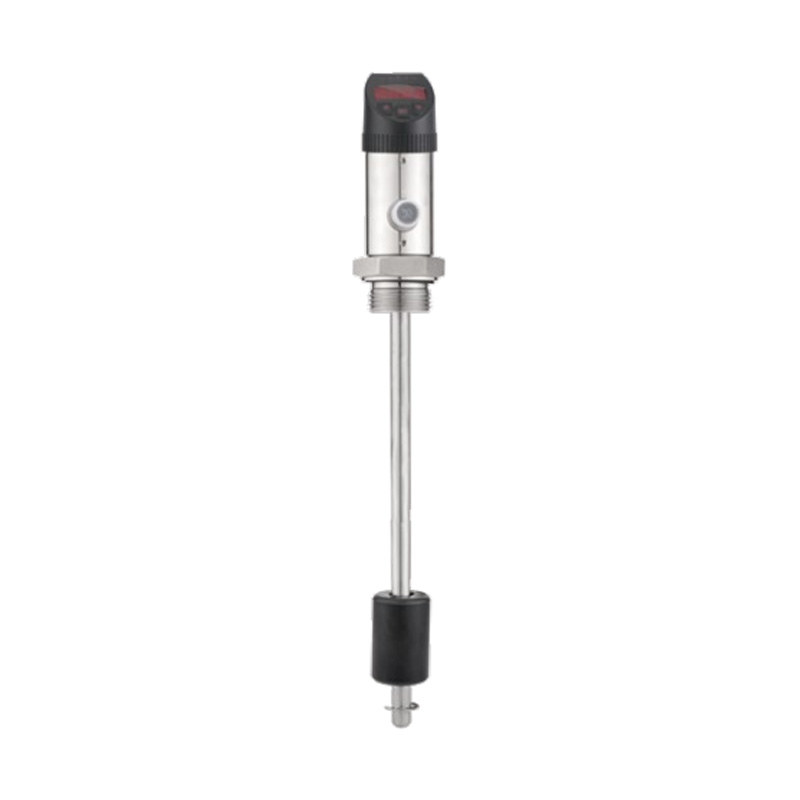
These are the most common type in industrial equipment. The float slides on a rigid stem installed vertically in the tank. The switching point is set by the stem length and the position of the reed switch. This design works well in small and medium tanks and is easy to mount from the top or side.
Cable-suspended float switches
The switch body hangs from a cable and tilts as the liquid level changes. A counterweight or an angled float ensures that the tilt occurs at the desired level. These are common in sumps, sewage lift stations, and open basins. They are inexpensive and adjustable, but they need free swinging space and can be affected by turbulence.
Compact and miniature float switches
These are used in dosing pumps, lubrication systems, and analytical instruments where space is restricted. A small float rides on a short stem, and some models detect level changes of only a few millimeters. The short measuring span is the main limitation.
Displacement float sensors
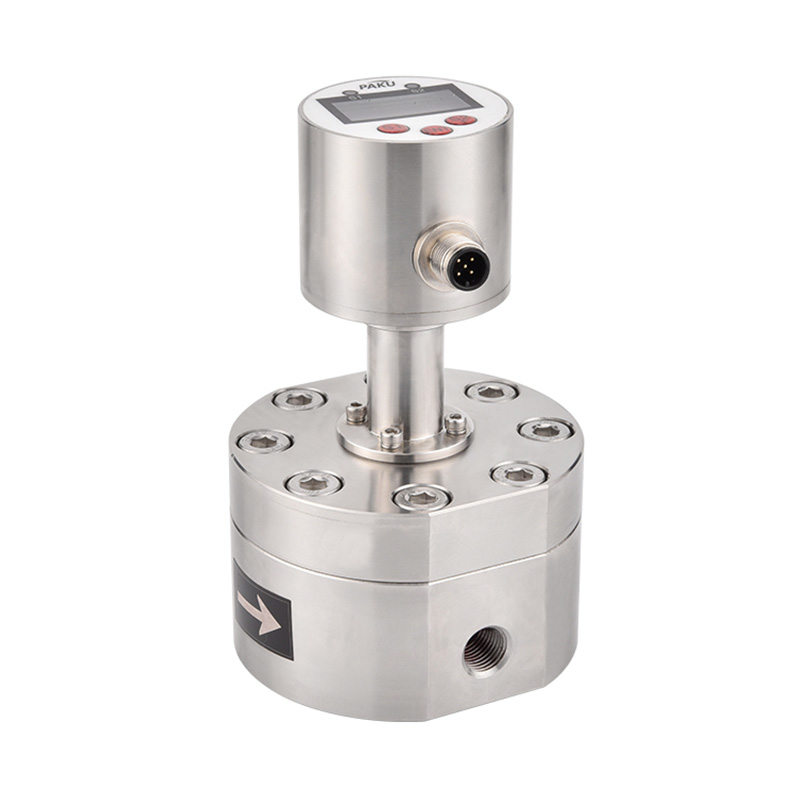
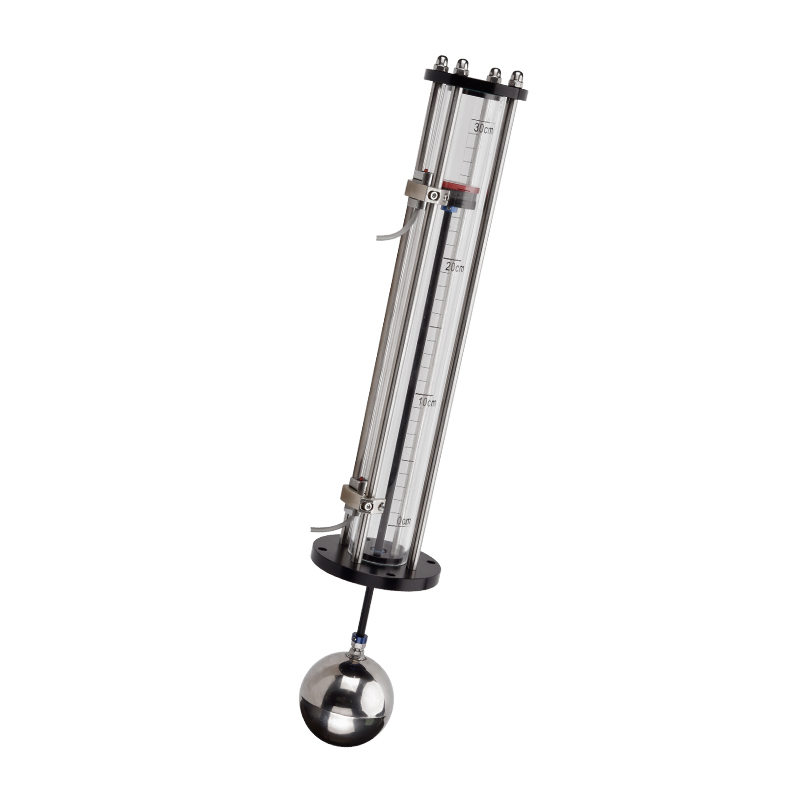
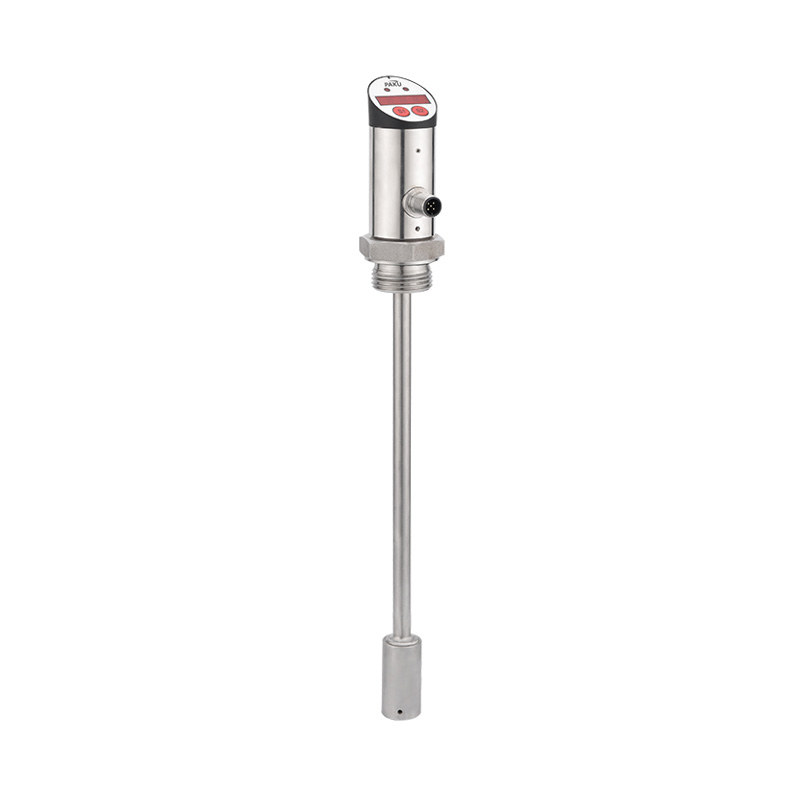
A displacement sensor uses a heavy displacer suspended in the liquid instead of a float on the surface. As the level changes, the buoyant force on the displacer changes, and the sensor converts that force change into a level signal. This design handles foam and turbulence better and can measure the interface between two liquids such as oil and water.Displacement-Type Liquid Level Sensor for Interface and Foam ApplicationsThis sensor is presented after a discussion of displacement technology, which suits foam, turbulence, and oil-water interface measurement. It is worth viewing because it addresses level sensing where standard floats may be unreliable.View Product →
| Type | Output | Typical accuracy | Best for | Main drawback |
|---|---|---|---|---|
| Vertical stem-mounted | Point or multi-point | +/-3 mm | Small and medium tanks | Needs vertical access |
| Cable-suspended | Point | +/-10 mm | Sumps and lift stations | Needs swinging space |
| Compact miniature | Point | +/-1 mm | Dosing systems, machinery | Short measuring span |
| Displacement | Continuous | +/-1% of span | Interface, foamy liquids | Higher cost |
Typical Applications
Float sensors protect equipment and keep processes within safe limits. In water and wastewater facilities, they control fill pumps, empty sumps, and trigger high-level alarms in lift stations. In hydraulic and lubrication systems, they warn when the oil level drops below the pump inlet. In the food and beverage industry, they monitor cleaning solution tanks and ingredient storage vessels.
Our industrial applications page shows how these sensors are deployed across sectors. In a cooling water circuit, for example, a float sensor prevents the circulation pump from running dry. In a chemical storage area, it closes a fill valve before the tank overflows.
How to Select a Float Sensor
The selection process narrows down to five practical questions.
- What is the liquid? Check specific gravity and chemical compatibility. A float designed for water may not float in a lighter liquid, and aggressive chemicals can attack the float material and seals.
- What are the temperature and pressure? Each model has a maximum rating. Exceeding it causes seal failure and erratic switching.
- Point level or continuous measurement? If you only need a high alarm or a dry-run interlock, a point level switch is sufficient. Continuous level tracking requires a different sensor design.
- What mounting orientation fits the tank? A vertical stem needs top access. A cable switch needs space below the mounting point. A compact side-mount switch suits limited access.
- Is the process foamy or turbulent? Foam can make a free-floating ball produce false readings. Turbulence can make a cable switch chatter. In these conditions, use a displacement sensor or install a stilling well.
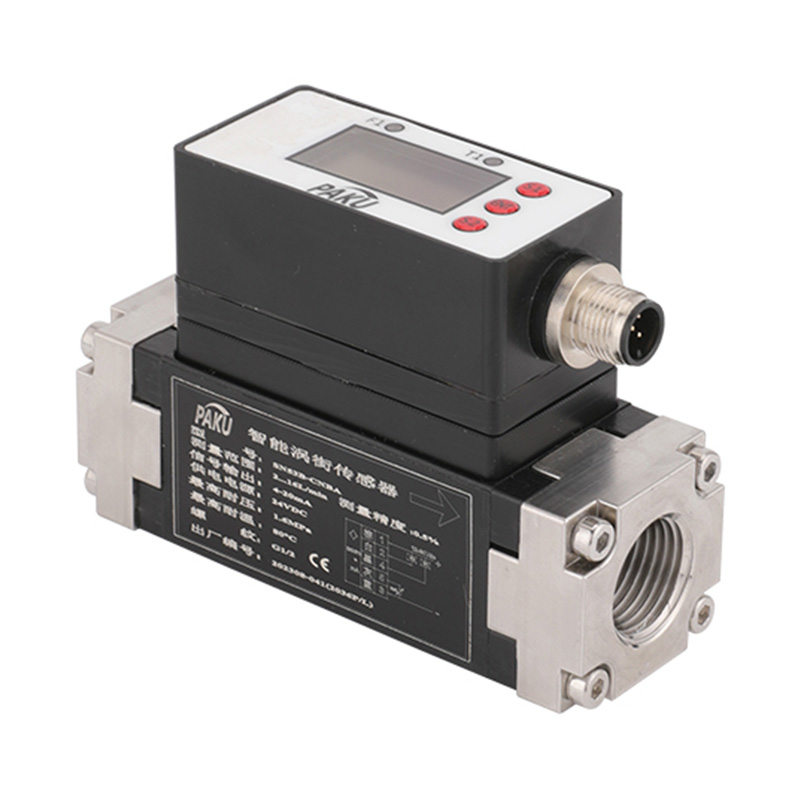
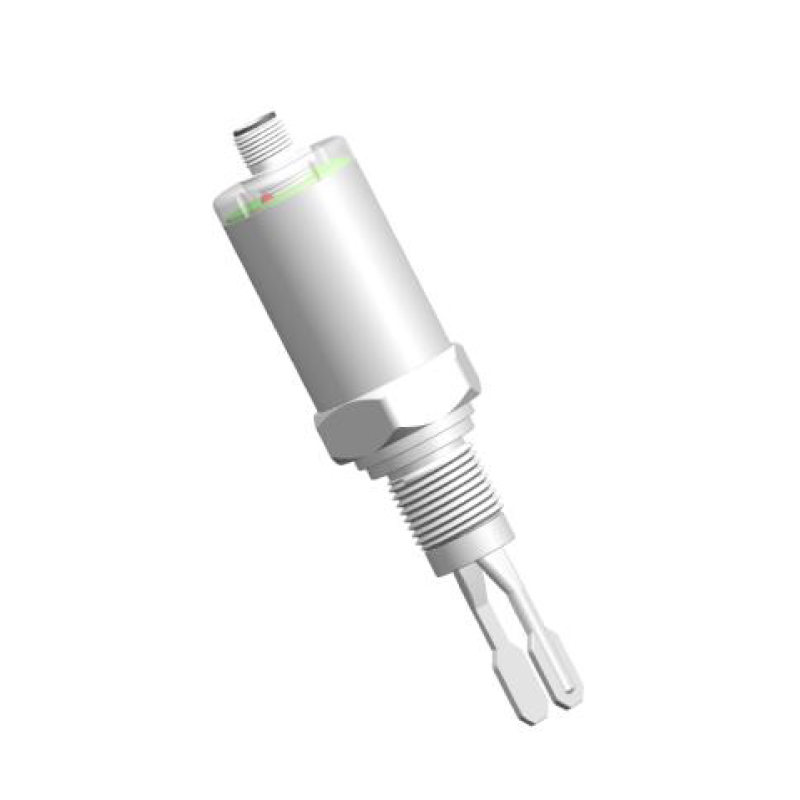
For aggressive liquids and high precision requirements, an anti-corrosion displacement sensor is a dependable choice in chemical tank farms and pharmaceutical buffer storage, where the cost of a false level reading is high.Anti-Corrosion Displacement Level Sensor for Chemical and Pharmaceutical TanksPlaced after a note on aggressive liquids and precision, this sensor is a dependable option for chemical tank farms and pharmaceutical buffer storage. Review it if false level readings are costly and corrosion resistance is required.View Product →
Installation and Maintenance Considerations
Most field failures of float sensors come from installation mistakes rather than from the sensor itself. The float must travel freely without touching the tank wall, heating coils, or agitator blades. The stem must stay vertical unless the datasheet says otherwise; a tilt of a few degrees changes the switching point. Cable-suspended switches should be anchored so the cable cannot tangle.
The most common maintenance issue is fouling, where scale, crystals, or an oily film changes the float density and slows its movement. Regular cleaning is necessary in processes with hard water, syrup, or polymer solutions. On the electrical side, the reed switch has no mechanical wear, but its contacts can be damaged by overcurrent. Use a relay or PLC input between the sensor and the load; never switch a motor winding directly with a reed switch.
A float sensor is one of the simplest and most durable level measurement technologies available. It uses the same buoyancy principle that has been applied in industry for over a century, converted into a clean electrical signal. For point level control it is cheap, reliable, and easy to diagnose. For continuous measurement it is less precise than guided-wave radar or a pressure transmitter, but it is also far easier to install and maintain.
Start your selection with the liquid, the process conditions, and the mounting layout. Those three factors eliminate most unsuitable models immediately. If you are evaluating a specific level control task, our about page describes our manufacturing and quality approach, and our team can help you confirm the right model for your tank geometry.
information
 [email protected]
 +86-13386111894 / +86-021-37566990
[email protected]
 B-4th Floor, Lane 1313, Nanting Road, Nanqiao Town, Fengxian District, Shanghai, China

Product Links