

 +86-13386111894
 Products & Solutions
  en
en English
 Русский
 España
 عرب .
عرب .
If you need any help, please feel free to contact us
inquire
Capacitive Liquid Level Sensors: How They Work & How to Choose
How Capacitive Sensing Detects Liquid Level
A capacitive liquid level sensor works because liquid isn't just liquid to an electric field — it's a dielectric material. The probe forms one plate of a capacitor, the tank wall or a second probe forms the other, and whatever sits between them determines how much charge that capacitor can hold. Air has a low dielectric constant near 1; most liquids sit far higher. As liquid rises up the probe, it physically replaces air between the plates, and capacitance climbs in direct proportion to how much of the probe is submerged.
The relationship follows a simple equation: C = (ε0 × εr × A) / d, where εr is the liquid's dielectric constant, A is the submerged electrode area, and d is the gap between plates. Because εr is the only variable that changes with the medium, every capacitive sensor in our full liquid level sensor lineup has to be calibrated to the specific liquid it will measure — a sensor set up for water reads nonsense in oil, and vice versa.
Point-Level Switches vs. Continuous Level Transmitters
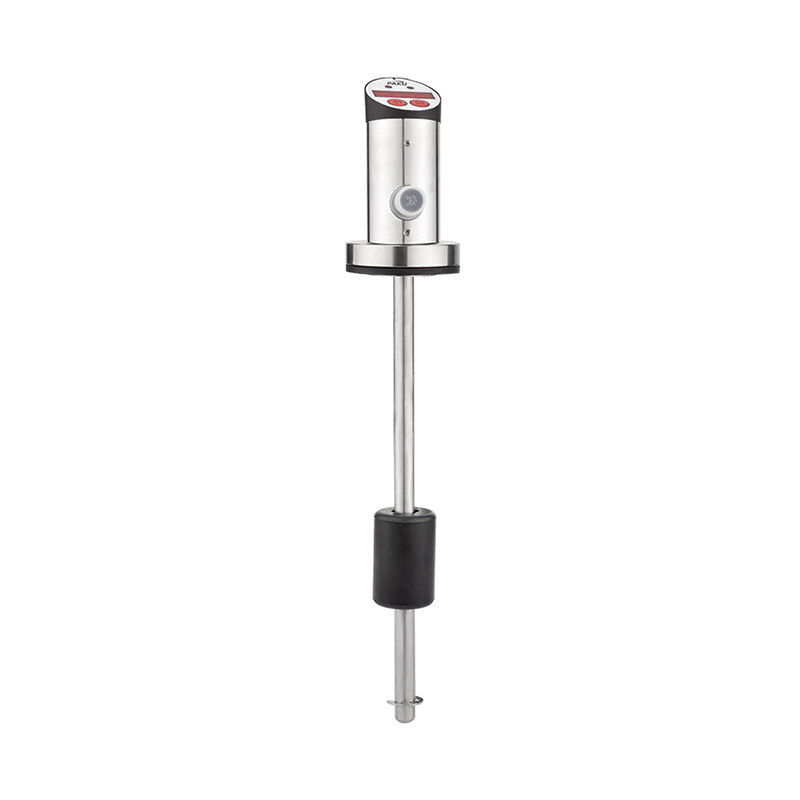
"Capacitive liquid level sensor" covers two genuinely different circuit designs, and mixing them up leads to the wrong product getting specified. A point-level switch detects a single threshold — full, empty, or a specific fill line — and outputs a binary signal when capacitance crosses a preset value. Our miniature capacitive level switch for point-level detection works exactly this way: when the induction rod is covered by material, capacitance rises until it hits the circuit's set point, triggering a high-frequency resonance that switches an NPN or PNP output.
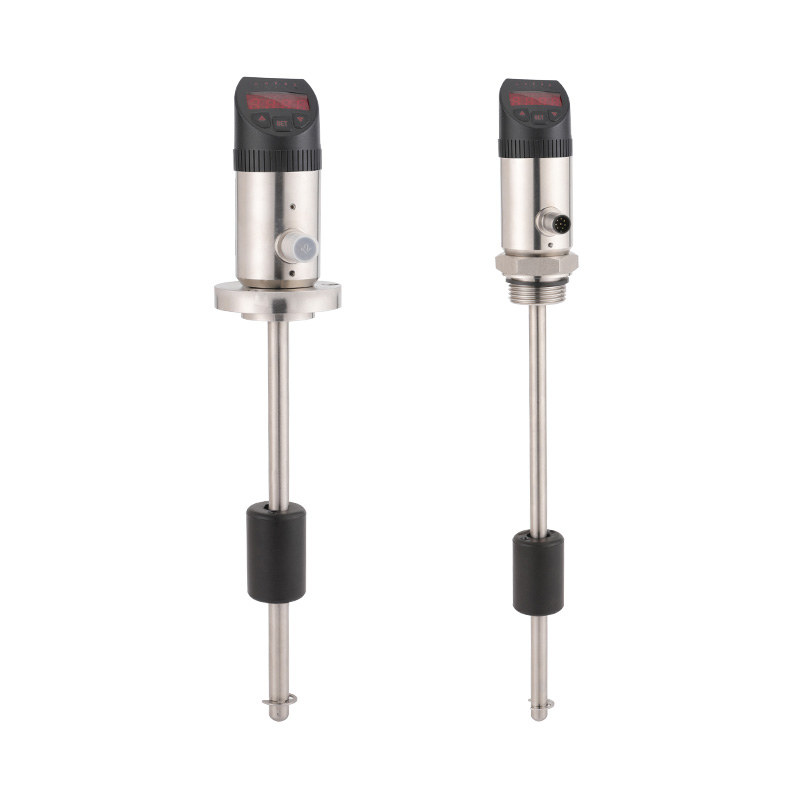
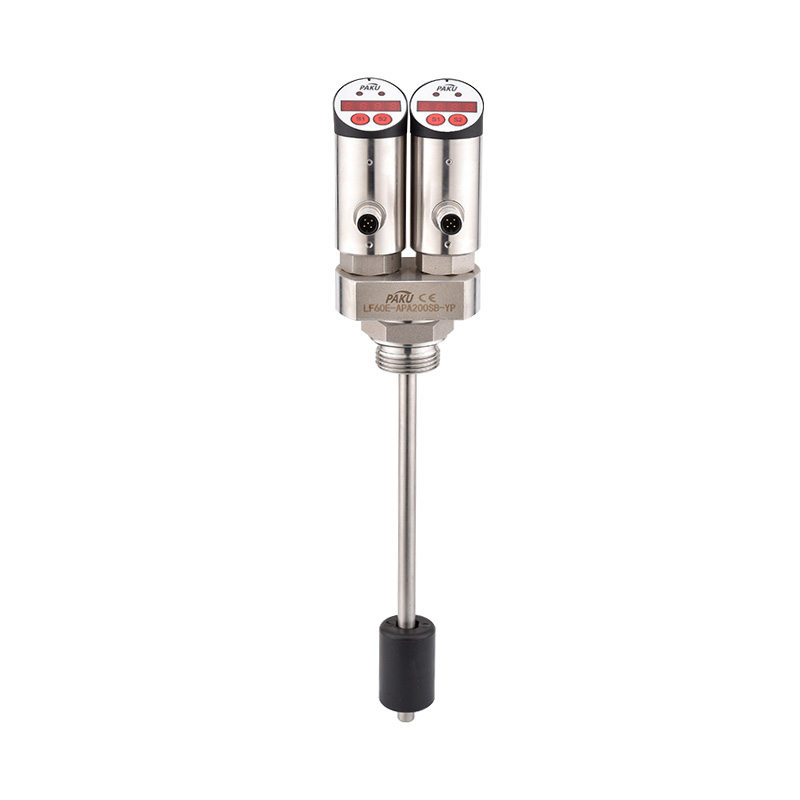
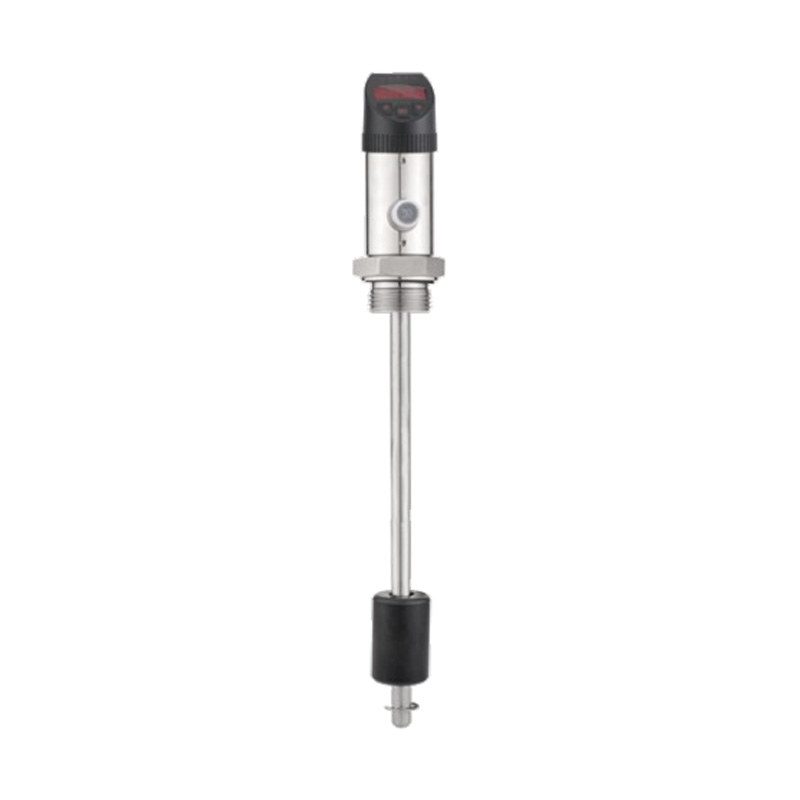
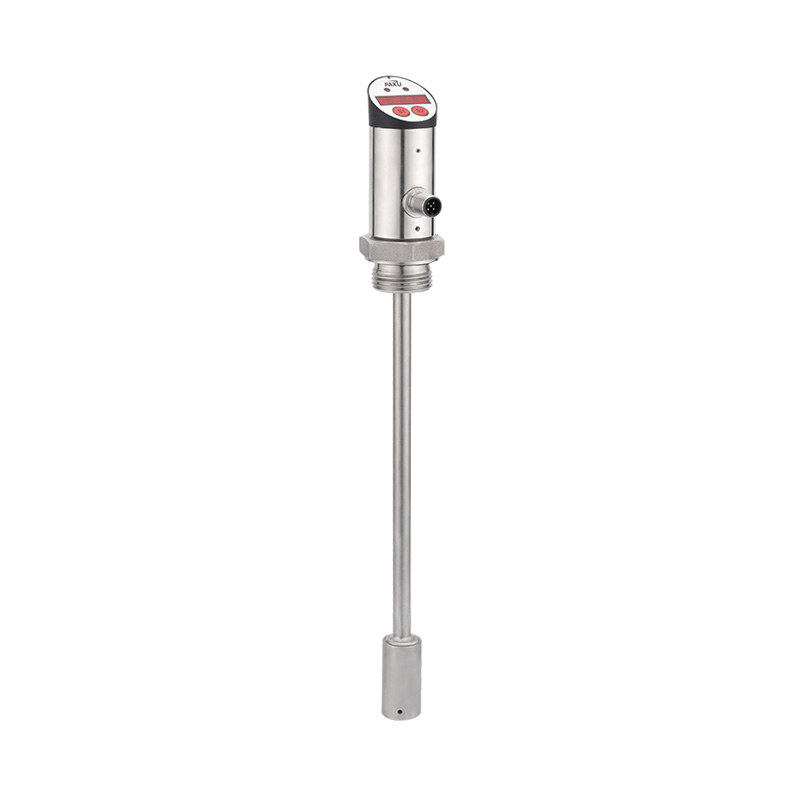
A continuous transmitter instead tracks capacitance across the full probe length and outputs a proportional 4-20 mA signal representing the entire fill range, not just a single trip point. Our LFP series RF capacitance level transmitter for continuous measurement measures the capacitance difference between an empty probe and a fully covered one — recommended within a ΔC range of 25 to 2000 pF — and converts that span into a real-time level reading rather than an on/off event. If the application needs a high-level alarm or a pump cutoff, a switch is the right tool; if it needs to track exactly how full a tank is at any moment, it needs a transmitter.

Probe Types and Coating: Matching the Sensor to the Liquid
Whether a probe needs an insulating coating depends entirely on whether the liquid conducts electricity. A bare metal rod works fine in a non-conductive liquid like oil, where the rod and tank wall form the capacitor plates directly. Conductive liquids — water, acids, alkalis, most aqueous solutions — would short the bare rod against the liquid itself, so the probe needs a PP, PFA, or PTFE jacket to keep the metal isolated while still letting the electric field pass through.
Coating choice also depends on temperature and chemical exposure. PP coating handles general-purpose service; PFA coating extends the operating range up to roughly 200°C and holds up against more aggressive chemicals, which is why high-temperature rod and cable probe variants specifically require PFA rather than PP. For point-level switches, the same logic applies to the induction rod material — PTFE-covered rods suit moderate pressure service, while PEEK-covered versions handle higher pressure ratings where PTFE alone would deform.
Dielectric Constant: The Number That Makes or Breaks the Application
Every capacitive sensor selection ultimately comes down to one property of the liquid: its dielectric constant, and whether that constant stays stable. Sino-Inst's engineering guide to capacitive level sensing puts the practical threshold at εr ≥ 1.8 for reliable measurement — water sits around 80, most aqueous acids and alkalis run 40-80, oils and fuels typically fall between 2 and 3. Below that 1.8 threshold, the capacitance change per centimeter of level becomes too small for the electronics to resolve accurately.
Stability matters as much as the absolute value. A liquid whose dielectric constant shifts with temperature or composition — many oils drift roughly 0.1% per degree Celsius — will cause the reading to drift unless the transmitter includes temperature compensation, a feature built into instruments like the LFP series specifically to correct for this.
When Capacitive Sensing Is the Wrong Choice
Capacitive technology has real limits, and forcing it onto the wrong application produces a sensor that never reads reliably no matter how carefully it's calibrated. Liquids with unpredictable or variable dielectric constant — oil-water emulsions, slurries with shifting solids content — defeat the whole premise, since the sensor has no way to distinguish a genuine level change from a composition change.
Sticky or heavily coating liquids present a related problem: standard capacitive probes read the buildup on the rod as if it were liquid level, producing a false high reading that gets worse over time. RF admittance designs, which use a driven guard electrode to cancel out coating effects, handle this specific failure mode — a distinction worth checking for on any sticky, viscous, or crystallizing process fluid. Where dielectric behavior is simply too unpredictable for any capacitive approach, our liquid level switch range includes float and tuning-fork alternatives that sense level mechanically rather than electrically, sidestepping the dielectric question entirely.
Calibration and Installation Considerations
Two-point calibration covers most capacitive sensors, and it should always be done with the actual process liquid rather than a water substitute — dielectric constants can differ by a factor of 20 or more between water and oil, and calibrating on the wrong medium produces a sensor that reads consistently wrong once the real liquid goes in. The empty-tank reading sets the low point, a full-range fill sets the high point, and a midpoint check confirms linearity between the two.
On the installation side, probe length shouldn't be trimmed in the field. Cutting a factory-set probe changes its capacitance-to-length relationship and invalidates the calibration curve the transmitter was configured against — any length adjustment needs to happen at the factory or through a documented recalibration, not with a hacksaw on site.
Hazardous Area and High-Temperature Applications
Tanks holding flammable liquids or sitting in classified hazardous areas need certified sensor variants rather than standard electronics. Capacitive transmitters built for this duty typically offer both intrinsically safe (Ex ia) and explosion-proof (Ex d) certification options, letting the same core sensing technology serve both general industrial tanks and zoned hazardous installations depending on which housing and output configuration gets specified.
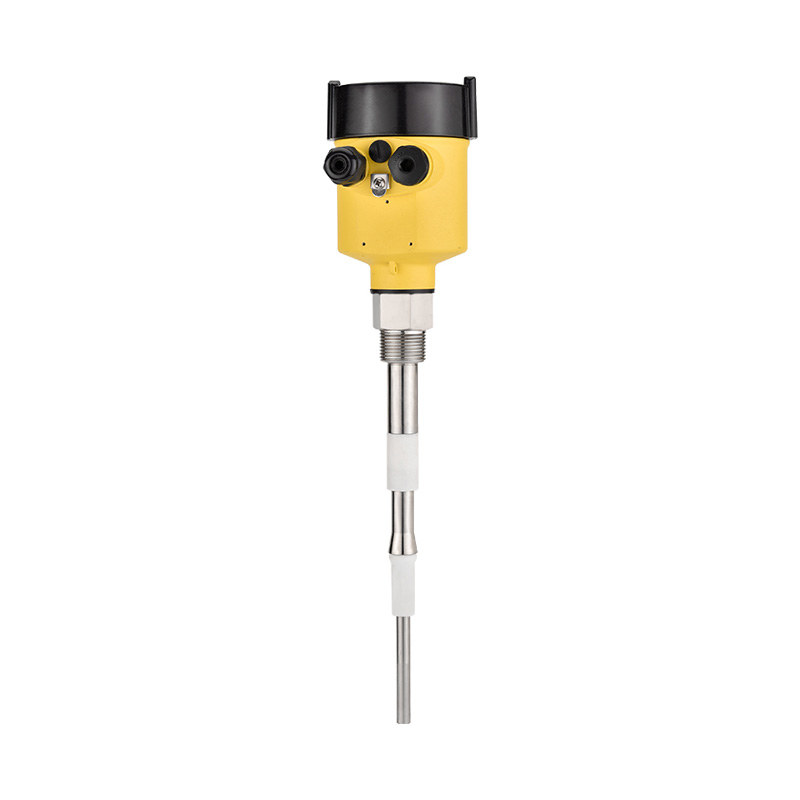
High-temperature service adds a second layer of selection. Standard PP-coated probes typically top out around 85°C, while PFA-coated high-temperature variants extend operating range up to roughly 200°C, and specialized ceramic-wetted designs push considerably higher for extreme process conditions. Matching probe coating and certification to both the liquid's chemistry and the tank's classification is the last step in specifying a capacitive sensor that will actually survive where it's installed, rather than one that works fine on the bench and fails within weeks in the field.
information
 [email protected]
 +86-13386111894 / +86-021-37566990
[email protected]
 B-4th Floor, Lane 1313, Nanting Road, Nanqiao Town, Fengxian District, Shanghai, China

Product Links