

 +86-13386111894
 Products & Solutions
  en
en English
 Русский
 España
 عرب .
عرب .
If you need any help, please feel free to contact us
inquire
Thermowell vs Thermocouple: Differences, Advantages, and Selection Guide
Thermowell vs Thermocouple: The Real Difference
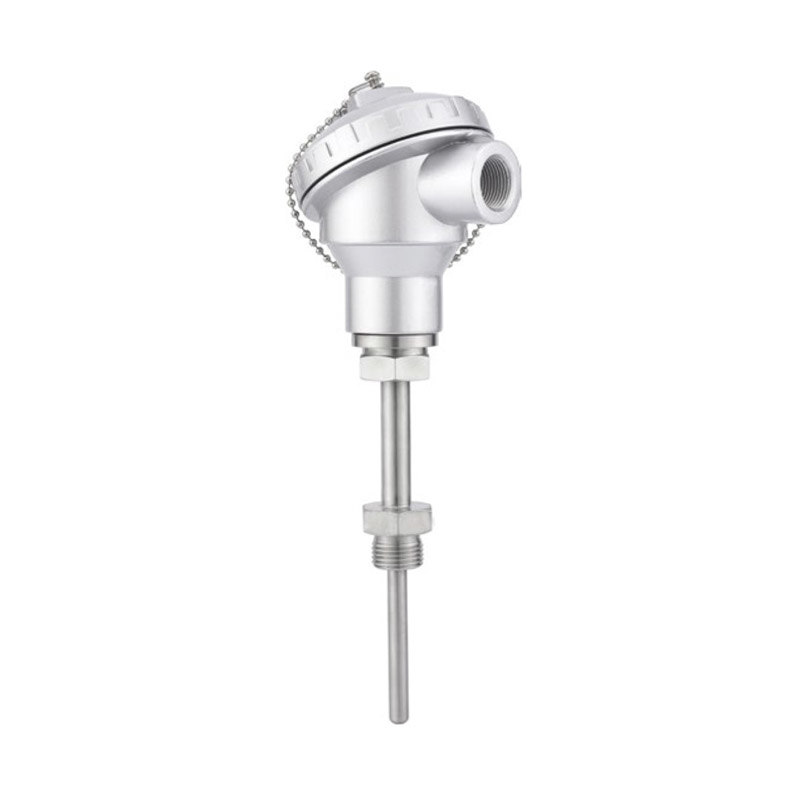
Picture a process line in a chemical plant. A stainless steel tube emerges from the pipe at an angle, and inside that tube is a thin temperature probe. Most engineers recognize the tube as a thermowell and the probe as a thermocouple. The key point is that they are not competitors. A thermowell protects; a thermocouple senses. The practical question is not whether to choose a thermowell or a thermocouple, but why the two are usually combined and when you actually need a thermowell around the thermocouple.
Here is the short answer: a thermowell is a protective housing that isolates the sensor from process pressure, flow, and corrosion. A thermocouple is a temperature sensor that produces a millivolt signal when its measuring junction is heated. In demanding industrial service, the thermowell is not an option; it is a necessity. In clean, low-pressure applications, a bare thermocouple can be acceptable.
What Is a Thermowell?
A thermowell is a hollow, closed-end metal tube that accepts a temperature sensor such as a thermocouple, an RTD, or a bimetal thermometer. The closed end extends into the process medium through a threaded, flanged, or weld-in connection, while the open end remains outside the pipe or vessel. The sensor is inserted from the outside until its tip reaches the bottom of the well. Because the sensor does not contact the process fluid, you can remove, inspect, or replace it without draining the line or stopping production.
How a Thermowell Works
Heat from the process fluid passes through the thermowell wall and reaches the sensor tip. The wall thickness, material, and bore diameter directly affect how quickly and accurately the sensor responds. A thin wall reacts faster but offers less mechanical strength; a thick wall provides more protection but slows the thermal response. Good thermowell design balances these trade-offs.
What a Thermowell Is Not
A thermowell does not measure temperature and does not produce an electrical signal. It is a mechanical component. Without the sensor inside, it is just a sealed tube.
What Is a Thermocouple?
A thermocouple is an electrical temperature sensor based on the Seebeck effect. Two wires made of different metals are joined at the measuring end. When the measuring junction and the reference junction are at different temperatures, a small voltage appears across the open ends. This voltage can be converted into a temperature reading by an instrument or transmitter.
Common Thermocouple Types
The most common types are Type K (nickel-chromium / nickel-aluminium), Type J (iron / copper-nickel), Type T (copper / copper-nickel), and Type E (nickel-chromium / copper-nickel). Each has a different temperature range, sensitivity, and resistance to environmental conditions. Type K is the most widely used in general industrial process measurement because it covers a broad range and is relatively economical.
Why a Thermocouple Needs Protection
A bare thermocouple responds quickly, but it is mechanically fragile. The wires are thin, the junction is small, and the outer sheath may not survive high pressure, high flow velocity, or corrosive chemicals. A thermowell physically shields the thermocouple and allows the sensor to be removed without breaking the process seal.
Key Differences Between a Thermowell and a Thermocouple
The most useful way to compare them is to look at roles and consequences, not to treat them as two competing products. The table below summarizes the main differences.
| Aspect | Thermowell | Thermocouple |
| Role | Protective tube or housing | Temperature sensing element |
| Output signal | None | Millivolt voltage proportional to temperature |
| Direct process contact | Yes, outer surface wetted by fluid | No, isolated inside the thermowell |
| Replacement | Remains in the pipe while sensor is withdrawn | Can be replaced without stopping the process when a thermowell is used |
| Thermal response | Adds response lag | Faster when bare |
| Cost | Machined metal part | Low-cost sensor element |
Function and Role
The thermocouple provides the measurement. The thermowell provides survival. If you install a thermocouple without a thermowell in a high-pressure steam line, the sensor may fail quickly and you will lose the measurement. With a thermowell, you can replace the sensor while the line remains under pressure.
Replacement and Maintenance
This is the strongest argument for a thermowell. Every thermocouple eventually drifts, wears, or breaks. If it is installed directly in the pipe, removing it means depressurizing the system. A thermowell lets you unscrew the sensor, slide it out, and insert a new one while the process continues running. The downtime savings often justify the thermowell cost very quickly.
Cost and Procurement
A thermowell is a machined metal part, and the price depends on material, length, and connection type. A thermocouple is a relatively inexpensive sensing element. Purchasing them together as an assembly is usually the most efficient way to guarantee the correct fit, because bore diameter, insertion depth, and connection thread must all match.
When Do You Actually Need a Thermowell?
A thermowell is not mandatory in every case, but in many industrial installations it is the safer and more economical choice.
High-Pressure Service
In steam lines, hydraulic systems, and other pressurized circuits, a thermocouple inserted directly into the line can create a leak path. The thermowell is pressure-rated and forms the process barrier. Without it, any failure of the sensor or its packing can cause a dangerous release. In these applications, the thermowell is effectively a safety device.
High Flow Velocity and Vibration
As fluid flows past an unprotected sensor, the sensor is subjected to drag and buffeting. Vibration can fatigue the sensor sheath and cause premature failure. A thermowell is machined with a controlled diameter and taper, and its length and natural frequency can be checked against the flow conditions. In high-velocity gas or steam service, this vibration analysis is a real engineering concern. Standard calculation methods such as ASME PTC 19.3 are often used to evaluate resonance risk.
Corrosive or Abrasive Media
Acids, caustic solutions, and slurries attack a bare sensor and erode it. Selecting a thermowell material that resists the specific chemical is usually more practical than replacing a fragile thermocouple again and again. Material selection becomes part of maintenance planning rather than just a sensor feature.
When a Thermowell Can Be Skipped
In low-pressure, non-corrosive, clean media where rapid response is critical, you may mount a thermocouple directly in the flow. Laboratory air ducts, clean gas lines, and some food or beverage applications fall into this category. A thermocouple with a thick metal sheath can also provide limited protection without a separate thermowell. If the process can be stopped safely and the sensor is durable enough, a thermowell is optional.
How to Select a Thermowell for Your Thermocouple
Once you decide that a thermowell is needed, the selection work begins. A poorly selected thermowell can introduce response lag, restrict flow, or vibrate dangerously. Check these points carefully.
Material and Process Compatibility
The thermowell material must withstand the process temperature, pressure, and chemical attack. 316/316L stainless steel is the default for many water, steam, and mild chemical applications. For stronger corrosion resistance, nickel-based alloys or specialty stainless steels are used. Match the material not only to the fluid but also to the maximum pressure at the design temperature.
Insertion Length and Bore Diameter
Insertion length determines how deep the sensor sits in the process. If the thermowell is too short, the sensor does not see the true fluid temperature. If it is too long, the thermowell may vibrate or obstruct flow. The bore diameter must be only slightly larger than the sensor diameter. If the sensor does not touch the bottom of the well, the trapped air creates a measurement error. Many manufacturers provide standard insertion lengths, but custom lengths are common in process engineering.
Thermal Response and Sensor Fit
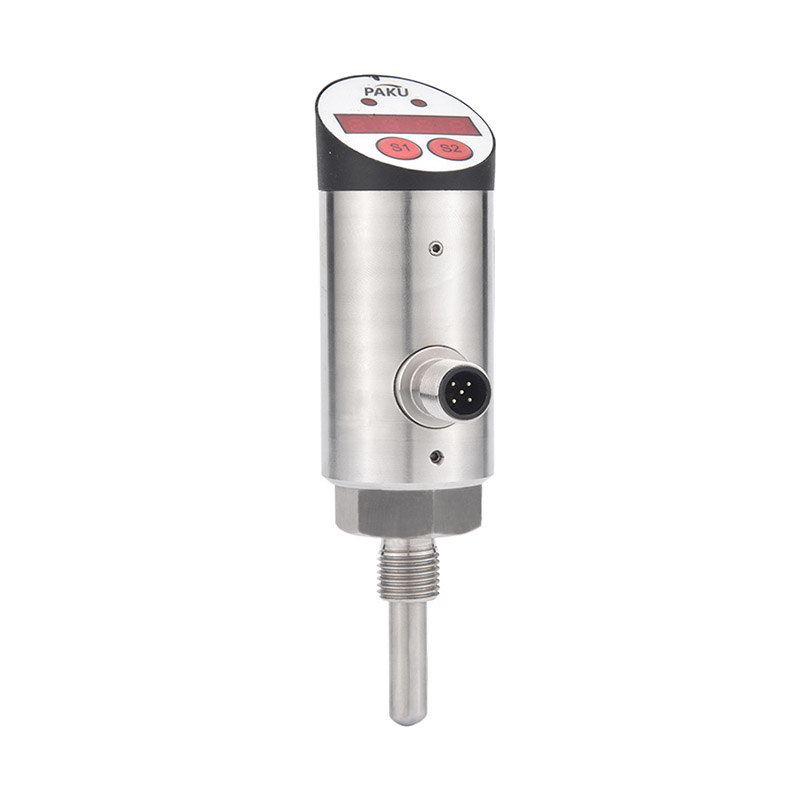
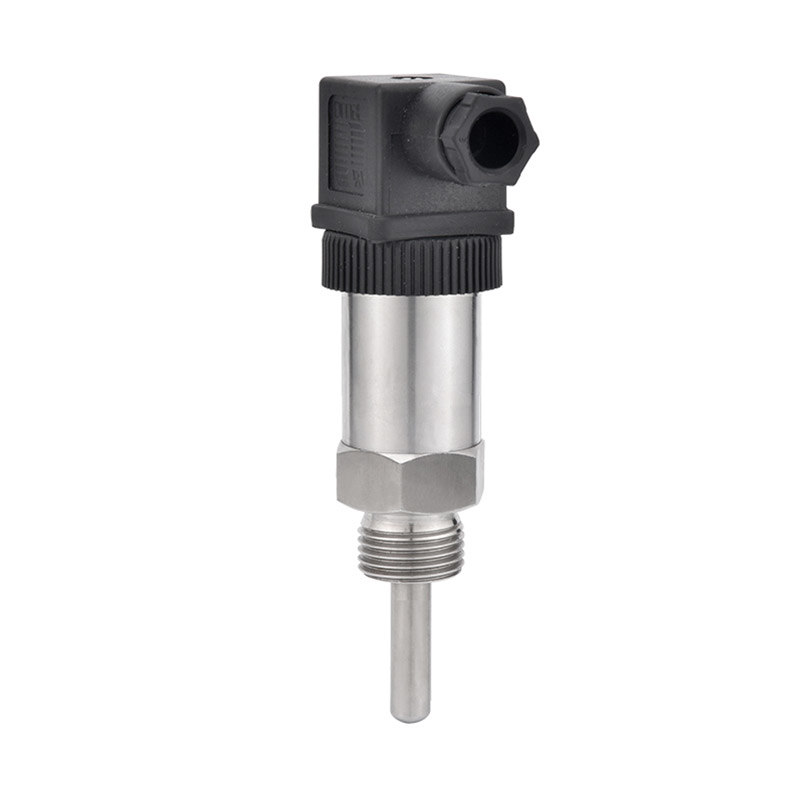
The gap between the sensor tip and the well bottom should be as small as possible, ideally zero. The tip diameter and wall thickness set the thermal response time. A thinner tip improves response but reduces the pressure rating. If the temperature changes quickly, remember that the thermowell adds a measurable delay. If you prefer the characteristics of a resistance element, you can still mount a PT100 temperature sensor T300 inside the same thermowell; it will provide stable, accurate readings but will not respond faster than the thermowell allows.https://www.pakusensors.comShanghai Kayuan Electronic Technology Co., LtdView Product →
Connecting the Signal to a Transmitter
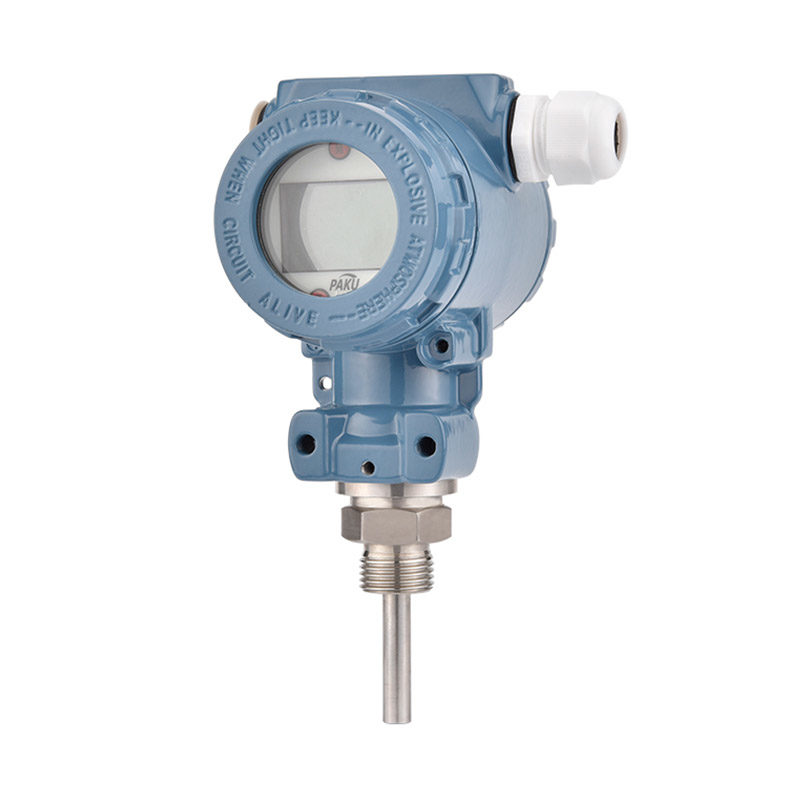
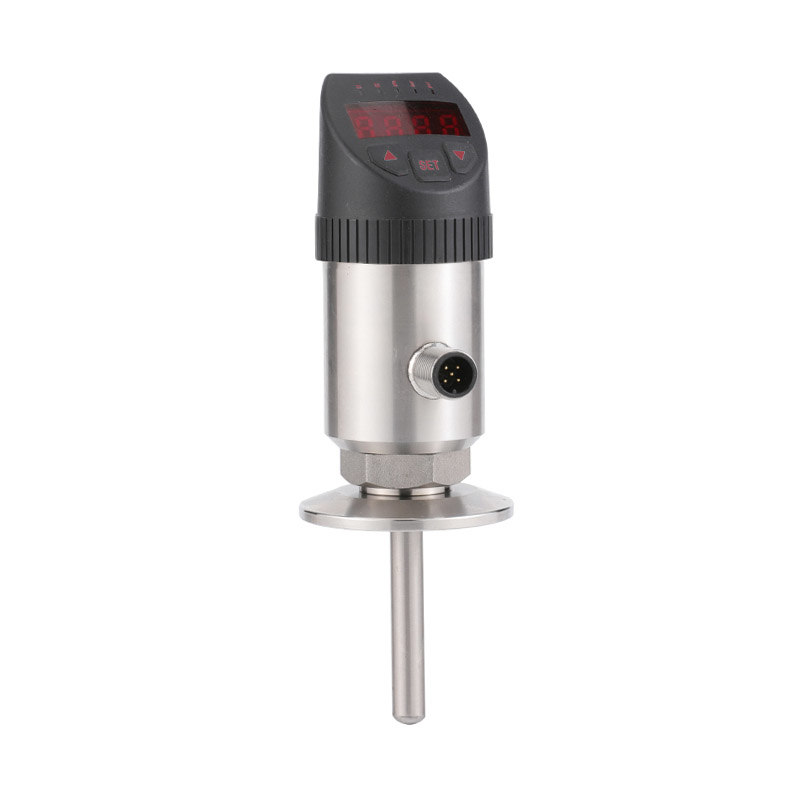
The thermocouple voltage is small, and long cable runs are vulnerable to electrical noise and voltage drops. Many installations therefore place a transmitter close to the sensor. A thermocouple universal temperature transmitter T55D is commonly mounted in the connection head of the thermowell and converts the millivolt signal into a standard 4-20 mA output for the control system.https://www.pakusensors.comShanghai Kayuan Electronic Technology Co., LtdView Product →
Final Recommendations for Your Temperature Measurement Assembly
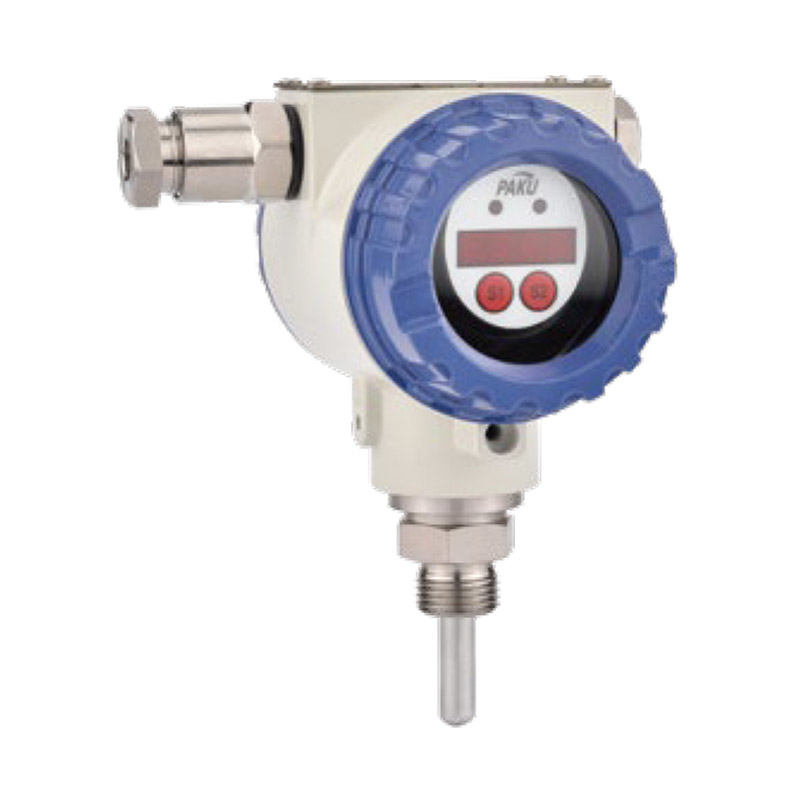
Choose the sensor first, then decide whether the process justifies a thermowell. If you are dealing with a high-pressure line, a fast-moving fluid, a corrosive substance, or a process that cannot be stopped for maintenance, plan the thermowell from the start. Match the material, insertion length, bore diameter, and connection type to the application. For compact installations that need a complete local assembly, an integrated temperature transmitter T450 combines the sensing element and electronics in one head-mounted package and reduces field wiring.https://www.pakusensors.comShanghai Kayuan Electronic Technology Co., LtdView Product →
You can see how these assemblies are used in different production environments in our industry applications overview. Before you finalize the specification, also review the common applications of temperature transmitters in different industries. The right thermowell design depends on process conditions, and so does the choice between a thermocouple, an RTD, and a head-mounted transmitter. A complete system with a properly matched thermowell, sensor, and transmitter will outperform an unplanned temperature element installed at the last minute.
information
 [email protected]
 +86-13386111894 / +86-021-37566990
[email protected]
 B-4th Floor, Lane 1313, Nanting Road, Nanqiao Town, Fengxian District, Shanghai, China

Product Links