

 +86-13386111894
 Products & Solutions
 en
 English
 Русский
 España
 عرب .
If you need any help, please feel free to contact us
inquire
Level Measurement Sensor Selection: Point Level Switches vs Continuous Transmitters
When a tank reading drifts or a pump runs dry, the level measurement sensor is often the first component blamed and the last one checked. In most plants the real starting point is simpler: decide whether the application needs a point-level switch that changes state at a set height, or a continuous transmitter that reports level across a range. That single decision narrows the technology, wetted materials, mounting style, and output signal before any datasheet comparison begins.
Point Level or Continuous Measurement: Decide This First
A point-level switch is not a cheap substitute for a transmitter; it answers a different question. The switch tells a control system that the level has reached, or fallen below, one defined position. It is the right choice for high-level alarms, low-level pump protection, overflow prevention, and simple fill-stop duties. A continuous transmitter reports the actual level, so it supports inventory, dosing, trend logging, and control loops that need a proportional signal.
Buyers sometimes select a continuous sensor for a duty that only needs a switch, then spend the commissioning budget on span calibration and signal filtering. The opposite mistake is more expensive: using a switch where the process needs a live reading, then discovering that pump control depends on rate of change, not just a trip point. Use the comparison below to settle the functional requirement before reviewing technologies.
| Comparison | Point level switch | Continuous level transmitter |
| What it reports | Whether level is above or below a set point | Level across a measured range as a proportional signal |
| Typical duty | Alarm, pump protection, overflow stop, fill limit | Inventory, dosing, trend, control loop, totalization |
| Output style | Relay, contact closure, digital switching | 4–20 mA, 0–10 V, RS485, or similar |
| Commissioning focus | Setpoint repeatability and reset differential | Zero, span, dead zone, and damping |
| Common failure mode | Buildup or foam causing a missed or late trip | Drift from density change, vapor, foam, or coating |
How the Main Level Measurement Sensor Technologies Compare
Once the function is clear, the next filter is the measurement principle. Each technology has a process condition that suits it and a condition that quietly defeats it.
Float and Displacer Sensors
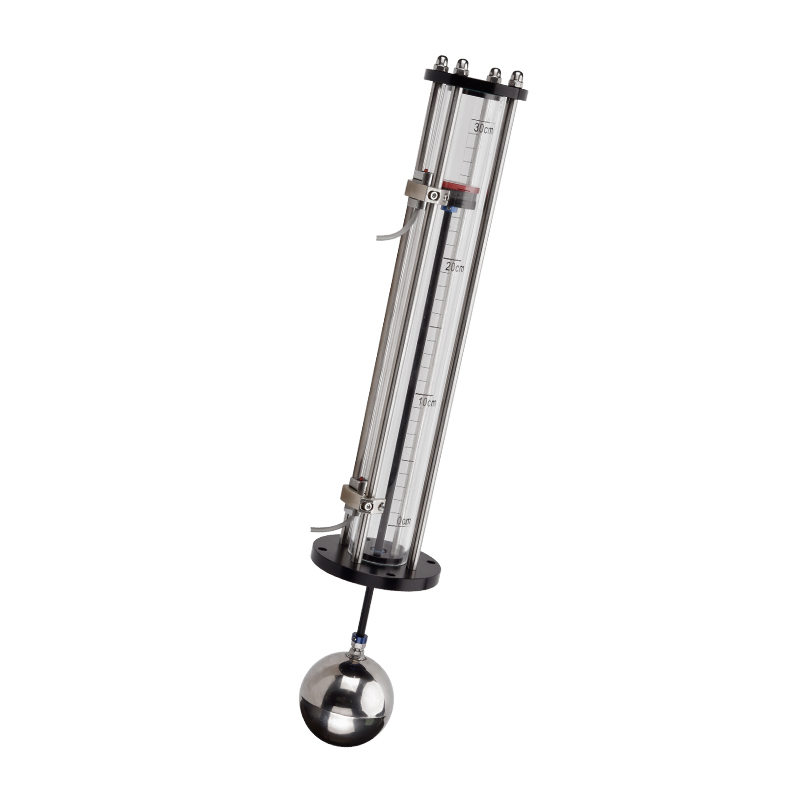
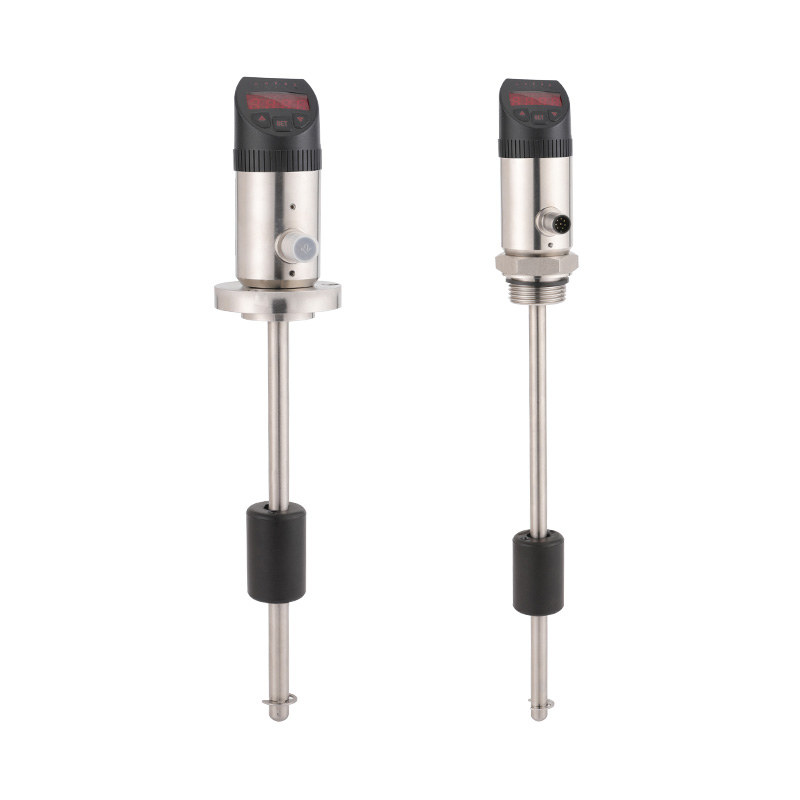
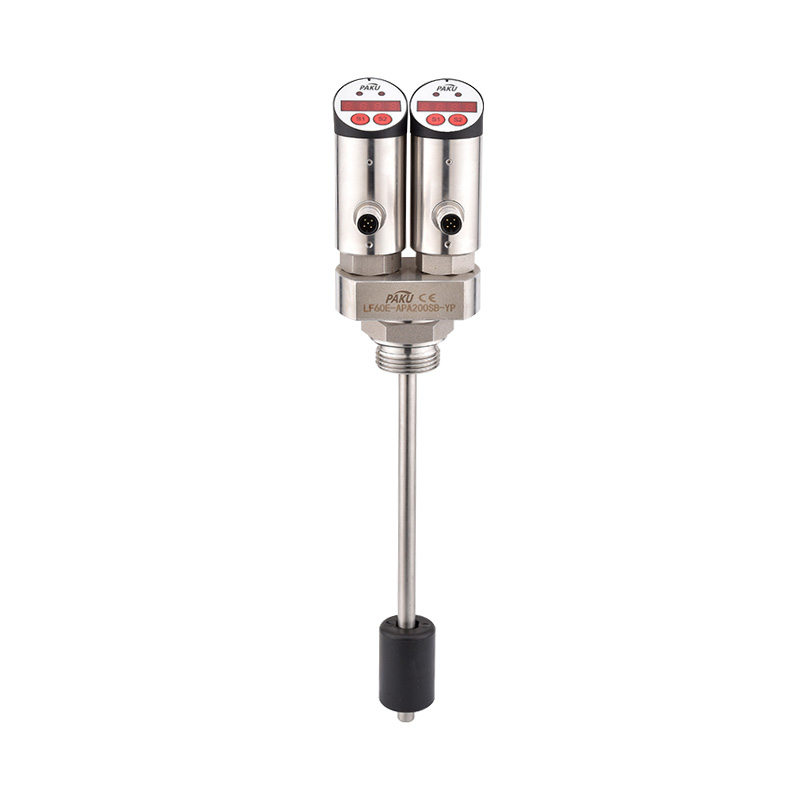
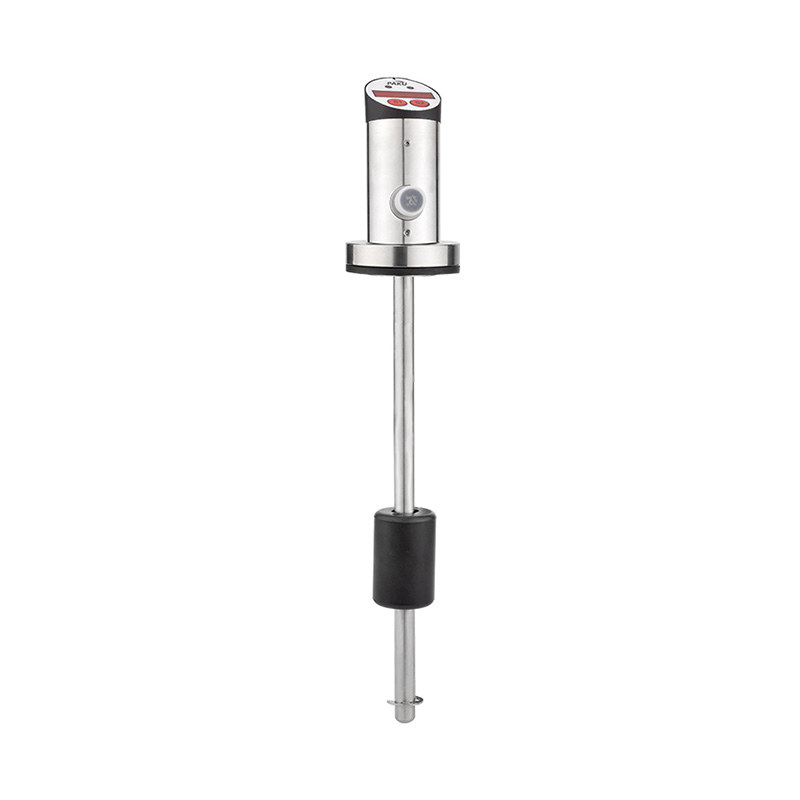
A float moves with the liquid surface and actuates a switch or a proportional element. The principle is easy to understand and needs little electronics, which makes it common in sumps, tanks, and pump chambers. The limitation is mechanical: dirty liquids can coat the float, high viscosity can hold it in place, and density changes alter the buoyancy force. For clean water and compatible chemicals, a float switch remains a practical point-level device. For viscous or coating media, a non-contact or vibrating alternative is usually easier to maintain.
Capacitance and RF Level Sensors
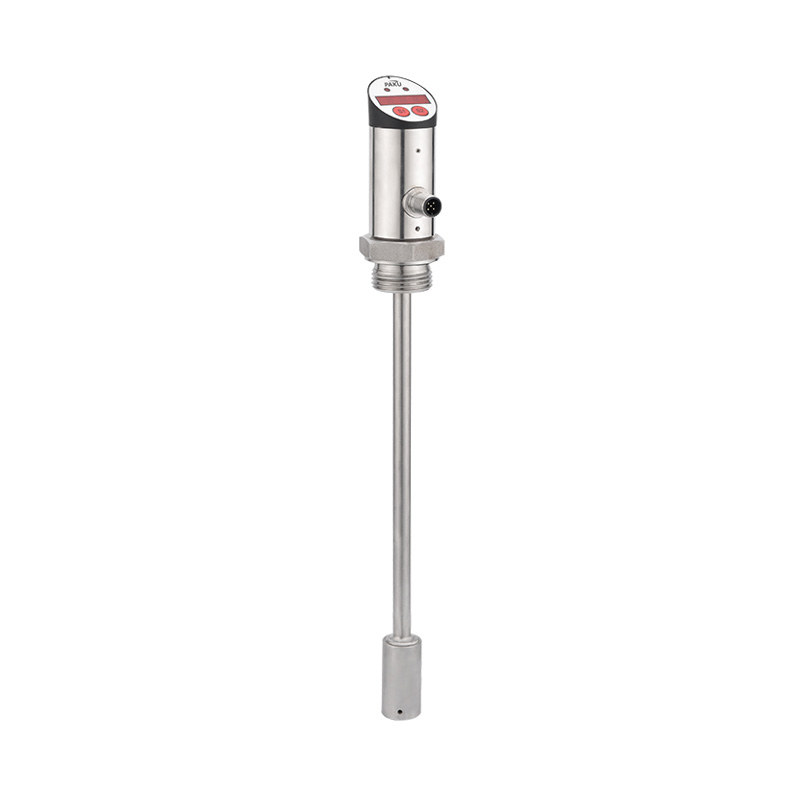
Capacitance sensors treat the probe and vessel wall as the plates of a capacitor, and the liquid between them changes the electrical value. They can be used as point switches or continuous transmitters and work well in sealed tanks and aggressive media when the probe material is selected correctly. The critical specification is the dielectric constant of the process liquid. A product with a low dielectric constant, or one that changes with moisture content, may not produce a reliable signal. Conductive buildup on the probe is another common source of drift. RF capacitance transmitters are therefore specified most confidently when the medium is stable and the probe can be cleaned or isolated during maintenance.
Tuning Fork Level Switches
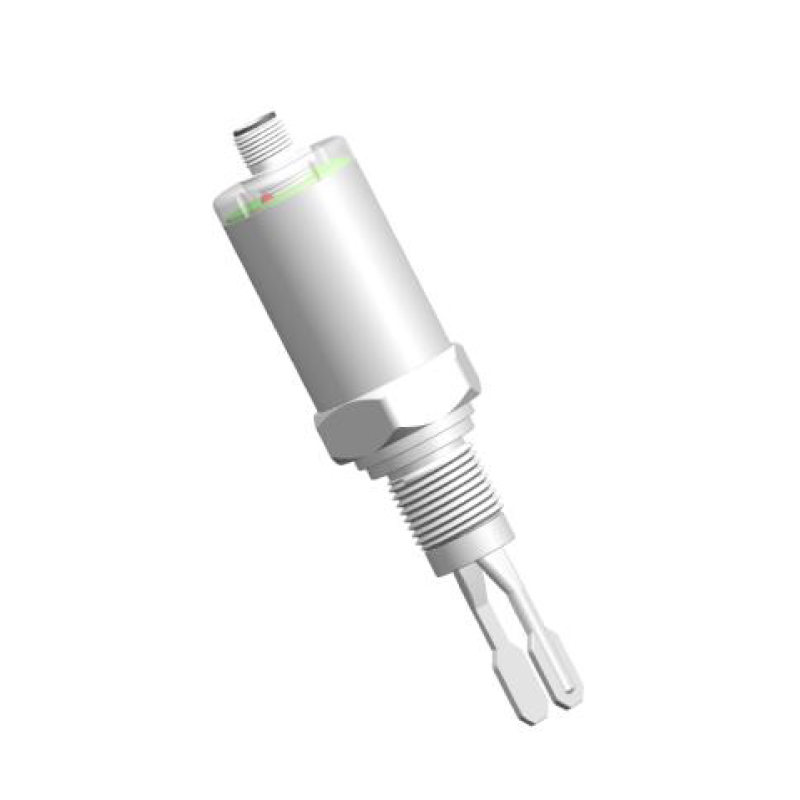
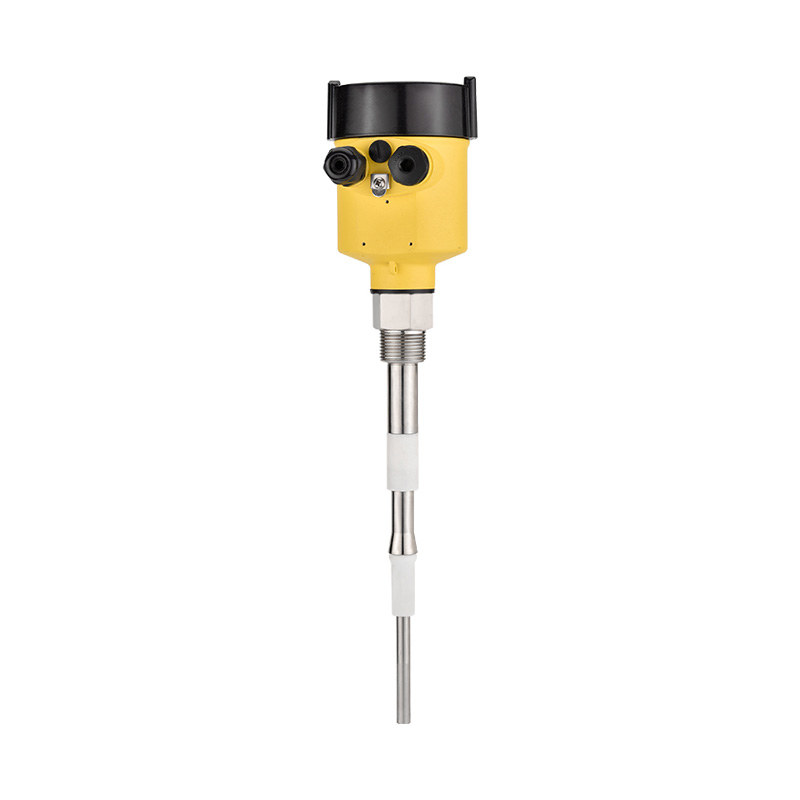
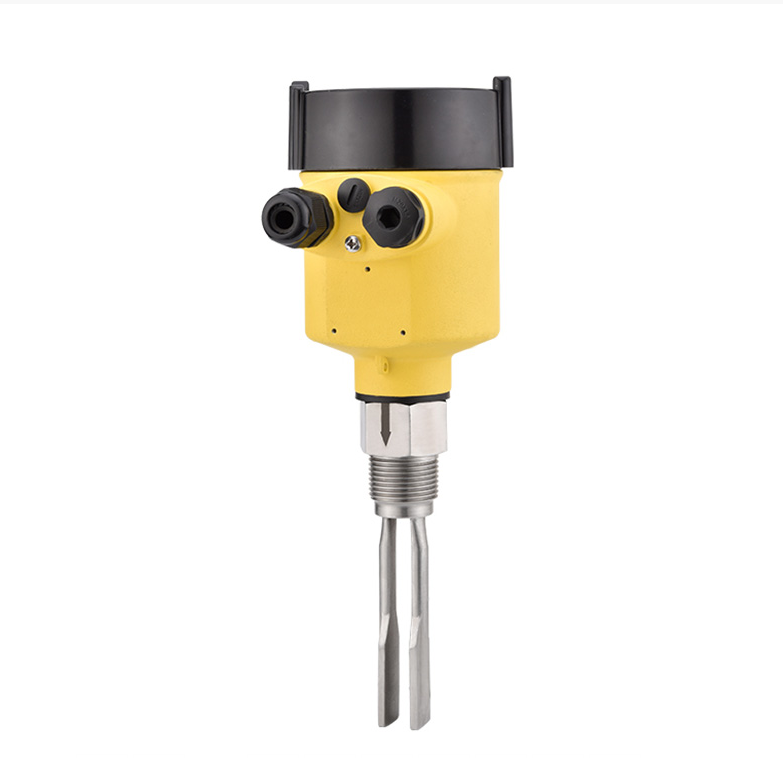
A tuning fork switch vibrates at a known frequency and changes frequency when the fork is covered by liquid or bulk material. Because the change is detected by vibration rather than buoyancy, the switch is less dependent on density and works in compact installations. It is a strong candidate for high- and low-level alarms in tanks, pipework, and small vessels, and for pump protection where space is tight. The practical checks are buildup between the tines and the possibility of foam or entrained air creating a false dry condition. A compact tuning fork switch is often a better fit than a float in viscous or fibrous media.LF100 Tuning Fork Level SwitchThe LF100 tuning fork level switch offers a no-moving-part limit switch for liquid or solid level alarms in compact, demanding installations.View Product →
Ultrasonic Level Sensors
Ultrasonic sensors measure the time of flight of a sound pulse from the sensor face to the liquid surface. Because they do not contact the liquid, they suit wastewater, sumps, and tanks where wetted materials or cleaning are a concern. The installation rules matter more than the electronics: keep the sensor out of the fill stream, respect the blanking distance, and account for foam, vapor, and condensation. Foam can absorb or scatter the echo, and heavy vapor can produce a false reflection. A non-contact ultrasonic sensor is a good choice for open channels and wet wells when the mounting position can be controlled.LF91A Ultrasonic Liquid Level SensorThe LF91A provides non-contact ultrasonic level detection with adjustable ranges, multiple output options, and a compact IP65 housing for open-channel and wet-well applications.View Product →
Hydrostatic and Submersible Pressure Transmitters
A submersible pressure transmitter infers level from the hydrostatic pressure at the bottom of the tank: level equals pressure divided by the product of density and gravity. The method is simple, stable, and well suited to deep tanks, boreholes, and reservoirs. It also makes density a specification, not an assumption. A liquid with changing density, or a tank with a varying gas blanket, will shift the reading unless the transmitter is vented correctly. The cable entry and vent tube need protection from moisture, and the diaphragm material must match the process liquid. For clean or wastewater applications with a stable density, a submersible level transmitter is often the most direct solution.LF70A Submersible Pressure Level TransmitterThe LF70A submersible level transmitter uses hydrostatic pressure for deep-tank and borehole level measurement, with wide range options, 4–20 mA output, and IP67 protection.View Product →
Specifications That Decide Whether the Sensor Survives
A sensor can match the measurement principle and still fail in service because one process detail was left out of the inquiry. The following checks catch most of those cases before the purchase order is issued.
- Wetted materials: probe, float, diaphragm, seal, and cable jacket must resist the process liquid at operating temperature, not only at ambient.
- Density and viscosity: float, displacer, and hydrostatic devices depend on density; high viscosity can slow or block moving parts.
- Dielectric constant: capacitance and RF devices need a stable, known dielectric value; low-dielectric liquids may need a different principle.
- Pressure and temperature: verify the maximum simultaneous condition, not the two limits separately.
- Foam, vapor, and buildup: non-contact ultrasonic and radar devices lose echo strength; contacting devices can bridge or coat.
- Mounting and access: confirm thread or flange size, insertion depth, clearance for the fork or float, and room for maintenance.
- Output and power: match the control system with the available relay, analog, or digital output, and confirm the supply voltage.
- Area classification: for hazardous locations, the explosion-proof rating must cover the gas group and temperature class, not just the enclosure.
Matching the Sensor to the Installation Point
The same plant can need three different level sensors within one process area. The installation point usually decides which one is appropriate.
| Installation point | Practical choice | Reason |
| Bulk storage tank for inventory | Continuous transmitter, often hydrostatic or ultrasonic | Requires a live reading for stock control and reconciliation |
| Pump suction line | Point-level switch with a short reset differential | Protects the pump from dry running without a control loop |
| Chemical dosing tank | Tuning fork switch or RF capacitance transmitter | Compact point detection or continuous reading in a small vessel |
| Wet well or sump with foam | Non-contact ultrasonic with a stilling reference | Keeps the sensor out of the liquid and away from debris |
| Food or beverage vessel | Hygienic float or sanitary diaphragm transmitter | Cleanable wetted parts and compatible surface finish |
| Wastewater channel | Ultrasonic or submersible transmitter | Open-channel or wet-well level with remote mounting |
Procurement and Commissioning Checks
Most level measurement problems that appear during commissioning were set at the inquiry stage. A short checklist keeps the specification and the installation aligned.
- State whether the duty is point level or continuous level, and include the control action.
- Provide the process liquid, concentration, density, temperature, and pressure at the sensor location.
- Confirm the connection: thread, flange, clamp, or cable suspension, with the insertion length.
- Define the setpoint or measuring span, including the required repeatability and any alarm delay.
- Ask for the wetted-material list and the applicable certificate before shipment.
- Plan calibration and verification: a switch needs a trip test; a transmitter needs zero and span verification.
- Keep a spare wetted part or a complete spare sensor for critical pump protection.
Getting the Application Right
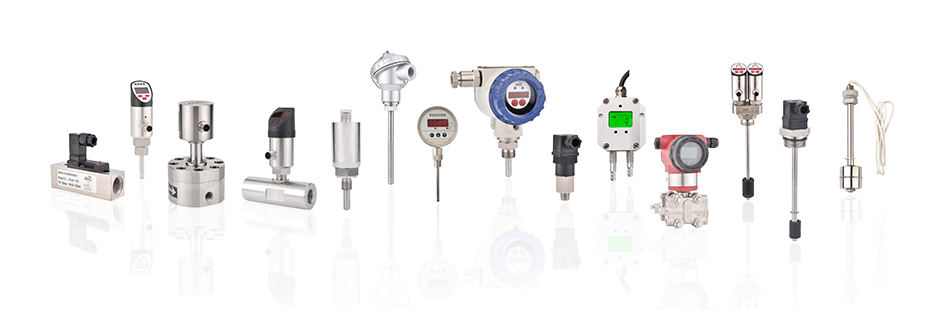
The most useful specification is not the longest one; it is the one that answers the process question. For a high-level alarm, the key facts are the liquid, the setpoint, and the mounting position. For inventory, the key facts are the span, the density, and the output expected by the control system. Paku Sensors organizes its level portfolio around those application differences, with point switches, continuous transmitters, and non-contact sensors in the liquid level series. If the process condition is unusual, the customization route is usually more reliable than forcing a standard catalog item into a duty it was not designed for.
Before ordering, confirm the wetted materials, the process connection, and the output with the supplier in writing. That step costs less than a return shipment and far less than an unplanned shutdown caused by a sensor that was never suitable for the tank it was installed on.
PREV: Intrinsically Safe Circuits Explained: Energy Limits, Barriers, and IS Design It is the last article
information
 [email protected]
 +86-13386111894 / +86-021-37566990
[email protected]
 B-4th Floor, Lane 1313, Nanting Road, Nanqiao Town, Fengxian District, Shanghai, China

Product Links