

 +86-13386111894
 Products & Solutions
  en
en English
 Русский
 España
 عرب .
عرب .
If you need any help, please feel free to contact us
inquire
Capacitive Switch Technology: How It Works and How to Select One
What Capacitive Switch Technology Actually Detects
Search for "capacitive switch" and most results describe touchscreens or HMI buttons that respond to a fingertip. Industrial capacitive switch technology works on the same underlying physics but solves a different problem entirely: detecting whether a liquid, powder, or granular material has reached a specific point inside a tank, silo, or pipe.
Instead of sensing a finger's charge, an industrial capacitive level switch treats the probe and the vessel wall (or a reference electrode) as the two plates of a capacitor, with the tank's contents acting as the dielectric material between them. As material rises to cover the probe, the dielectric changes, and so does the measured capacitance.
That single capacitance shift is the entire signal the switch needs. No moving parts, no float, no mechanical linkage — just a change in an electrical property that the circuit is built to recognize.
The Physics Behind It: Capacitance and Dielectric Constant
The relationship driving this detection is straightforward: capacitance equals the dielectric constant multiplied by the electrode contact area, divided by the thickness of the insulating layer between them. Air has a low dielectric constant near 1, while most liquids and many solids sit considerably higher — water, for instance, has a dielectric constant around 80.
When the probe is dry and surrounded by air, baseline capacitance stays low. Once material covers the probe, the dielectric constant jumps toward that of the material itself, and the resulting capacitance increase triggers a high-frequency resonance inside the switch's circuit, which the device converts into a clean on/off switching signal. This behavior traces back to a fixed physical quantity — the vacuum electric permittivity constant published by NIST, which anchors every dielectric constant calculation back to a defined baseline.
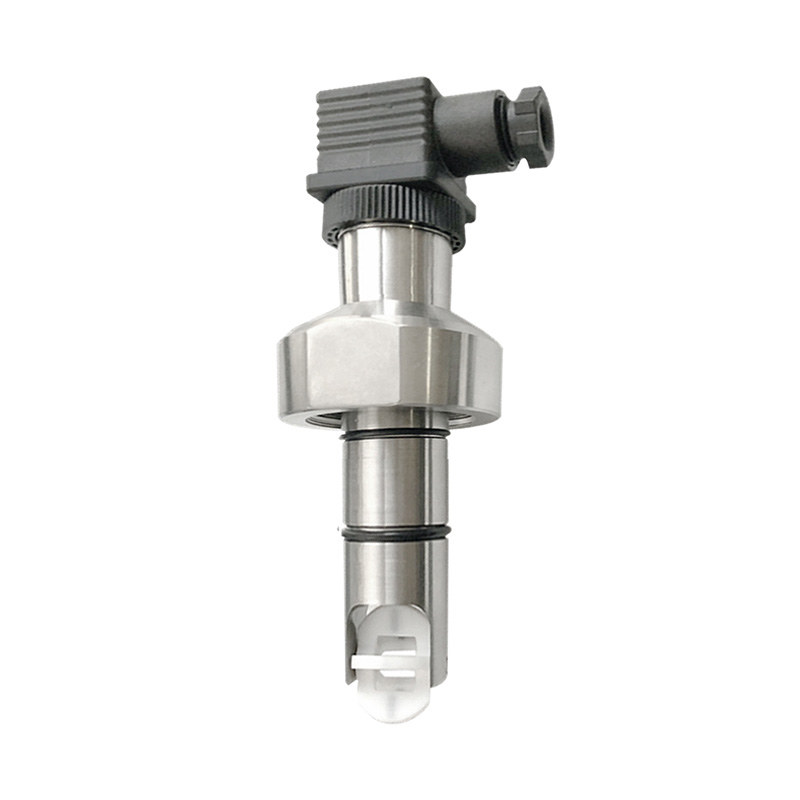
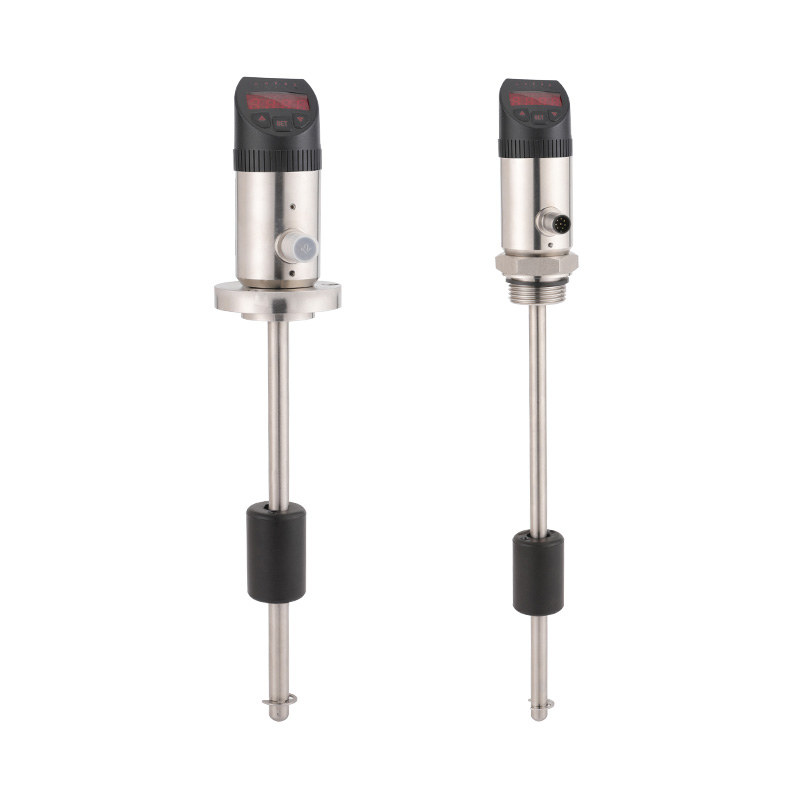
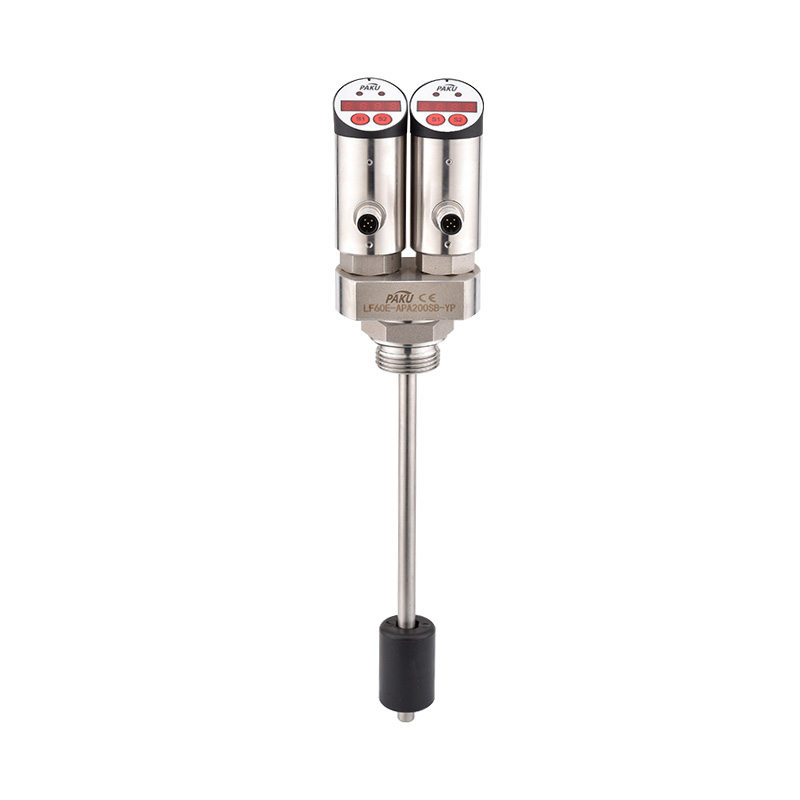
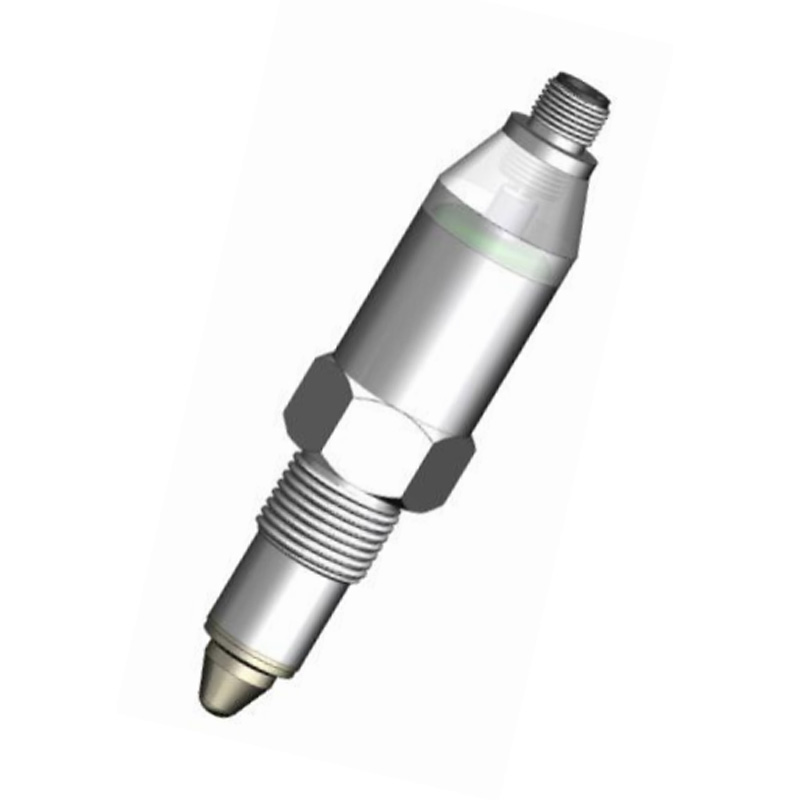
A a miniature capacitive level switch built for direct probe-to-wall detection applies exactly this principle, using an induction rod against the container wall to measure the capacitance shift as the medium covers the rod.
Capacitive vs Tuning Fork: Choosing a Point-Level Technology
Capacitive switches aren't the only no-moving-parts option for point-level detection, and tuning fork technology is the most common alternative worth comparing directly.
| Factor | Capacitive | Tuning Fork |
| Detection principle | Dielectric constant change | Oscillation frequency change |
| Best suited for | Liquids, slurries, some powders | Powders, granules, liquids alike |
| Sensitivity to buildup/coating | Can false-trigger if probe stays coated | Self-checking oscillation resists coating effects |
| Low dielectric constant media | Reduced sensitivity | Not dependent on dielectric constant |
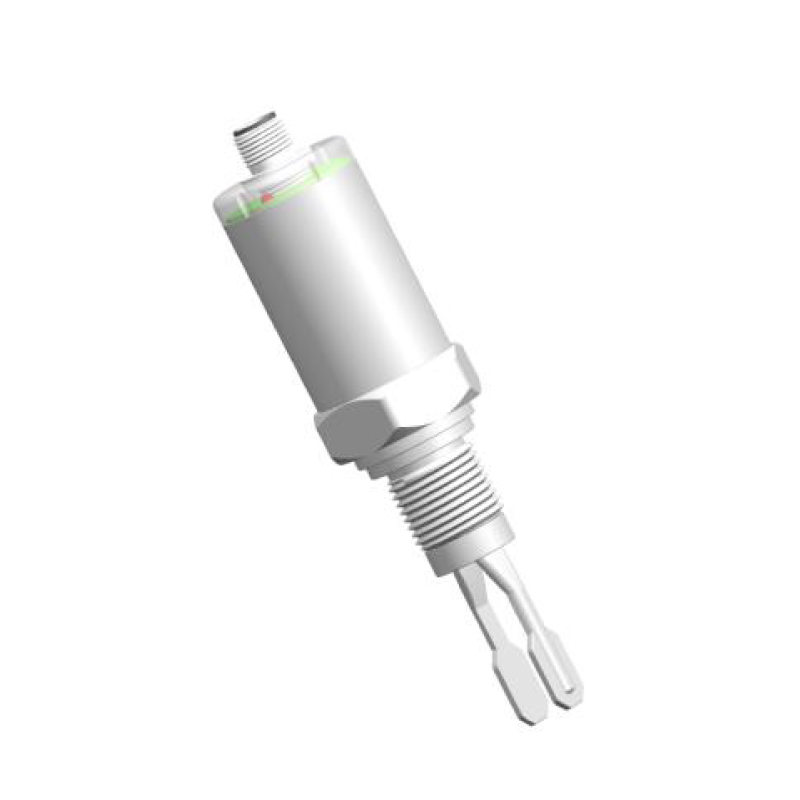
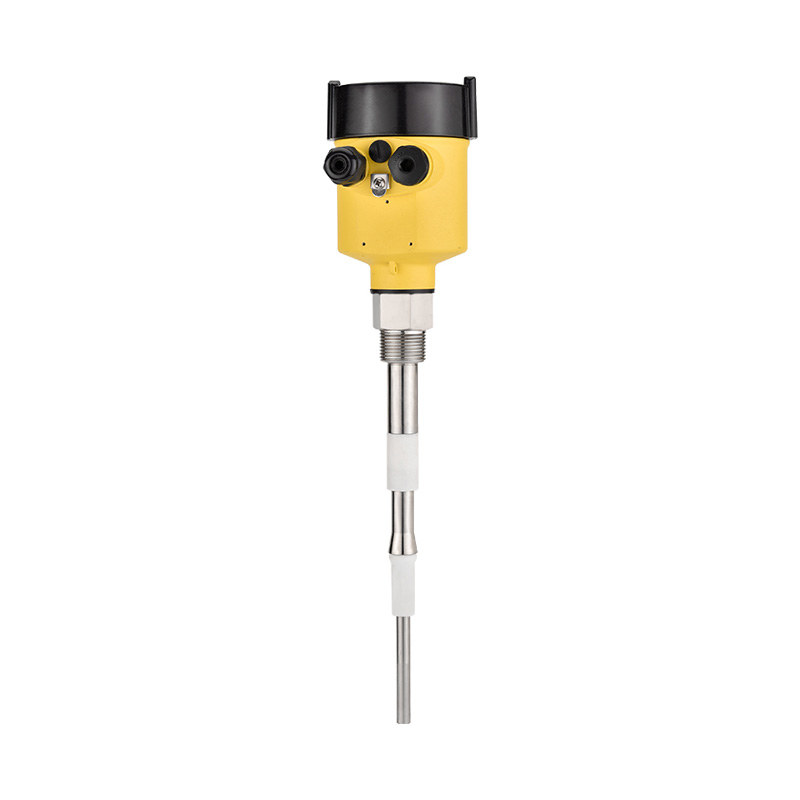
Where a medium has a low, unstable, or poorly characterized dielectric constant, a tuning fork level switch often performs more predictably, since its detection doesn't depend on that property at all. For most clean liquids and consistent slurries, though, capacitive technology remains the simpler and more cost-effective choice.
Where Capacitive Switches Excel — and Where They Fall Short
The absence of moving parts is the headline advantage. There's nothing to jam, wear out, or get stuck mid-stroke, which makes capacitive switches a strong fit for continuous, unattended operation in tanks that rarely get opened for inspection.
They also tolerate a wide range of media — conductive and non-conductive liquids alike, plus many powders and granules — because the detection principle doesn't require the medium to conduct electricity, only to have a dielectric constant different from air.
The limitation shows up with sticky or coating-prone media. If material clings to the probe after the actual level drops, the lingering coating can keep the capacitance elevated and delay the switch from resetting — a false reading that has nothing to do with the true fill level. Very low dielectric constant materials, like some dry powders or oils, can also produce a weaker signal that's harder to distinguish from noise.
Key Specifications to Check Before Selecting One
Probe material compatibility comes first — stainless steel handles most industrial media, but highly corrosive or high-purity applications may call for a PTFE or PEEK-coated probe instead. Pressure and temperature ratings matter just as much, since a switch rated for standard atmospheric tanks won't hold up in a pressurized process line.
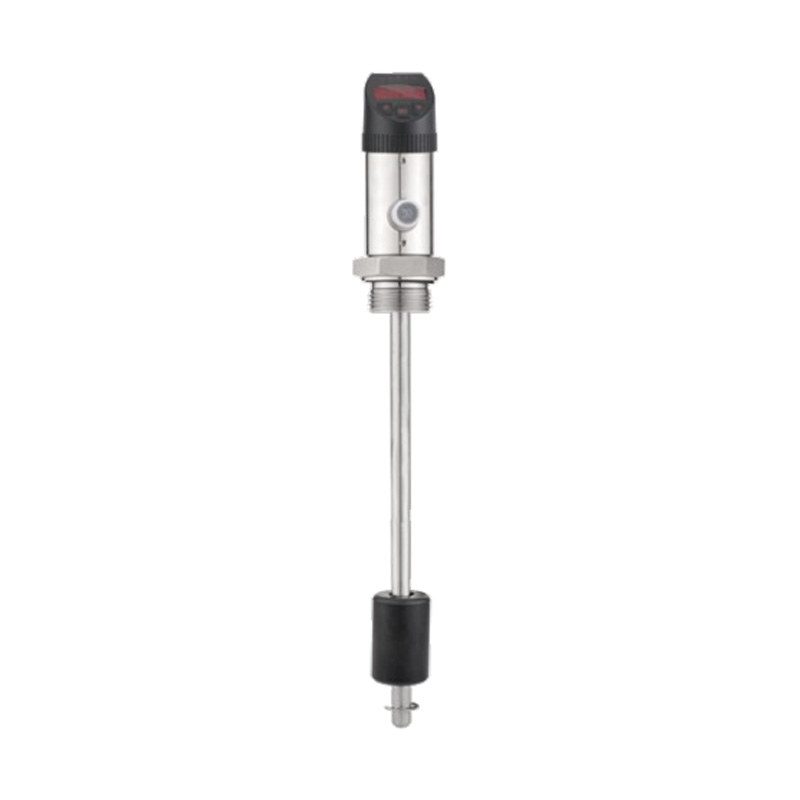
Output type is worth confirming against existing control system wiring — relay output, NPN, and PNP configurations aren't interchangeable without adapting the circuit. The full range of liquid level switches spans these variations across different probe lengths and process connections, which makes it easier to match a switch to an existing tank fitting rather than modifying the installation to fit the switch.
Typical Industrial Applications
Overflow protection is the most common use case — a capacitive switch mounted near the top of a tank cuts a fill pump the moment material reaches it, before liquid spills over. The mirror-image application, dry-run protection, places the switch near the bottom to stop a pump before it runs dry and damages its seals or impeller.
Beyond these two core functions, capacitive switches show up wherever a simple point-level alarm is more practical than continuous level measurement: chemical storage tanks, water treatment sumps, and hopper level indication in bulk material handling. For applications needing a broader look at level detection options beyond point switching, the broader liquid level sensor and switch lineup covers continuous transmitters and sensors alongside the point-level switches discussed here.
information
 [email protected]
 +86-13386111894 / +86-021-37566990
[email protected]
 B-4th Floor, Lane 1313, Nanting Road, Nanqiao Town, Fengxian District, Shanghai, China

Product Links