

 +86-13386111894
 Products & Solutions
  en
en English
 Русский
 España
 عرب .
عرب .
If you need any help, please feel free to contact us
inquire
Capacitive Liquid Level Sensor: How It Works, Types & Selection Guide
What Is a Capacitive Liquid Level Sensor?
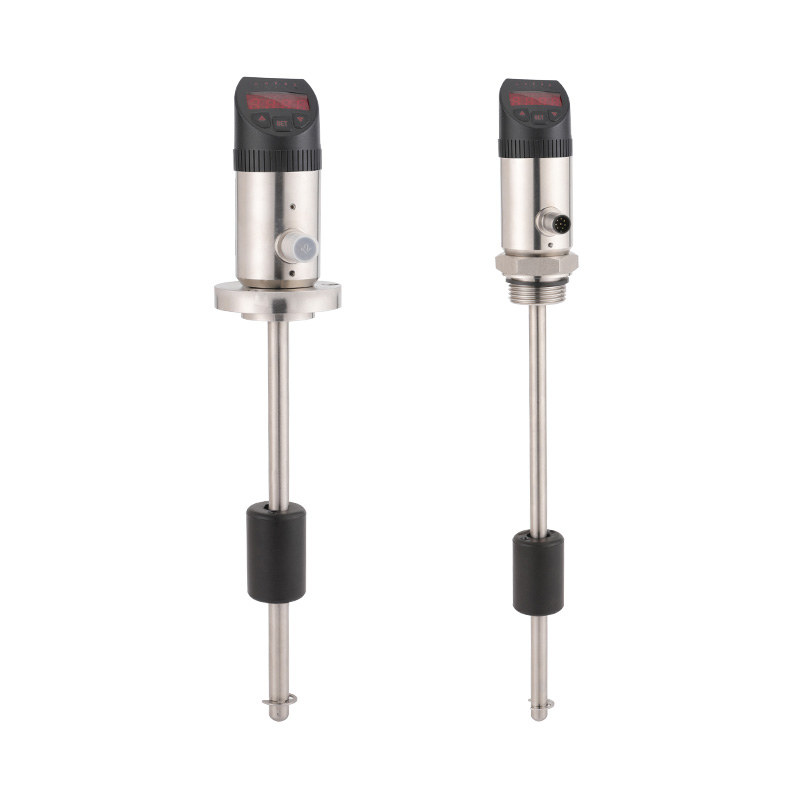
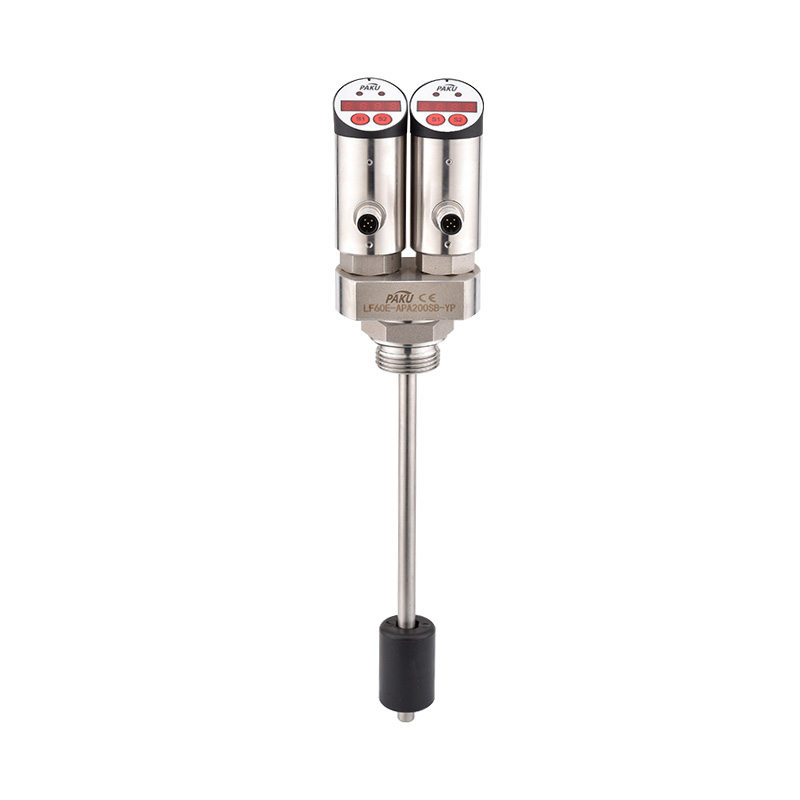
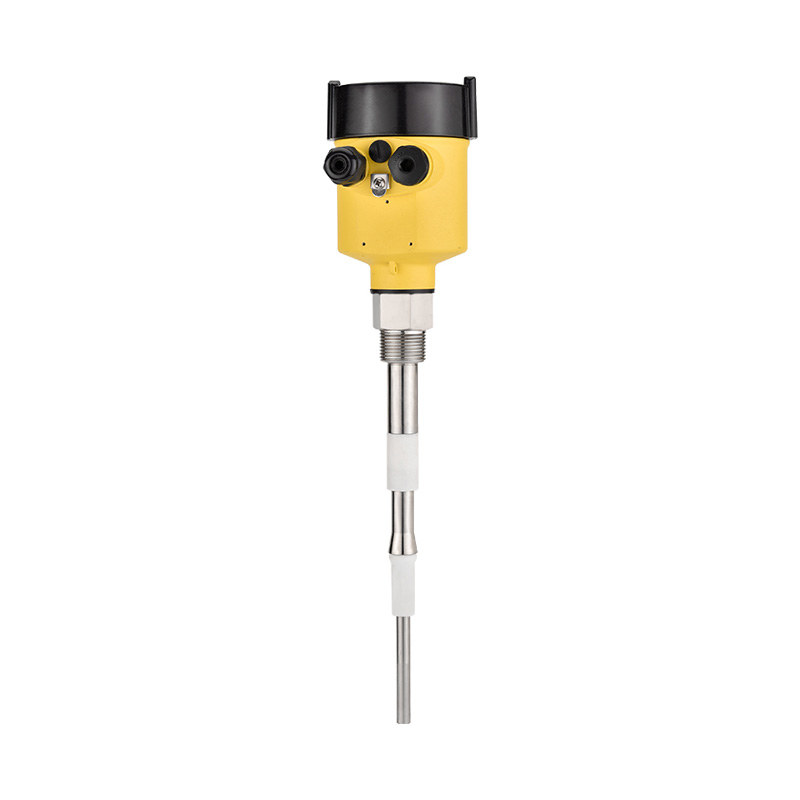
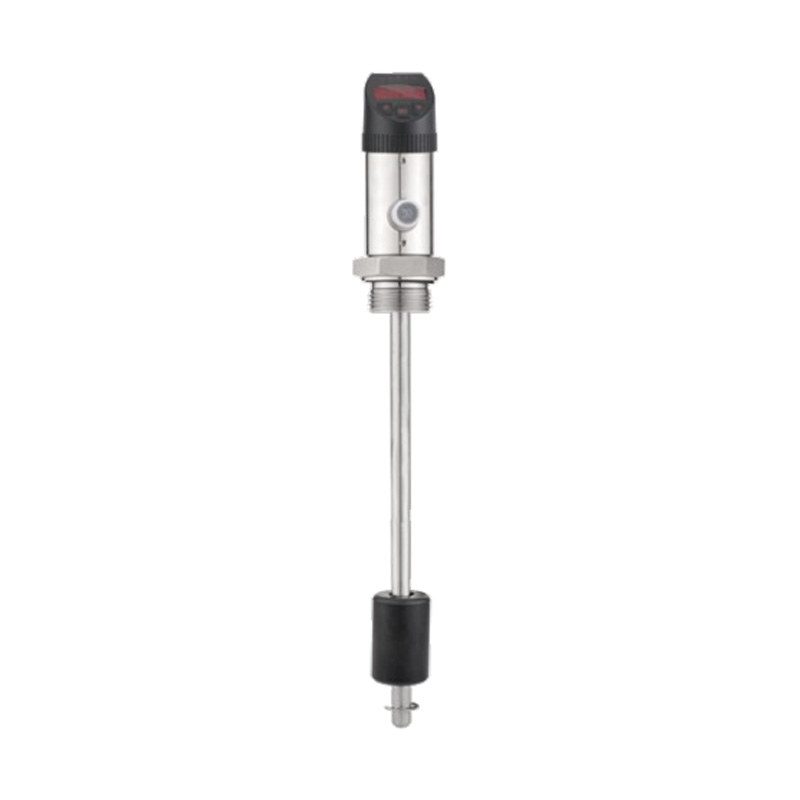
A capacitive liquid level sensor is an electronic measurement device that determines the level of a liquid inside a tank or vessel by detecting changes in electrical capacitance. When the liquid level rises or falls, it alters the dielectric medium between two conductive elements, changing the capacitance value in a measurable and predictable way. This capacitance shift is then converted into a level reading — either as a continuous analog signal, a digital output, or a discrete switch point.
Capacitive level sensing has become one of the most widely adopted technologies in industrial and commercial fluid monitoring. Its appeal lies in a combination of non-contact or minimal-contact operation, high sensitivity, broad chemical compatibility, and the ability to detect both conductive and non-conductive liquids. From fuel tanks and chemical reactors to food processing lines and pharmaceutical vessels, capacitive sensors provide reliable level data across a diverse range of applications.
How Capacitive Level Sensing Works
The operating principle is rooted in basic electrostatics. A capacitor consists of two conductive plates separated by a dielectric material. Its capacitance (C) is given by:
C = ε × (A / d)
Where ε is the permittivity (dielectric constant) of the medium between the plates, A is the overlapping area of the plates, and d is the distance between them. In a liquid level sensor, A and d are fixed by the probe geometry. As the liquid level changes, the proportion of the probe immersed in liquid versus air changes — and since liquid has a significantly higher dielectric constant than air, the overall capacitance of the system increases with rising liquid level.
For a typical industrial probe arrangement, the sensing electrode is the probe rod, and the tank wall (or a concentric outer electrode) serves as the second plate. The electronic circuit continuously measures capacitance and translates the reading into a level value. The output signal is essentially linear with level for most homogeneous liquids, making calibration straightforward.
Conductive vs. Non-Conductive Liquids
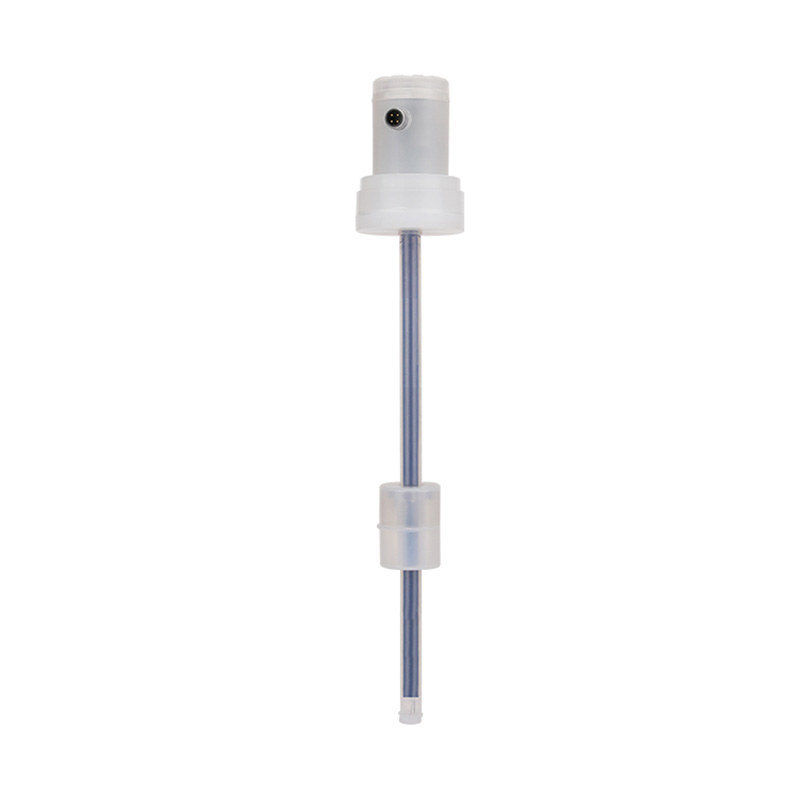
For conductive liquids (water, acids, bases, and most aqueous solutions), the liquid itself acts as one electrode. The probe is coated with an insulating material — typically PTFE, PFA, or polyethylene — to prevent direct electrical contact. The insulating coating becomes the dielectric layer. For non-conductive liquids (oils, solvents, fuels), the liquid itself serves as the dielectric medium and the probe can be bare metal. In both cases, the measurement principle remains the same; only the probe construction differs.
Types of Capacitive Liquid Level Sensors
Capacitive level sensors are available in several configurations to suit different installation environments and measurement requirements.
Rod and Cable Probes
Rod probes are rigid sensing elements mounted vertically from the top of a vessel. They are well suited to tanks up to approximately 3–4 meters in depth. For deeper vessels or flexible mounting requirements, cable probes replace the rigid rod with a suspended sensing wire, extending measurement range to 10 meters or more. Both types provide continuous level output and are the most common form used in industrial process tanks.
Point Level (Switch) Sensors
Point level capacitive sensors detect whether liquid is present or absent at a single fixed height. They output a discrete on/off signal and are used for high-level alarms, low-level pump protection, and overflow prevention. Their simple design and low cost make them extremely common in storage tanks, sump pits, and process vessels where only a threshold indication — not a continuous measurement — is required.
Non-Contact (External Clamp-On) Sensors
For applications where the sensor must not come into contact with the liquid — such as highly corrosive acids, sterile pharmaceutical fluids, or cryogenic liquids — external capacitive sensors are mounted on the outside of a non-metallic tank wall (typically plastic, glass, or fiberglass). The sensor detects the change in capacitance through the tank wall as liquid level changes. This approach eliminates contamination risk and enables truly zero-contact level measurement with no process penetrations required.
Coaxial (Guided) Probes
Coaxial probes use a central sensing rod surrounded by a concentric outer tube, forming a well-defined capacitive cell independent of the tank geometry. This design improves accuracy and shields the measurement from external interference. Coaxial sensors are preferred in applications with agitated liquids, foam, or where the tank wall material is variable or conductive.
Key Specifications When Selecting a Level Liquid Sensor
Choosing the right capacitive level liquid sensor requires evaluating multiple technical parameters against the demands of the specific application.
| Parameter | Typical Range / Options | Design Impact |
|---|---|---|
| Measurement range | 50 mm – 10,000 mm | Determines probe length and type (rod vs. cable) |
| Output signal | 4–20 mA, 0–10 V, PNP/NPN, IO-Link | Must match PLC or control system input |
| Process temperature | -40°C to +250°C | Affects probe material and electronics housing choice |
| Process pressure | Vacuum to 40 bar+ | Determines process connection and sealing design |
| Dielectric constant of fluid (εr) | 1.8 (oils) to 80 (water) | Governs measurement sensitivity; low-εr fluids require more sensitive electronics |
| Accuracy | ±1 mm to ±5 mm typical | Affected by fluid homogeneity and temperature variation |
| Wetted material | PTFE, 316L SS, Hastelloy, PFA | Must be chemically compatible with process fluid |
| Ingress protection | IP65, IP67, IP68, IP69K | Required for washdown, immersion, or outdoor installations |
Advantages of Capacitive Level Liquid Sensors
Capacitive sensing offers a compelling set of advantages compared to other level measurement technologies such as float switches, ultrasonic sensors, or pressure transmitters:
- No moving parts: The absence of mechanical components eliminates wear, reduces maintenance requirements, and extends operational lifespan — often exceeding 10 years in clean service.
- High sensitivity: Modern capacitive electronics can resolve level changes as small as 1 mm, enabling precise inventory control and tight process level management.
- Wide fluid compatibility: Capacitive sensors work with water, oils, fuels, acids, bases, solvents, adhesives, and food-grade liquids. The measurement principle is fluid-agnostic as long as the dielectric constant is known.
- Compact installation: Probe designs are available with process connections as small as G1/2", making them suitable for compact vessels and tight installation spaces.
- Fast response time: Capacitive sensors typically respond to level changes within 20–100 milliseconds, making them suitable for dynamic processes and rapid filling/draining operations.
- EMI resistance: Well-designed capacitive sensors incorporate shielding and signal conditioning that reject electromagnetic interference from motors, VFDs, and other industrial equipment.
Limitations and Challenges
No sensor technology is without limitations. Understanding where capacitive sensors may underperform helps engineers make well-informed technology choices.
Coating and Buildup
Sticky, viscous, or crystallizing liquids can coat the probe surface, creating a film with a different dielectric constant than the bulk fluid. This leads to false high-level readings even when the actual level has dropped. Advanced sensors include automatic coating compensation algorithms that differentiate between a genuine level change and a slow-drifting buildup effect, but these are not universal across all product tiers.
Foam and Emulsions
Foam layers above the liquid surface can be detected by a capacitive probe and interpreted as liquid, causing level readings to appear higher than the true liquid surface. Similarly, emulsified fluids — where oil and water are intermixed — present a variable dielectric constant that reduces measurement repeatability. In these applications, additional signal filtering or an alternative sensing technology may be required.
Low-Dielectric Fluids
Liquefied gases, certain hydrocarbons, and ultra-pure solvents have dielectric constants close to 1.0 — barely higher than air. The resulting capacitance change per unit level is very small, demanding highly sensitive electronics and careful probe design. Measurement accuracy and reliability are reduced compared to water-based applications, and specialist sensors calibrated for the specific fluid are generally required.
Temperature and Dielectric Variation
The dielectric constant of a fluid changes with temperature. In processes where fluid temperature varies significantly — such as batch heating or cooling cycles — this can introduce level measurement drift. Sensors with built-in temperature compensation or those calibrated at the actual process temperature perform considerably better in thermally dynamic environments.
Capacitive vs. Other Liquid Level Sensor Technologies
Selecting the optimal level sensing technology requires comparing capacitive sensors against the available alternatives for each application scenario.
- Float switches: Simple and low-cost for point-level detection, but have moving parts that wear and can jam in viscous or contaminated fluids. Capacitive sensors offer longer life and higher reliability in such conditions.
- Ultrasonic sensors: Non-contact from above the liquid, ideal for open tanks with no probe insertion required. However, they are affected by foam, vapors, turbulence, and low-temperature condensation. Capacitive sensors outperform ultrasonics in enclosed pressurized vessels and where surface conditions are unstable.
- Pressure transmitters (hydrostatic): Measure level indirectly via hydrostatic pressure at the tank bottom. Highly reliable for large tanks and varying densities, but affected by fluid density changes and require bottom-mounted installation. Capacitive sensors are better suited for smaller vessels and top-mounted installations.
- Radar (guided wave or free-space): Superior accuracy (±1 mm) and excellent performance with difficult fluids including foam and low-dielectric liquids. However, radar sensors carry a significantly higher unit cost — often 3–10 times the price of a comparable capacitive sensor — making capacitive the preferred choice where fluid characteristics permit.
- Optical level sensors: Precise and fast for clear or lightly tinted liquids at point-level detection, but susceptible to coating, condensation, and opaque fluids. Capacitive sensors are more versatile across fluid transparency ranges.
Industrial Applications of Capacitive Liquid Level Sensors
The versatility of capacitive technology means it appears across a broad spectrum of industries and use cases:
Chemical and Petrochemical Processing
Capacitive probes with PTFE or Hastelloy wetted parts handle aggressive acids, bases, and solvents in reactors and storage tanks. Their ability to operate in pressurized, closed vessels without requiring an open surface makes them preferable to ultrasonic sensors in many chemical plant installations.
Food and Beverage Production
Hygienic capacitive sensors with smooth, crevice-free surfaces and FDA-compliant wetted materials are widely used in dairy, brewing, juice, and edible oil processing. They withstand CIP (clean-in-place) and SIP (sterilize-in-place) procedures, and their IP69K-rated housings tolerate high-pressure hot washdowns without ingress or contamination risk.
Water and Wastewater Treatment
Submersible capacitive probes monitor sump levels, clarifier levels, and chemical dosing tank inventories. Their immunity to the turbulence and surface disturbance common in treatment plant environments gives them an advantage over ultrasonic alternatives in many installations.
Fuel and Lubricant Storage
Bare-metal capacitive probes measure the level of diesel, gasoline, hydraulic fluid, and lubricating oils in storage and day tanks. Intrinsically safe (ATEX/IECEx) certified versions are available for use in explosive atmospheres at fuel storage facilities and refineries.
Pharmaceutical Manufacturing
External clamp-on capacitive sensors attached to the outside of glass or plastic vessels monitor sterile fluids without any process penetration, eliminating contamination pathways and simplifying validation under FDA 21 CFR Part 11 and GMP requirements.
Installation and Calibration Best Practices
Correct installation and calibration are critical to achieving specified accuracy and long-term reliability from a capacitive liquid level sensor.
- Avoid proximity to tank walls and agitators: Position the probe at least 100 mm from tank walls and away from inlet pipes or agitator blades to prevent turbulence effects and stray capacitance from adjacent metal surfaces.
- Ground the tank properly: For metallic tanks used as the reference electrode, ensure reliable electrical grounding. Poor grounding introduces measurement noise and drift.
- Calibrate with the actual process fluid: Set the empty and full reference points using the fluid that will be measured, not water, unless the sensor is specifically pre-calibrated for water. Dielectric constant differences between fluids shift the output span.
- Account for temperature effects during calibration: If process temperature varies by more than 20°C, calibrate at the midpoint operating temperature or use a sensor with built-in temperature compensation.
- Use shielded cable: Run sensor signal cables in shielded conduit, separate from power cables, to minimize electromagnetic interference from motors and variable frequency drives.
- Verify process connection integrity: Confirm that flange or threaded connections are leak-free and that the probe insertion depth matches the tank geometry to ensure the full measurement range is captured.
Emerging Developments in Capacitive Level Sensing
Capacitive level sensor technology continues to evolve in response to demands for smarter, more connected, and more versatile instrumentation.
IO-Link and Digital Communication
An increasing share of new capacitive level sensors support IO-Link, a standardized point-to-point industrial communication protocol. IO-Link enables bidirectional digital communication between the sensor and the control system, allowing remote parameter configuration, real-time diagnostic data, and predictive maintenance alerts without additional wiring. This integration reduces commissioning time and supports Industry 4.0 connectivity initiatives.
Miniaturization for OEM Integration
Advances in microelectronics have enabled capacitive sensing circuits to be reduced to the scale of a single chip or small PCB module, making it practical to integrate level sensing directly into OEM equipment such as medical devices, automotive fluid systems, and consumer appliances. These miniaturized sensors operate from low-voltage power supplies and communicate via I2C or SPI interfaces to embedded microcontrollers.
Multi-Parameter Sensing
Next-generation capacitive probes integrate additional measurement functions — such as temperature, conductivity, or fluid permittivity — within a single instrument body. This multi-parameter capability allows operators to simultaneously monitor level and detect fluid quality changes, such as water ingress into oil or concentration shifts in chemical solutions, without installing additional instruments.
information
 [email protected]
 +86-13386111894 / +86-021-37566990
[email protected]
 B-4th Floor, Lane 1313, Nanting Road, Nanqiao Town, Fengxian District, Shanghai, China

Product Links