

 +86-13386111894
 Products & Solutions
  en
en English
 Русский
 España
 عرب .
عرب .
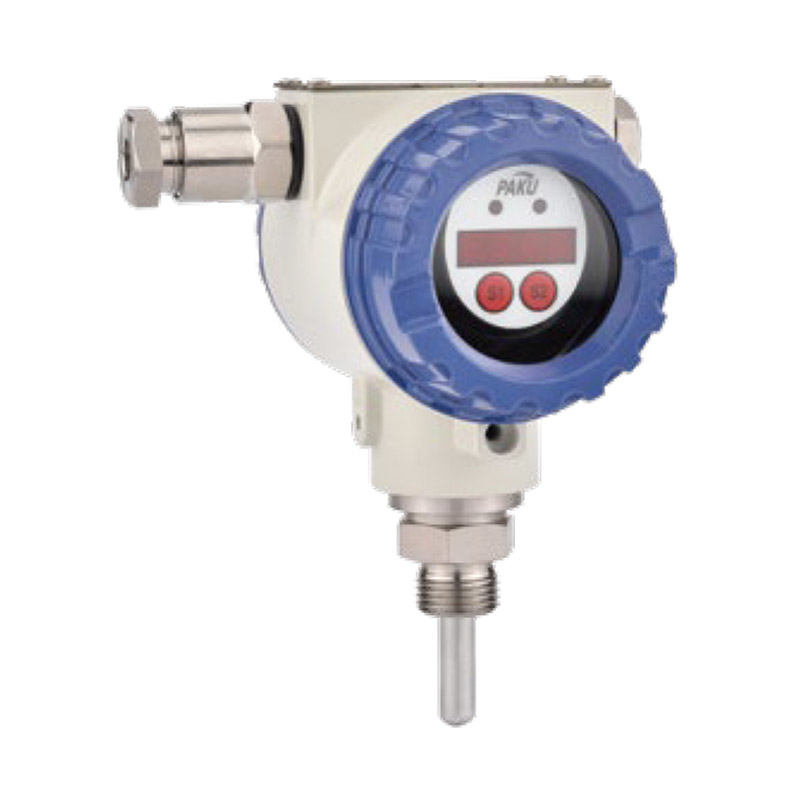
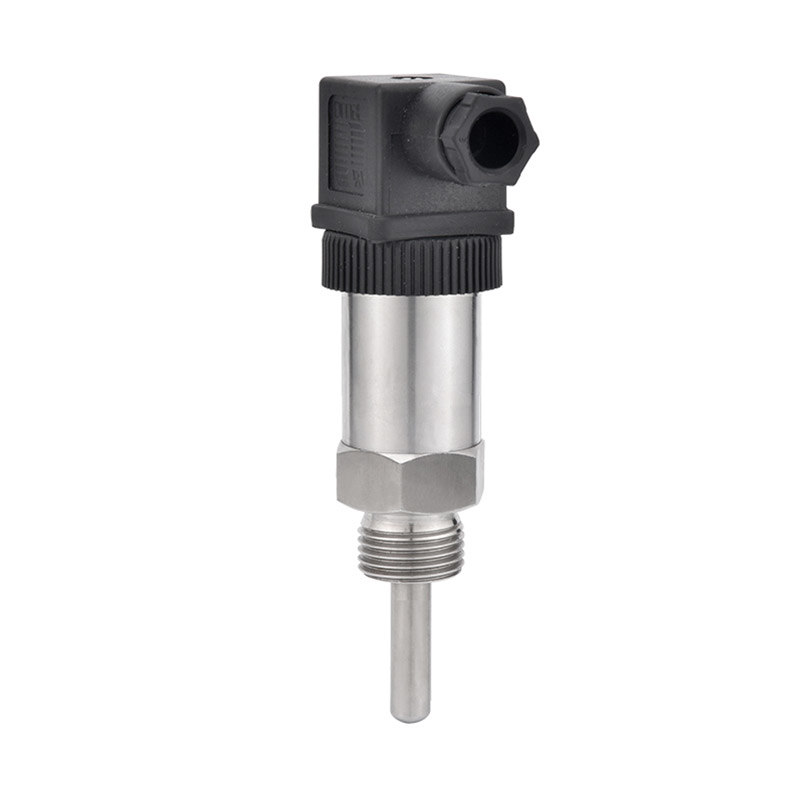
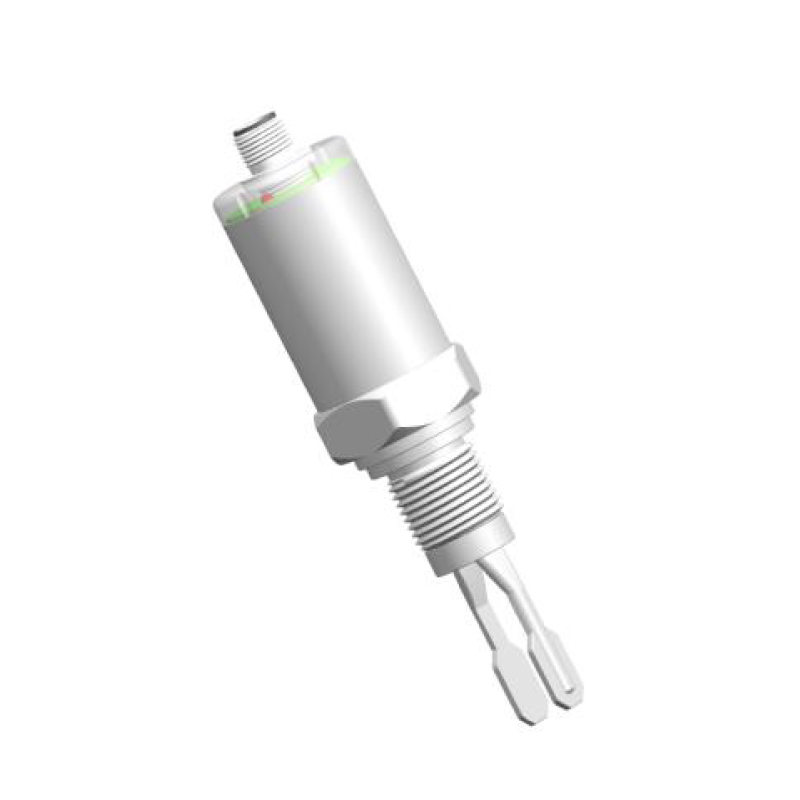
If you need any help, please feel free to contact us
inquire
Continuous Level Sensors for Industrial Liquid and Bulk Measurement | Paku Sensors
When a production engineer needs to know the exact amount of liquid remaining in a storage tank, a point-level switch cannot answer the question. It only tells whether the level is above or below a specific point. A continuous level sensor, however, delivers a live reading across the full measuring range. That difference matters for inventory control, pump automation, and overflow prevention. In a chemical plant, a 4-20 mA loop that goes quiet because the sensor was selected for the wrong medium is not just an inconvenience; it can lead to an overfilled vessel, an alarm that never fires, and a costly process shutdown.
What is a continuous level sensor?
A continuous level sensor is an instrument that measures the position of a liquid, slurry, or bulk solid surface within a defined range and outputs a proportional signal. The typical output is 4-20 mA or 0-10 V, and many models support HART or Modbus for communication with a PLC or SCADA system. Unlike a point-level switch, which only changes state when the product reaches a specific height, a continuous sensor provides a real-time value at any point in the range. This capability allows operators to track inventory trends, control batch filling, and respond to process deviations before a vessel overflows or runs dry.
The sensor must be selected against real process conditions: the medium itself, the tank geometry, the required accuracy, the operating temperature and pressure, and the available mounting location.
Continuous level measurement technologies
Each continuous level measurement principle has strengths and limitations that become visible in different process conditions. The overview below shows how the main technologies compare, and the sections that follow explain the practical implications.
| Technology | Contact | Best for | Limitations to consider |
| Radar | Non-contact | Large tanks, silos, foamy or vaporous liquids | Higher initial cost |
| Ultrasonic | Non-contact | Water, chemicals, open channels | Dead zone, foam and dust interference |
| Capacitive | Contact | Corrosive liquids, slurries, bulk solids | Coating on probe, grounding requirements |
| Hydrostatic pressure | Contact | Open tanks, wells, reservoirs | Density changes affect accuracy |
| Float-based | Contact | Clean liquids, small tanks | Moving parts, periodic maintenance |
Radar level sensors
Radar level sensors transmit electromagnetic waves and measure the time delay of the reflected signal. Because the sensor does not contact the medium, it can operate in vapors, foams, and high-temperature or high-pressure environments. Radar is effective for both liquids and granular solids, which makes it a strong choice for tall silos and closed tanks. The trade-off is a higher initial cost compared with simpler measurement methods.
Ultrasonic level sensors
Ultrasonic level sensors emit sound pulses and calculate distance from the time of flight. They are non-contact and simple to install, which is why they are common in water treatment, chemical storage, and open-channel applications. The limitations are the dead zone directly below the sensor face and sensitivity to foam, dense dust, and strong temperature gradients. For clean liquids in small and medium tanks, ultrasonic offers a practical balance between cost and reliability.Capacitive Level Transmitter for Liquid and Bulk Solid MeasurementThis capacitance-based level transmitter suits conductive and non-conductive liquids, slurries, and solids. Its moving-part-free design fits maintenance-sensitive areas, while compensation options address sticky coating issues.View Product →
Capacitive level transmitters
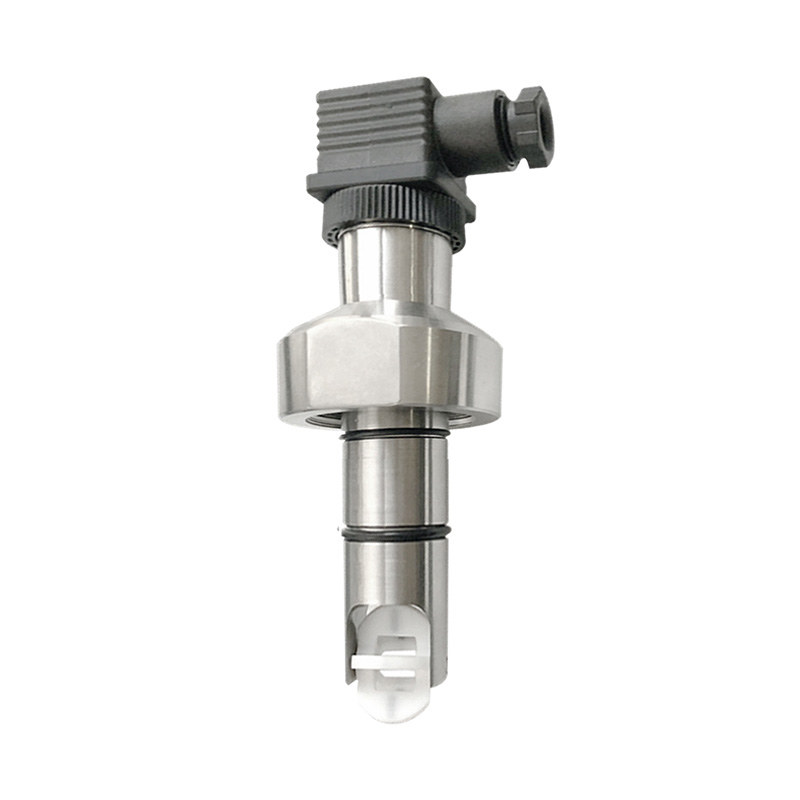
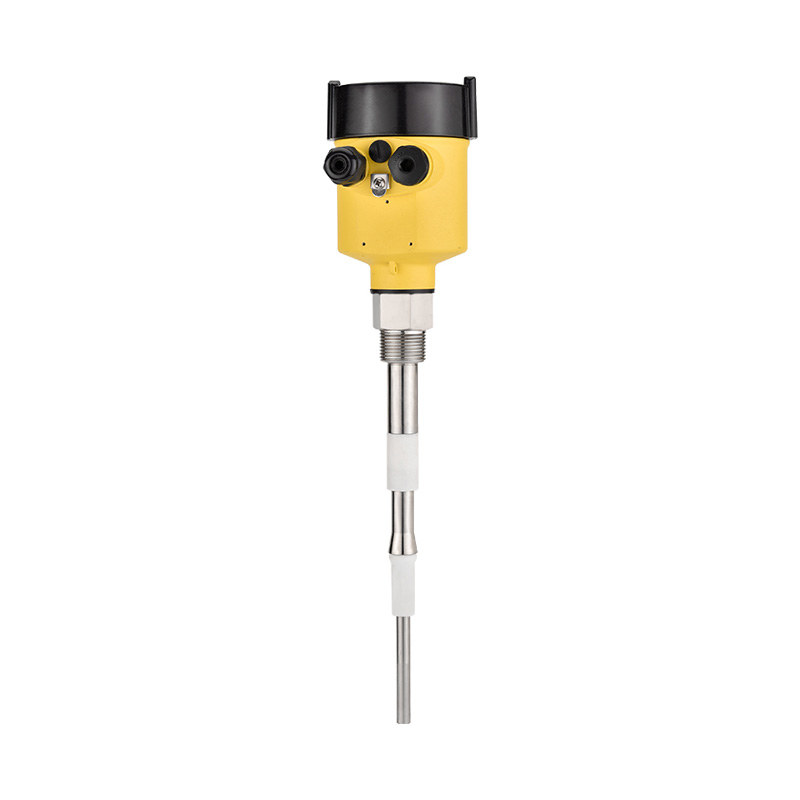
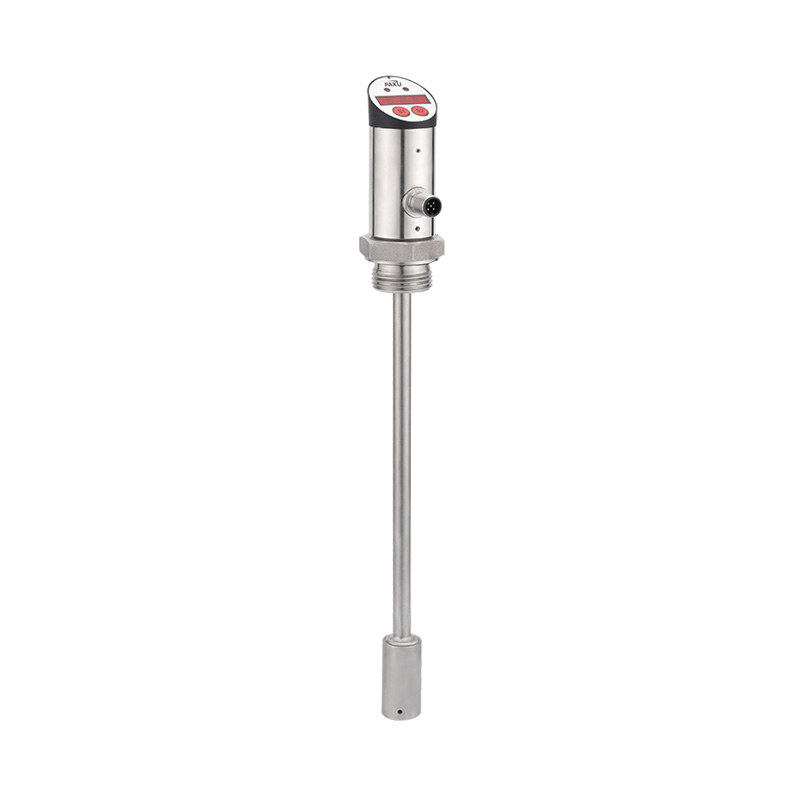
Capacitive level transmitters use a rod or cable probe as one electrode and the tank wall as the other. As the medium rises or falls, the capacitance between them changes. This principle works with conductive and non-conductive liquids, slurries, and bulk solids. It can be designed for high temperature and high pressure, and the absence of moving parts makes it attractive for maintenance-sensitive areas. Sticky liquids can coat the probe, so the instrument should include a compensation function or the system should include a cleaning plan.Submersible Hydrostatic Pressure Transmitter for Open Tank LevelThis submersible transmitter measures hydrostatic pressure to determine liquid level in open tanks, wells, and reservoirs, offering a cost-effective solution, though density and foam effects must be considered.View Product →
Hydrostatic pressure level transmitters
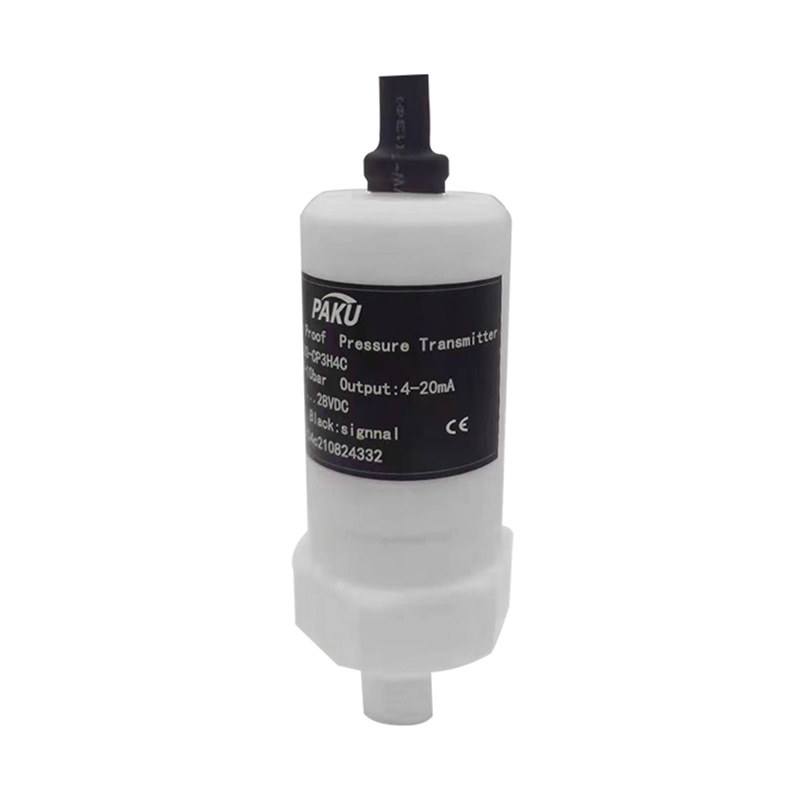
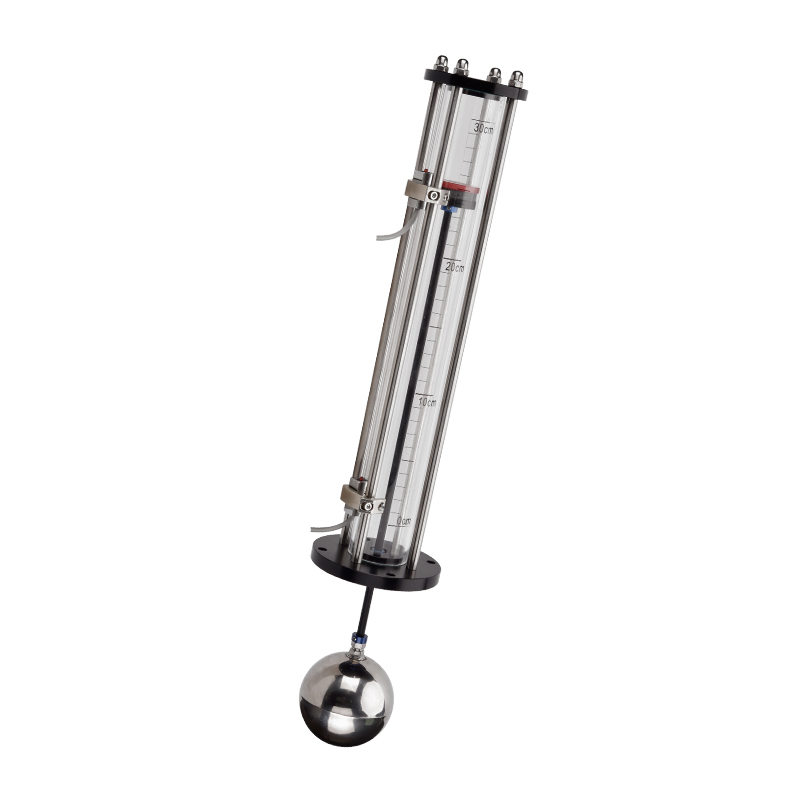
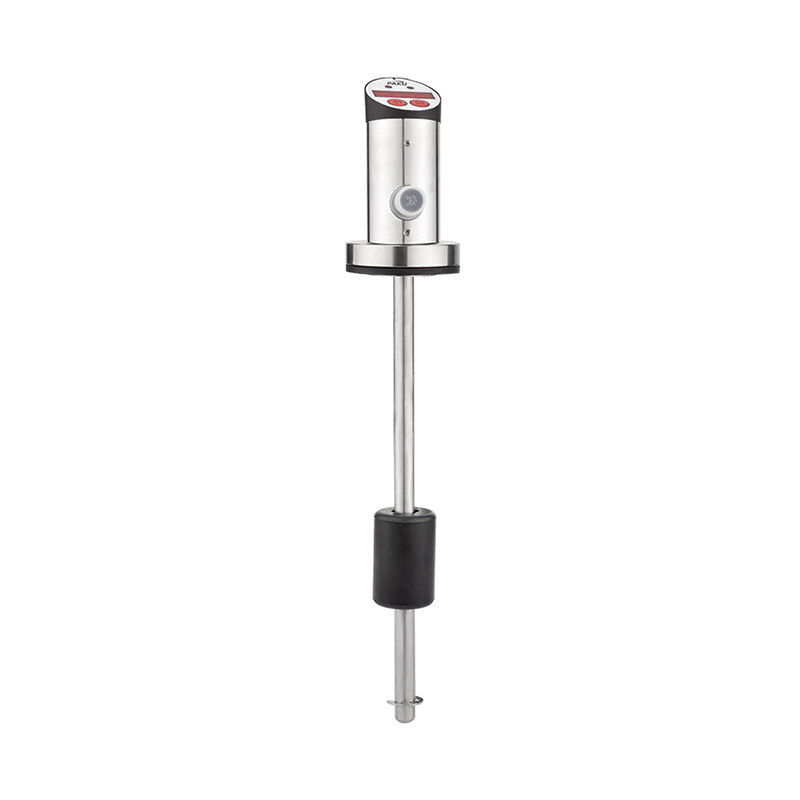
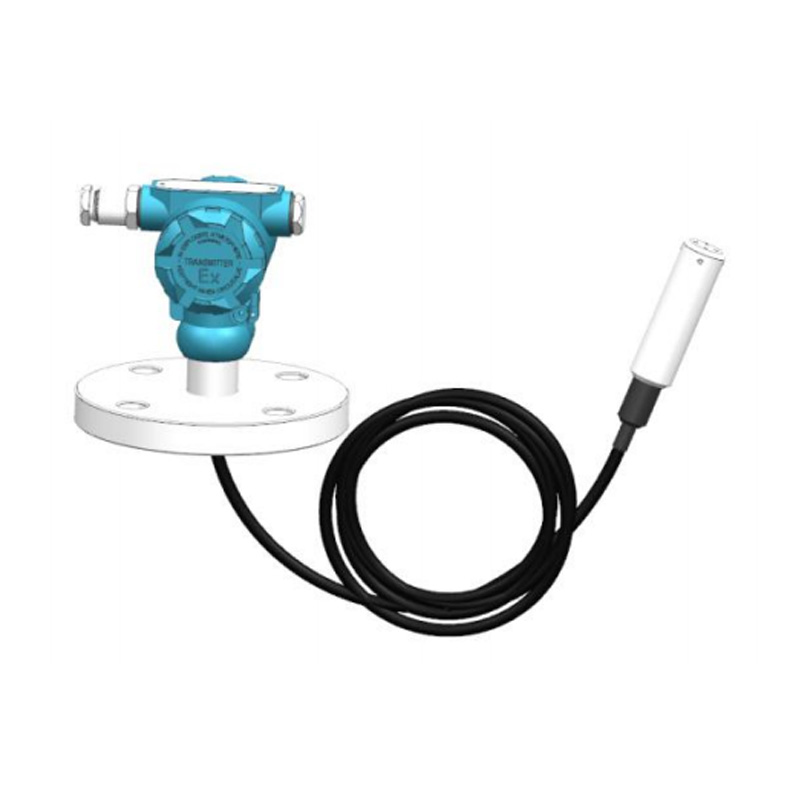
A submersible pressure transmitter measures the hydrostatic pressure created by the liquid column. Level is calculated from pressure divided by the product of density and gravity. This method is economical and reliable for open tanks, wells, and reservoirs. Changes in liquid density and foam conditions must be considered, because both influence the calculated level.Float-Based Continuous Level Sensor for Clean Liquid TanksThis float-operated level sensor tracks liquid surface via magnetic coupling, providing simple, visual level indication for small tanks with clean, non-viscous fluids, but may require more maintenance with solids.View Product →
Float-based continuous level sensors
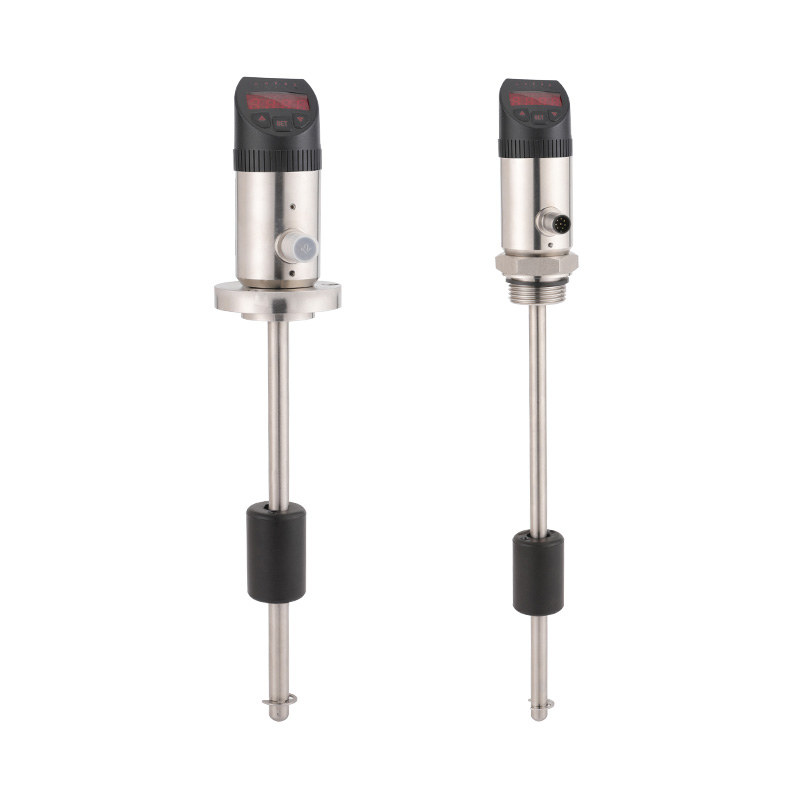
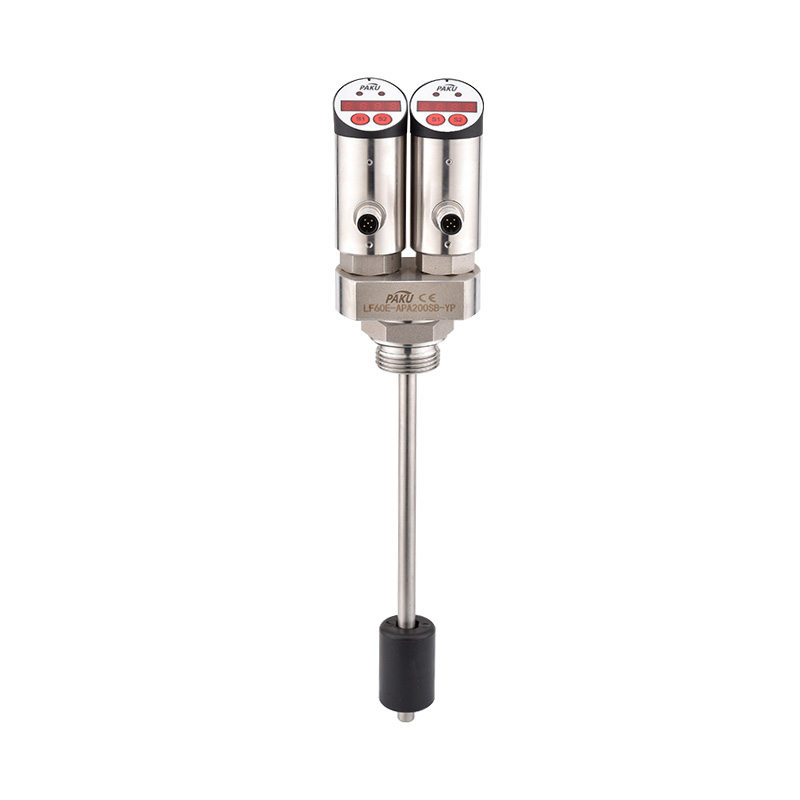
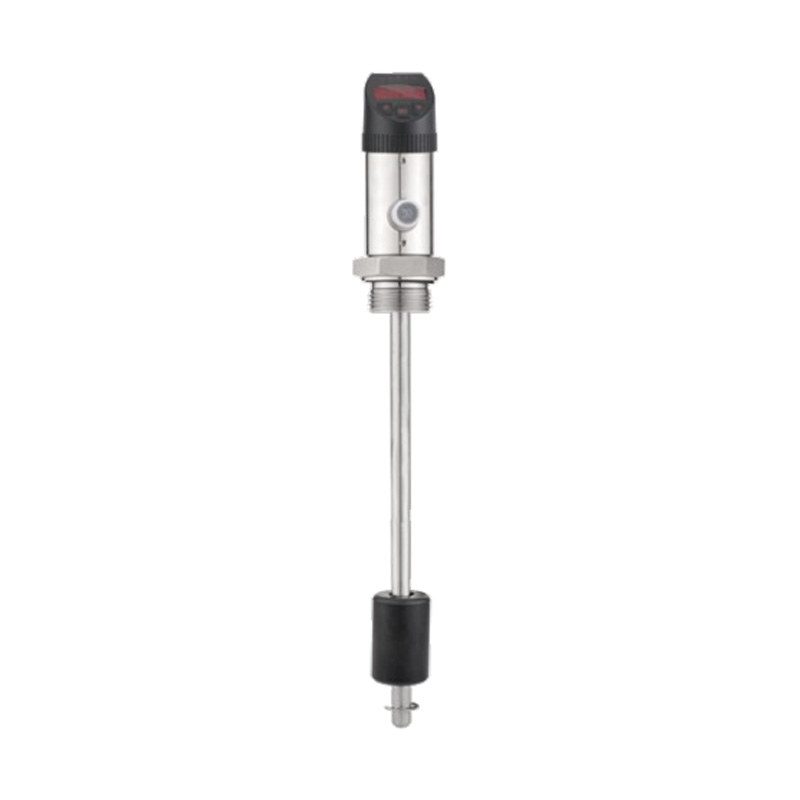
Float-based continuous level sensors use a buoyant float that follows the liquid surface and transmits its position through magnetic coupling. They are simple, visually inspectable, and dependable in small tanks with clean, non-viscous liquids. Because they contain moving parts, they require more maintenance when the medium contains solids or forms residues.
Key selection criteria for continuous level sensors
Selecting a sensor without first reviewing the medium and the vessel creates procurement risks that surface after installation. The following points should be documented in the specification.
- Medium properties: density, conductivity, viscosity, corrosiveness, and whether foam or vapor is generated.
- Vessel geometry and construction: open or closed, tank height, nozzle size, and internal obstructions such as agitators, heating coils, or baffles.
- Required accuracy: the acceptable deviation in percent of the measuring range for the specific process.
- Operating conditions: maximum pressure and temperature, and any explosion-proof requirement based on the ATEX or IECEx classification of the area.
- Output signal: whether 4-20 mA, 0-10 V, or a digital protocol such as HART is needed for the control system.
- Installation and service: whether the sensor can be isolated from the process for cleaning or calibration, and whether a non-contact or insertion design is more practical.
One practical point when comparing specifications: accuracy figures quoted by different manufacturers are not always comparable. Radar can achieve deviations of a few millimeters under ideal conditions, while ultrasonic sensors commonly state accuracy as a percentage of range, typically around plus or minus 0.25%. The same percentage at a 10-meter measuring range represents a different absolute value than at a 2-meter range. Procurement decisions should be based on the absolute deviation that matters for the process, not on a spec sheet number alone.
Process conditions such as temperature, pressure, and hazardous area classification also change the selection. A flammable vapor zone requires a sensor with an acceptable explosion-proof rating, and a high-temperature vessel may need an extended process connection and cooling element. In corrosive media, the wetted materials of the probe, flange, and diaphragm must be checked against the chemical compatibility table.
Installation and calibration requirements
Even a well-selected continuous level sensor can deliver poor data if the installation is not planned. Each technology has specific requirements that should be checked during the layout phase.
- Ultrasonic sensors need a dead zone clearance below the face. The beam angle must be checked against the tank diameter so the pulse does not reflect from internal structures such as mixing blades, ladders, or heating coils. Air temperature and humidity affect the speed of sound, so automatic temperature compensation is essential for stable accuracy.
- Radar sensors with a small beam angle are less affected by tank walls, but a stilling well can improve measurement under turbulent surface conditions. The antenna must be installed so that the signal path stays clear of buildup, and for high-temperature vessels, a spool piece is often used to isolate the sensor from thermal load.
- Capacitive probes must be grounded correctly and kept at a defined distance from the tank wall. The cable should be routed away from metal structures and other power cables to reduce interference signals.
- For open tanks, the submersible cable should have a vented reference to atmospheric pressure. The sensor should be placed where the liquid is still, not in a zone of swirl or inlet turbulence, so the measured pressure represents the true liquid column.
Calibration should be performed at the point of use, using the actual medium or a reference liquid with the same density. A simple water calibration is not always valid for a medium of different density, especially for hydrostatic and capacitive systems.
Continuous level sensor applications across industries
Continuous level sensors are used wherever a permanent and accurate picture of vessel contents is required.
- In water and wastewater treatment, they control pump station levels, monitor tank volumes, and provide data for flow measurement through flumes and weirs.
- In chemical processing, they help prevent overflow of corrosive media by feeding level values into a safety interlock.
- In food and beverage production, hygienic vessels with CIP and SIP cycles require wetted materials that can be cleaned without risking contamination.
- In oil and gas, separator tanks and storage vessels rely on continuous level transmitters for tank gauging and custody transfer.
- In mining and bulk handling, silos and hoppers are monitored to keep material flow stable and to make restart decisions.
Paku Sensors has served these industries with flow, level, pressure, and temperature instrumentation. The level portfolio includes non-contact and insertion designs that cover most of the applications above. An overview of how these products are applied across process industries is available on the industry page.
Why Paku Sensors for continuous level measurement
Shanghai Kayuan Electronic Technology Co., Ltd., known in the industrial market as Paku Sensors, designs and manufactures sensors, switches, and transmitters for flow, level, pressure, and temperature measurement. The liquid level series includes ultrasonic, capacitive, hydrostatic, float, tuning fork, and magnetic level indicator products, with options for sanitary, corrosion-resistant, and explosion-proof construction. Customization extends to wetted materials, threads, signal outputs, measuring ranges, and certifications, allowing the sensor to be matched to a specific application rather than forcing a standard product to fit.
Paku Sensors operates its own factory and supports customization as a routine part of the business. If the standard catalog does not match the process, the customization service is used to build the required sensor. More information about the company can be found on the about page.
Choosing a continuous level sensor is a decision built on process data rather than brand preference alone. The medium, the tank geometry, the required accuracy, the operating pressure and temperature, and the control strategy should all be reviewed together. With a product range covering ultrasonic, capacitive, and hydrostatic continuous level measurement, and with engineering experience accumulated across the level, pressure, and temperature series, Paku Sensors makes that decision more straightforward. A short technical discussion with the team is often the fastest way to finalize a specification that will hold up in daily operation.
information
 [email protected]
 +86-13386111894 / +86-021-37566990
[email protected]
 B-4th Floor, Lane 1313, Nanting Road, Nanqiao Town, Fengxian District, Shanghai, China

Product Links